• Fri frakt över 249 kr
  • •
  • Snabba leveranser
  • •
  • Billiga böcker
Kundservice

Du är på sajten för privatpersoner.

Företag, bibliotek eller offentlig verksamhet?

Du handlar på classic.bokus.com, där alla dina funktioner finns intakta.
Till classic.bokus.com
Bokus logotyp. Gå till startsidan.
  • Erbjudanden
  • Nyheter
  • Student
  • Topplistor
  • Barn & ungdom
  • Bokus Play
  • E-böcker
  • Pocketböcker
  • Spel & pussel

10% rabatt på allt med kod: NYSTART10 →

Sidfot

Mina sidor

    Hjälp

    • Kundservice
    • Vanliga frågor och svar
    • Frakt och leverans
    • Retur vid ångerrätt
    • Reklamera vara
    • Betalning
    • Köpvillkor
    • Allmänna villkor
    • Information om webbplatsens tillgänglighet

    Om Bokus

    • Om oss
    • Pressrum
    • För studenter
    • För företag
    • För bibliotek och offentlig verksamhet
    • För leverantörer
    • Hållbarhet

    Populärt

    • Aktuella erbjudanden
    • Presentkort
    • Studentlitteratur
    • Nya böcker
    • Topplistor
    • Signerade böcker
    • Engelska böcker

    Inspiration

    • Boktips
    • BookTok
    • Populära bokserier
    • Barnbokskaraktärer
    • Populära författare
    Logotyp för Bokus
    Följ oss på Facebook (extern länk)Följ oss på Instagram (extern länk)Följ oss på YouTube (extern länk)Följ oss på TikTok (extern länk)
    bokus @ CookiesAnpassa cookiesIntegritetspolicyKöpvillkor
    Till Citymail hemsida (extern länk)Till Budbee hemsida (extern länk)Till Postnord hemsida (extern länk)Till Schenker hemsida (extern länk)Till Early Bird hemsida (extern länk)Till Walleys hemsida (extern länk)
    1. Filosofi och religion
    2. Religion och tro
    3. Kristendom

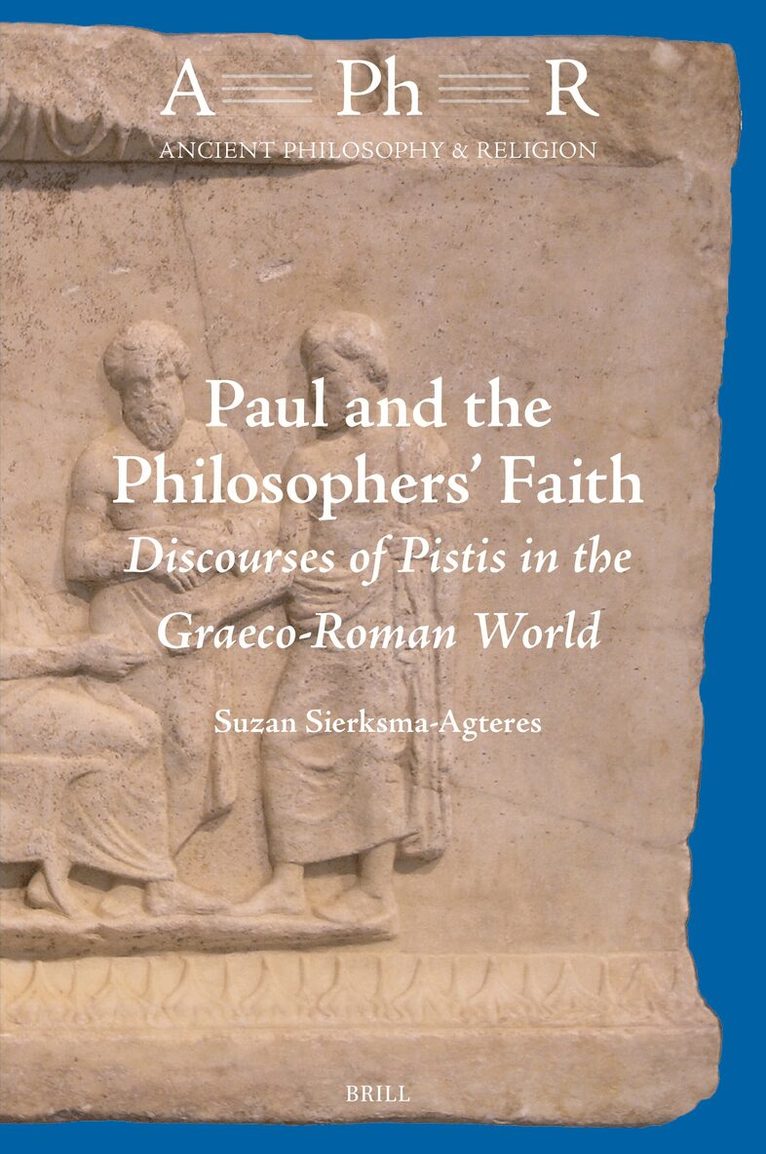
    Paul and the Philosophers’ Faith

    Discourses of Pistis in the Graeco-Roman World

    AvSuzan Sierksma-Agteres

    Inbunden, Engelska, 2024

    Del 12 i serien Ancient Philosophy & Religion

    3 246 kr

    Beställningsvara. Skickas inom 5-8 vardagar. Fri frakt över 249 kr.

    Beskrivning

    The notion of faith experienced a remarkable surge in popularity among early Christians, with Paul as its pioneer. Yet what was the wider cultural significance of the pistis word group? This comprehensive work contextualizes Paul’s faith language within Graeco-Roman cultural discourses, highlighting its semantic multifariousness and philosophical potential. Based on an innovative combination of cognitive linguistics and discourse analysis, it explores ‘faith’ within social, political, religious, ethical, and cognitive contexts. While challenging modern individualist and irrational conceptualizations, this book shows how Paul uses pistis to creatively configure philosophical narratives of his age and propose Christ as its ultimate embodiment.

    Produktinformation

    • Utgivningsdatum:2024-07-25
    • Mått:155 x 235 x 61 mm
    • Vikt:1 530 g
    • Format:Inbunden
    • Språk:Engelska
    • Serie:Ancient Philosophy & Religion
    • Antal sidor:938
    • Förlag:Brill
    • ISBN:9789004549081

    Utforska kategorier

    • Kristendom inom Filosofi och religion

    Mer om författaren

    Suzan Sierksma-Agteres, Ph.D. (2023, University of Groningen) is Assistant Professor of New Testament at the Protestant Theological University in the Netherlands. Combining expertise in classics and theology, she focuses on the interactions between early Christian thought and ancient philosophical traditions.

    Recensioner i media

    "In sum, we have not just been given a map of Graeco-Roman pistis discourses - including, vitally, the apostle Paul's - but something closer to an atlas. We can thank and congratulate Dr. Sierksma-Agteres for the detailed and faithful work she has poured into the project." - Alex W. Muir, in Biblica 106/2 (2025), pp. 310-313.

    Innehållsförteckning

    • Contents PrefaceText Editions and Translations of Ancient and Modern TextsList of FiguresList of Bibliographical AbbreviationsInclusion of Previously Published Work by the Same Author1 Introduction: Tracing the Semantics and Discourses of Faith in Paul’s World1.1 Another Work on Faith?1.2 Faith: How a Semantic Domain Approach Helps to Overcome Essentializing Word Studies1.3 Paul: How Discourse Analysis Helps to Overcome Canonomania and Parallelomania1.4 Philosophers: How Philosophical Contextualization Helps to Overcome Anachronistic Conceptions of Faith1.5 The Route Travelled: Scope, Terminology, Method, and OutlinePart 1: A Pistis Cosmology2 Pistis, Theos, and Logos: Faith as the Standard of Philosophical Religion2.1 Disentangling Modern and Ancient Semantics of Faith2.2 The Problem of Approaching Religion and Faith in the Ancient World2.3 The Theologia Tripartita: Theorizing Religion in Graeco-Roman Discourses2.4 Faith as a Indication of Philosophical Religion in Paul’s Letters2.5 Conclusion3 Pistis, Dikaiosynē, and Nomos: Faith as Unwritten Law of the Golden Age3.1 Paul the Universalist? New Perspectives on an Old Debate3.2 ‘Justification by Faith’: an Outline of the Debated Issues3.3 The Golden Age and Unwritten Law: Juridical Usage of Pistis in Graeco-Roman Discourses3.4 Faith as Unwritten Law and Christ as Living Law in Paul’s Letters3.5 ConclusionPart 2: A Pistis Mentality4 Pistis, Doxa, and Epistēmē: Faith as Firm, Human Conviction Anticipating Divine Knowledge4.1 Faith Opposed to Knowledge?4.2 The Stigma of Early Christian Pistis Being a Low-Level Epistemological Category4.3 A Fideistic Turn in Plato’s Wake? Epistemological Usage of Pistis in Graeco-Roman Discourses4.4 Pistis as Firm but Provisional Knowledge of God in Paul’s Letters4.5 Conclusion5 Pistis, Peithō, and Sophia: Faith as Transformative Persuasion of the Wise5.1 Is Faith a Religious ‘Acceptance as True’?5.2 The Dichotomy of Greek Cognitive Conviction and Jewish Relational Faith5.3 Rhetoric and Dialectic, Scepticism and Dogmatism, Sophism and Sagehood: Persuasive Usage of Pistis in Graeco-Roman Discourses5.4 Faith as Transformative Persuasion in Paul’s Letters5.5 Conclusion6 Pistis, Ēthos, and Mimēsis: Faith as Attitude and Virtue Imitating the Divine6.1 Faith and Works: an Unhappy Couple?6.2 Faith in Christ versus Faithfulness of Christ and the Key Discourse of Imitation6.3 Character Formation and Philosophical Imitation: Ethical Usage of Pistis in Graeco-Roman Discourses6.4 The Mimetic Chain of Faith and Faithfulness in Paul’s Letters6.5 ConclusionPart 3: A Pistis Society7 Pistis, Charis, and Dynamis: Faith as Transjuridical and Transethnic Bond of Trust7.1 On the Crossroads of Faith and Grace, Imperialism and Benefaction, and Old and New Perspectives7.2 Pauline Faith and Grace as Responses to Graeco-Roman Imperialism and Benefaction7.3 A Religious, Bridging, Asymmetrical, Reciprocal, Universal, and Interior Virtue: Public Usage of Pistis in Graeco-Roman Discourses7.4 The Proclamation of a Transjuridical and Transethnic Bond of Trust in Paul’s Letters7.5 Conclusion8 Pistoi, Hagioi, and Apistoi: Faith as Philosophical-Religious Group Identity8.1 How to Make More Semantic Sense of the Reverse of Pistis8.2 Denouncing All Outsiders or Criticizing Particular Antagonists? Us-Versus-Them Thinking by Pagans and Paul8.3 Identifying the Faithless: Social-Religious Usage of Pistis in Graeco-Roman Discourses8.4 Apistia as a Polyvalent and Deviantizing Boundary Marker in Paul’s Letters8.5 Conclusion9 Concluding Reflections: Paul beyond the Philosophers’ Faith9.1 The Distinctiveness of Paul’s Contribution to Discourses of Pistis9.2 A Pauline Response to Present-Day Discourses of FaithBibliographyIndex