• Fri frakt över 249 kr
  • •
  • Snabba leveranser
  • •
  • Billiga böcker
Kundservice

Du är på sajten för privatpersoner.

Företag, bibliotek eller offentlig verksamhet?

Du handlar på classic.bokus.com, där alla dina funktioner finns intakta.
Till classic.bokus.com
Bokus logotyp. Gå till startsidan.
  • Erbjudanden
  • Nyheter
  • Student
  • Topplistor
  • Barn & ungdom
  • Bokus Play
  • E-böcker
  • Pocketböcker
  • Spel & pussel

10% rabatt på allt med kod: NYSTART10 →

Sidfot

Mina sidor

    Hjälp

    • Kundservice
    • Vanliga frågor och svar
    • Frakt och leverans
    • Retur vid ångerrätt
    • Reklamera vara
    • Betalning
    • Köpvillkor
    • Allmänna villkor
    • Information om webbplatsens tillgänglighet

    Om Bokus

    • Om oss
    • Pressrum
    • För studenter
    • För företag
    • För bibliotek och offentlig verksamhet
    • För leverantörer
    • Hållbarhet

    Populärt

    • Aktuella erbjudanden
    • Presentkort
    • Studentlitteratur
    • Nya böcker
    • Topplistor
    • Signerade böcker
    • Engelska böcker

    Inspiration

    • Boktips
    • BookTok
    • Populära bokserier
    • Barnbokskaraktärer
    • Populära författare
    Logotyp för Bokus
    Följ oss på Facebook (extern länk)Följ oss på Instagram (extern länk)Följ oss på YouTube (extern länk)Följ oss på TikTok (extern länk)
    bokus @ CookiesAnpassa cookiesIntegritetspolicyKöpvillkor
    Till Citymail hemsida (extern länk)Till Budbee hemsida (extern länk)Till Postnord hemsida (extern länk)Till Schenker hemsida (extern länk)Till Early Bird hemsida (extern länk)Till Walleys hemsida (extern länk)
    1. Språk och ordböcker
    2. Språkvetenskap och lingvistik

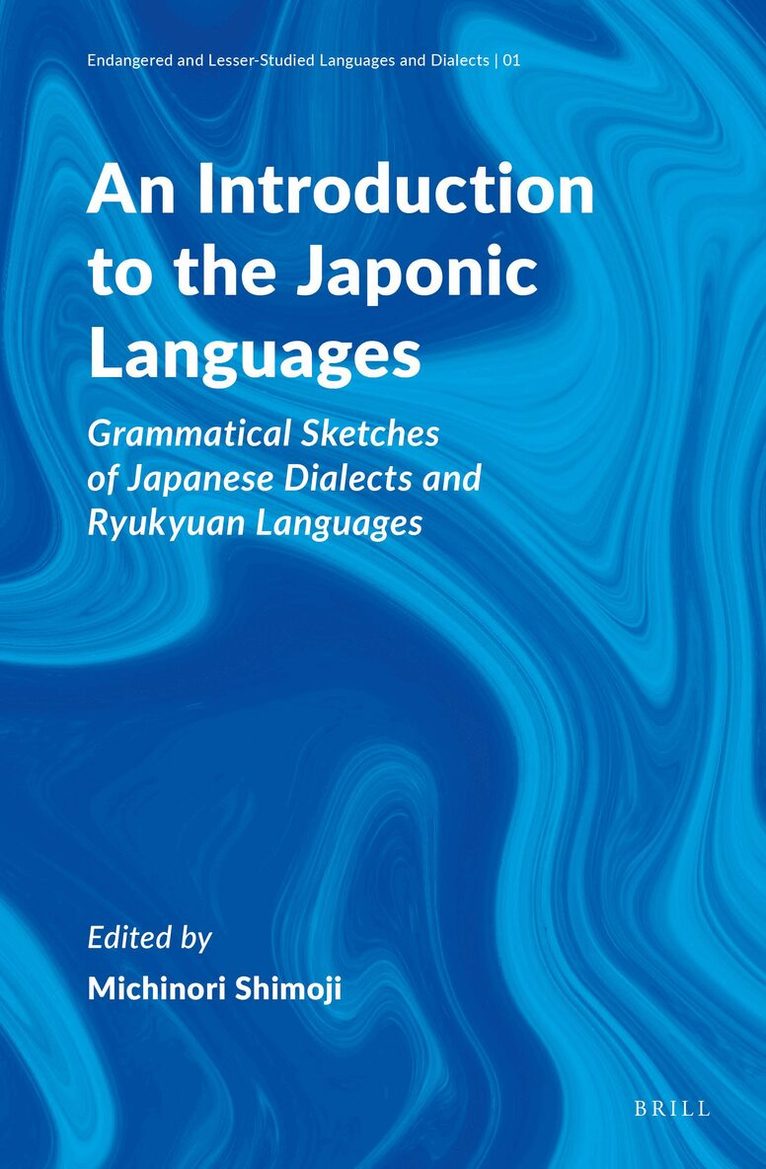
    Endangered Compound Prosody in Kansai Japanese

    Implications for the Syntax-Prosody Interface

    AvAndrew Angeles

    Inbunden, Engelska, 2023

    Del 2 i serien Endangered and Lesser-Studied Languages and Dialects

    1 848 kr

    Beställningsvara. Skickas inom 5-8 vardagar. Fri frakt över 249 kr.

    Beskrivning

    This book examines the diverse prosody of compound nouns in Kansai Japanese, with a special focus on a class of compounds with particularly variable prosody, whose unique prosody is potentially endangered due to their structure and influence from Tokyo Japanese. These compounds serve as important evidence for recursion in prosodic structure in theories of the syntax-prosody interface, as they simultaneously resemble not only other compound words but also non-compound phrases, making them valuable test cases for compound prosodic structure. This book discusses potential reasons for these compounds' prosodic variabilty and what may condition their unique prosody, based on results from novel fieldwork. A unified account of compound prosody in Kansai and three other Japanese dialects is also presented.

    Produktinformation

    • Utgivningsdatum:2023-12-20
    • Mått:155 x 235 x 25 mm
    • Vikt:636 g
    • Format:Inbunden
    • Språk:Engelska
    • Serie:Endangered and Lesser-Studied Languages and Dialects
    • Antal sidor:290
    • Förlag:Brill
    • ISBN:9789004644649

    Utforska kategorier

    • Språkvetenskap och lingvistik inom Språk och ordböcker

    Mer om författaren

    Andrew Angeles received his PhD in Linguistics from the University of California, Santa Cruz in 2022. His research interests include phonological theory, the syntax-prosody interface, compounding, compound prosody, Japanese dialects, and historical linguistics.

    Innehållsförteckning

    • ContentsPrefaceAcknowledgmentsList of Figures and Tables1 Introduction1.1 Introduction1.2 Overview of the Book1.3 Background on Japanese Phonology1.4 The Syntax-Prosody Interface and Match Theory1.5 Compounds2 Accent2.1 Pitch Accent or Tone?2.2 Accent and Tone Bearing Units2.3 Characteristics of the Accentual Systems of Tokyo, Kansai, Kagoshima, and Nagasaki Japanese in Simplex Words2.4 Introduction to Japanese Compounds2.5 Overview of Tokyo, Kagoshima, Nagasaki, and Kansai Japanese Compound Words3 The Syntax-Prosody of Japanese Compounds3.1 The Syntax of Japanese Compounds3.2 The Syntactic Structure of Japanese Compounds3.3 Prosodic Structures and Prosodic Categories3.4 Non-right-headed Compounds4 Kansai Japanese Compound Accentuation4.1 Register Inheritance and Accent Loss – Overview and Analysis4.2 Word Compounds and the Necessity of Junctural Alignment4.3 Symmetrical Phrasal Compounds4.4 A Deeper Look at the Word-Phrase Compound4.5 Implications for a Theory of the Syntax-Prosody Interface5 Where Do Word-Phrase Compounds Come From?5.1 The N2 Length Problem and the No Unique Word-Phrase Parse Problem5.2 Discovering Additional Conditioning Factors on the Word-Phrase Parse5.3 Novel Fieldwork on the Word-Phrase Parse6 ConclusionAppendix 1: List of ConstraintsAppendix 2: Full Candidate SetsAppendix 3: List of Nakai CompoundsBibliographyIndex of Modern AuthorsIndex of SubjectsIndex of Constraints and Constraint FamiliesIndex of Language Names