• Fri frakt över 249 kr
  • •
  • Snabba leveranser
  • •
  • Billiga böcker
Kundservice

Du är på sajten för privatpersoner.

Företag, bibliotek eller offentlig verksamhet?

Du handlar på classic.bokus.com, där alla dina funktioner finns intakta.
Till classic.bokus.com
Bokus logotyp. Gå till startsidan.
  • Erbjudanden
  • Nyheter
  • Student
  • Topplistor
  • Barn & ungdom
  • Bokus Play
  • E-böcker
  • Pocketböcker
  • Spel & pussel

10% studentrabatt med kod TERM26

Sidfot

Mina sidor

    Hjälp

    • Kundservice
    • Vanliga frågor och svar
    • Frakt och leverans
    • Retur vid ångerrätt
    • Reklamera vara
    • Betalning
    • Köpvillkor
    • Allmänna villkor
    • Information om webbplatsens tillgänglighet

    Om Bokus

    • Om oss
    • Pressrum
    • För studenter
    • För företag
    • För bibliotek och offentlig verksamhet
    • För leverantörer
    • Hållbarhet

    Populärt

    • Aktuella erbjudanden
    • Presentkort
    • Studentlitteratur
    • Nya böcker
    • Topplistor
    • Signerade böcker
    • Engelska böcker

    Inspiration

    • Boktips
    • BookTok
    • Populära bokserier
    • Barnbokskaraktärer
    • Populära författare
    Logotyp för Bokus
    Följ oss på Facebook (extern länk)Följ oss på Instagram (extern länk)Följ oss på YouTube (extern länk)Följ oss på TikTok (extern länk)
    bokus @ CookiesAnpassa cookiesIntegritetspolicyKöpvillkor
    Till Citymail hemsida (extern länk)Till Budbee hemsida (extern länk)Till Postnord hemsida (extern länk)Till Schenker hemsida (extern länk)Till Early Bird hemsida (extern länk)Till Walleys hemsida (extern länk)
    1. Kultur
    2. Konstböcker
    3. Konsthistoria

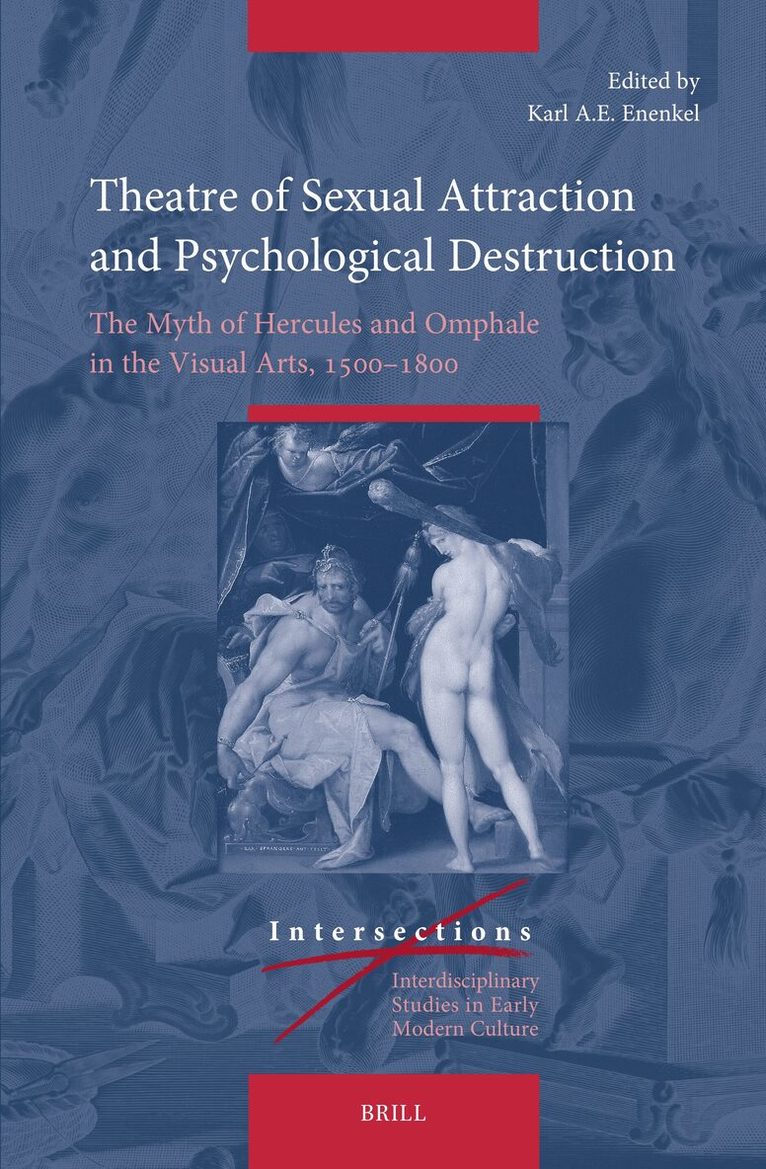
    Theatre of Sexual Attraction and Psychological Destruction

    The Myth of Hercules and Omphale in the Visual Arts, 1500–1800

    AvKarl A.E. Enenkel

    Inbunden, Engelska, 2024

    Del 91 i serien Intersections

    3 088 kr

    Beställningsvara. Skickas inom 3-6 vardagar. Fri frakt över 249 kr.

    Beskrivning

    The book examines the myth of Hercules and Omphale/Iole which became an important topic in the visual arts in the period 1500–1800. It offers an analysis of the iconography from the perspective of the history of emotions, classical and Neo-Latin philology, reception studies, and gender studies. The early modern inventions of the myth excel in a skilful display of mixed and compound emotions, such as the male character's psychopathology, and of the theatrical performance of emotions by the female character.

    Produktinformation

    • Utgivningsdatum:2024-12-11
    • Mått:155 x 235 x 36 mm
    • Vikt:1 113 g
    • Format:Inbunden
    • Språk:Engelska
    • Serie:Intersections
    • Antal sidor:482
    • Förlag:Brill
    • ISBN:9789004694644

    Utforska kategorier

    • Konsthistoria inom Kultur
    • Dramatik inom Skönlitteratur

    Mer om författaren

    Karl Enenkel is Professor of Medieval-and Neo-Latin Literature at the University of Münster. He has published five monographs and well over a hundred articles, and has edited more than forty collective volumes. His latest publication is a critical edition of Erasmus's Apophthegmata, books V–VIII (Brill, 2024).

    Innehållsförteckning

    • AcknowledgementsList of IllustrationsNote on the Author1 Introduction: the Relevance of the Myth of Hercules and Omphale for the History of Emotions2 Hercules and Omphale: the Myth in the Literary Tradition of Greek and Roman Antiquity and of the Middle Ages3 Boccaccio’s De mulieribus claris: Psychopathology of Love, Hercules’s furor and Yole’s Strategy of Cunning3.1 The Origins of Boccaccio’s Blurring of Iole and Omphale in De mulieribus claris: Petrarch’s De viris illustribus3.2 Yole’s Destructive Strategy of Feigned Emotions3.3 Boccaccio’s Psychopathology of Love and the Stoic Theory of Affectus3.4 Mythological Figures as Human Beings from Flesh and Blood: Euhemerism in De mulieribus claris and in Genealogiae deorum gentilium3.5 The Religion of Fame: Historical Writing on Women by Boccaccio and Petrarch3.6 Compositional, Rhetorical, and Evaluative Peculiarities of De mulieribus claris3.7 The Impact of De mulieribus claris3.8 The Importance of Boccaccio’s De mulieribus claris, Chapter 23, for the History of Emotions: the Theatrical Performance of Emotions, and the Expression of Complex, Compound, and Mixed Emotions4 A Bestseller of the Cranach Factory: Hercules furens as Didactic Tragicomedy of “Weiberlist” (Women’s guile) and “Weibermacht” (Women’s Power)5A Women’s Guile in Manuscript Illuminations of De mulieribus claris and 16th-Century Representations of the Myth5B The Myth as Allegorical Court Satire on the Bad Ruler: Dosso Dossi (ca. 1535–1537)6 Erotic Farce: Bartholomeus Spranger’s Invention of the Myth as Brothel Scene (ca. 1585–1600)7 The Invention of the Myth as Multimedia Entertainment: Gillis Coignet (1590–1599)8 Hercules furens as Tragedy and as Comedy: Alessandro Turchi’s Pendant Paintings in the Alte Pinakothek (ca. 1620)9 Comedy and Courtly Decorum: Adaptations and Transformations of Spranger’s Brothel Scene, 1600–180010 How Low Can Hercules Go? – the Development of Spranger’s Brothel Scene as Vulgar Farce in the 17th and 18th Centuries11 Music and Madness, Furor and Frenzy: Staging the Myth as Bacchus Feast and Sacred Marriage (Statius, Ovid’s Fasti)12 Hercules’s Perturbatio mentis and Female Emotions of the Male Hero13 Iole’s/Omphale’s Triumph or ‘omnia vincit amor’ – the Compound of Triumphant Emotions14 The Humiliation of the Male: Slapstick Humour, Physical Violence15 Omphale as a Moral Example of Chastity and Template for a Female Political Leader? – Simon Vouet’s Comedy and Tragedy of Love16 Sincere Love or Feigned Love? The Art of Creating Ambiguous Emotional Compounds and Erotic Tension17 From Feigned Love to Performative Erotic Techniques: Nude Dance, Dress-Dropping, Erotic Motion, Striptease18 Conclusion18.1 The Iconography of the Myth and Its Consequences: Iconographic Constructions as Settings for Women’s Guile, Gender Relations, and the Expression of Emotions18.2 The Contribution of the Visual Representations of Hercules and Omphale to the Early Modern Discourse on Emotions: Study of the Various Shades of affectus/furorBibliographyIndex Nominum