• Fri frakt över 249 kr
  • •
  • Snabba leveranser
  • •
  • Billiga böcker
Kundservice

Du är på sajten för privatpersoner.

Företag, bibliotek eller offentlig verksamhet?

Du handlar på classic.bokus.com, där alla dina funktioner finns intakta.
Till classic.bokus.com
Bokus logotyp. Gå till startsidan.
  • Erbjudanden
  • Nyheter
  • Student
  • Topplistor
  • Barn & ungdom
  • Bokus Play
  • E-böcker
  • Pocketböcker
  • Spel & pussel

10% rabatt på allt med kod: NYSTART10 →

Sidfot

Mina sidor

    Hjälp

    • Kundservice
    • Vanliga frågor och svar
    • Frakt och leverans
    • Retur vid ångerrätt
    • Reklamera vara
    • Betalning
    • Köpvillkor
    • Allmänna villkor
    • Information om webbplatsens tillgänglighet

    Om Bokus

    • Om oss
    • Pressrum
    • För studenter
    • För företag
    • För bibliotek och offentlig verksamhet
    • För leverantörer
    • Hållbarhet

    Populärt

    • Aktuella erbjudanden
    • Presentkort
    • Studentlitteratur
    • Nya böcker
    • Topplistor
    • Signerade böcker
    • Engelska böcker

    Inspiration

    • Boktips
    • BookTok
    • Populära bokserier
    • Barnbokskaraktärer
    • Populära författare
    Logotyp för Bokus
    Följ oss på Facebook (extern länk)Följ oss på Instagram (extern länk)Följ oss på YouTube (extern länk)Följ oss på TikTok (extern länk)
    bokus @ CookiesAnpassa cookiesIntegritetspolicyKöpvillkor
    Till Citymail hemsida (extern länk)Till Budbee hemsida (extern länk)Till Postnord hemsida (extern länk)Till Schenker hemsida (extern länk)Till Early Bird hemsida (extern länk)Till Walleys hemsida (extern länk)
    1. Historia och arkeologi
    2. Historia
    3. Forntidens historia

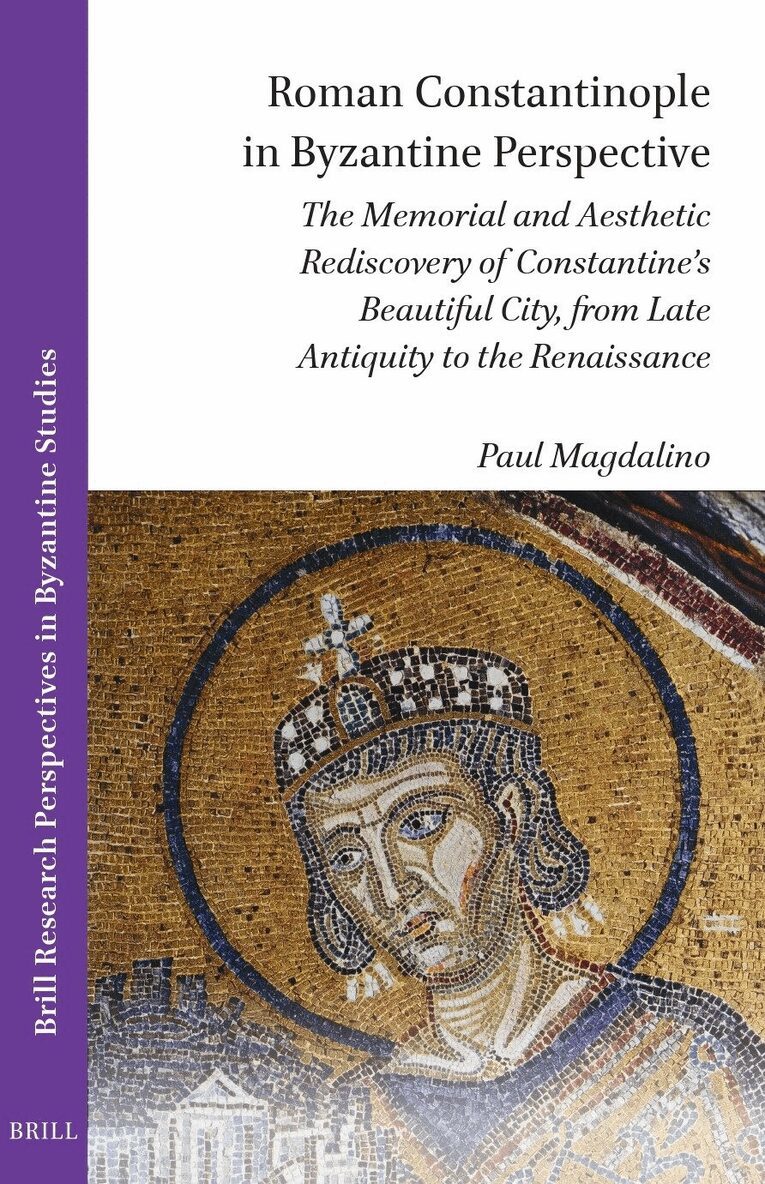
    Roman Constantinople in Byzantine Perspective

    The Memorial and Aesthetic Rediscovery of Constantine’s Beautiful City, from Late Antiquity to the Renaissance

    AvPaul Magdalino

    Häftad, Engelska, 2024

    Del i serien Brill Research Perspectives in Byzantine Studies

    1 107 kr

    Beställningsvara. Skickas inom 5-8 vardagar. Fri frakt över 249 kr.

    Beskrivning

    This book studies the research perspective in which the literary inhabitants of Late Antique and medieval Constantinople remembered its past and conceptualised its existence as a Greek city that was the political capital of a Christian Roman state. Initial reactions to Constantine’s foundation noted its novel Christian orientation, but the memorial mode of writing about the city that developed from the sixth century recollected the traditional civic cultural heritage that Constantinople claimed both as the New Rome, and as the continuation of ancient Byzantion. This research culture increasingly became the preserve of the imperial bureaucracy, and focused on the city’s sculptured monuments as bearers of eschatological meaning. Yet from the tenth century, writers progressively preferred to define the wonder and spectacle of Constantinople in the aesthetic mode of urban praise inherited from late antiquity, developing the notion of the city as a cosmic theatre of excellence.

    Produktinformation

    • Utgivningsdatum:2024-06-06
    • Mått:155 x 235 x 11 mm
    • Vikt:321 g
    • Format:Häftad
    • Språk:Engelska
    • Serie:Brill Research Perspectives in Byzantine Studies
    • Antal sidor:178
    • Förlag:Brill
    • ISBN:9789004698895

    Utforska kategorier

    • Forntidens historia inom Historia och arkeologi

    Mer om författaren

    Paul Magdalino, D.Phil. (1976), Oxford, is Emeritus Professor of Byzantine History at the University of St Andrews, and a Fellow of the British Academy. He has published extensively on many aspects and all periods of the history and culture of Byzantium.

    Innehållsförteckning

    • ContentsAbstractKeywordsIntroduction1 Historical Research on Constantinople, 330–6002 Memorial Literature and Research Culture, 6th–10th Centuries3 Cultural Heritage and Tourist Disinformation 1000–1453. From Bureaucratic to Scientific Antiquarianism4 The Rhetorical Rediscovery of Constantinople, Tenth to Thirteenth Centuries5 The Byzantios of Theodore Metochites and Its LegacyConclusionBibliographyIndex