• Fri frakt över 249 kr
  • •
  • Snabba leveranser
  • •
  • Billiga böcker
Kundservice

Du är på sajten för privatpersoner.

Företag, bibliotek eller offentlig verksamhet?

Du handlar på classic.bokus.com, där alla dina funktioner finns intakta.
Till classic.bokus.com
Bokus logotyp. Gå till startsidan.
  • Erbjudanden
  • Nyheter
  • Student
  • Topplistor
  • Barn & ungdom
  • Bokus Play
  • E-böcker
  • Pocketböcker
  • Spel & pussel

10% rabatt på allt med kod: NYSTART10 →

Sidfot

Mina sidor

    Hjälp

    • Kundservice
    • Vanliga frågor och svar
    • Frakt och leverans
    • Retur vid ångerrätt
    • Reklamera vara
    • Betalning
    • Köpvillkor
    • Allmänna villkor
    • Information om webbplatsens tillgänglighet

    Om Bokus

    • Om oss
    • Pressrum
    • För studenter
    • För företag
    • För bibliotek och offentlig verksamhet
    • För leverantörer
    • Hållbarhet

    Populärt

    • Aktuella erbjudanden
    • Presentkort
    • Studentlitteratur
    • Nya böcker
    • Topplistor
    • Signerade böcker
    • Engelska böcker

    Inspiration

    • Boktips
    • BookTok
    • Populära bokserier
    • Barnbokskaraktärer
    • Populära författare
    Logotyp för Bokus
    Följ oss på Facebook (extern länk)Följ oss på Instagram (extern länk)Följ oss på YouTube (extern länk)Följ oss på TikTok (extern länk)
    bokus @ CookiesAnpassa cookiesIntegritetspolicyKöpvillkor
    Till Citymail hemsida (extern länk)Till Budbee hemsida (extern länk)Till Postnord hemsida (extern länk)Till Schenker hemsida (extern länk)Till Early Bird hemsida (extern länk)Till Walleys hemsida (extern länk)
    1. Skönlitteratur
    2. Dramatik

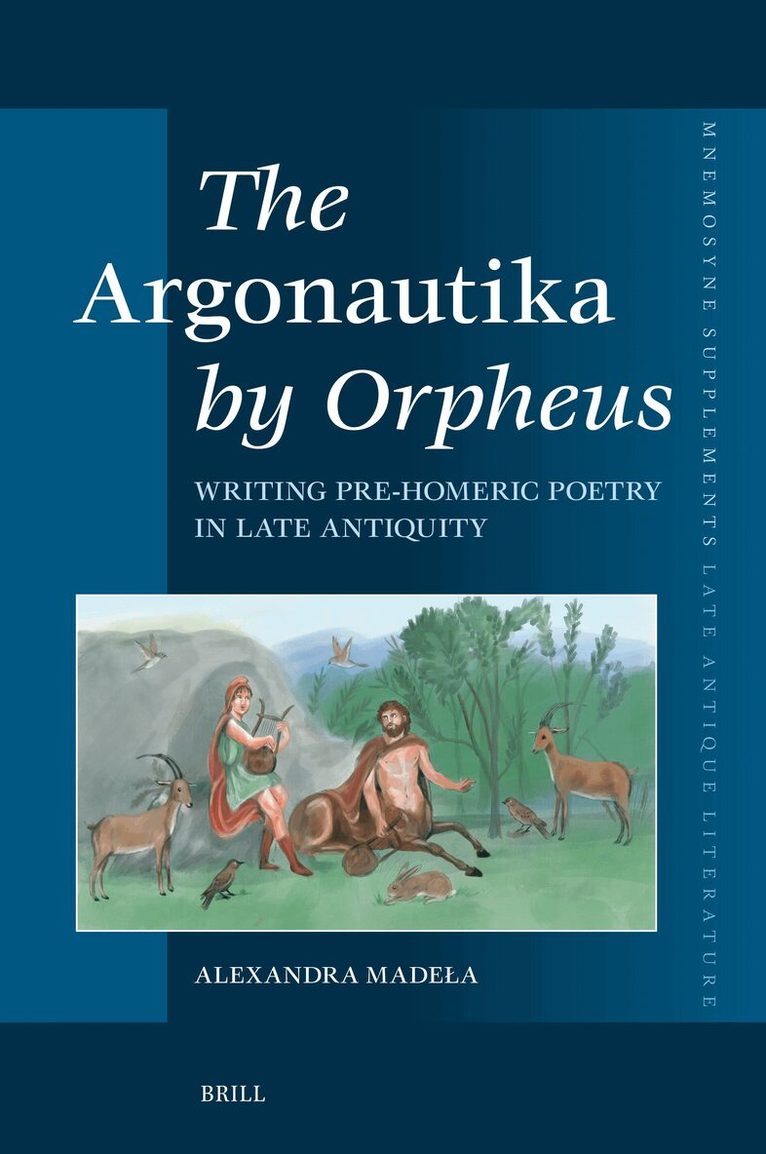
    Argonautika by Orpheus

    Writing Pre-Homeric Poetry in Late Antiquity

    AvAlexandra Maria Madeła

    Inbunden, Engelska, 2024

    Del 490 i serien Mnemosyne, Supplements, Late Antique Literature

    1 938 kr

    Beställningsvara. Skickas inom 3-6 vardagar. Fri frakt över 249 kr.

    Beskrivning

    Is it possible to be better than Homer? For most literary critics in late antiquity, the answer was an unequivocal no, but the anonymous author of the Argonautika by Orpheus disagreed. This book, the first English monograph on this late antique epic poem, demonstrates that the idea of competing with Homer is central to the Argonautika by Orpheus. Through a series of case-studies on the poem’s diction and compositional technique, it proposes a novel approach. Since the mythological bard Orpheus is ostensibly the poem’s author, readers are invited to view it from two perspectives simultaneously: as a late antique epic modelled on Homer’s works, but also a prehistorical model for Homer’s works.

    Produktinformation

    • Utgivningsdatum:2024-12-06
    • Mått:155 x 235 x 23 mm
    • Vikt:580 g
    • Format:Inbunden
    • Språk:Engelska
    • Serie:Mnemosyne, Supplements, Late Antique Literature
    • Antal sidor:264
    • Förlag:Brill
    • ISBN:9789004713840

    Utforska kategorier

    • Dramatik inom Skönlitteratur

    Mer om författaren

    Alexandra Madeła is a postdoctoral fellow at the University of Warsaw. She gained her PhD in Classics from Trinity College Dublin. She has previously published on the Argonautica by Orpheus, Dares Phrygius, late antique poetry, and ancient scholarship.

    Innehållsförteckning

    • AcknowledgmentsIntroduction: Orpheus the Poet1 The Many Faces of Orpheus2 Orpheus of Kroton—a Red Herring3 The Argonautika as Part of Orpheus’ Oeuvre4 Double Vision5 Ps-Orpheus as Imitator and Inspiration for Homer and Apollonios6 Ps-Orpheus and Homer7 Ps-Orpheus and ApolloniosEdition and Translation: The Argonautika by OrpheusPart1 Formulaic Language: Between Tradition and Innovation1 Personal Epithets: Epic Jason, Tragic Medea1 Epic Hero Jason2 Medea3 Conclusions2 Epithets for ‘Ship’: The ‘Swift’ and the ‘Sluggish’ Argo1 Homeric-Archaic Epithets2 Epithets Inspired by Archaic Poetry3 Apollonian Epithets4 Other Epithets5 Conclusions3 Introductions to Direct Speeches: An Old and a New Formulaic Language1 Homeric-Archaic Speech Introductions2 Other Speech Introductions3 ConclusionsPart2 Rewriting the Epic Tradition: Homer and Apollonios4 Competing with Homer1 Metapoetics2 The Iliad as a Sequel3 Orpheus the Eyewitness and Homer the Liar4 Conclusions5 Rewriting Apollonios1 Introduction of Kyzikos2 Hospitality3 The Mountain Monsters4 Night-Time Battle and Death of Kyzikos5 Tiphys’ Dream6 Rhea’s Wrath7 The Funeral Games8 Kleite and Rhea9 ConclusionsFinal ThoughtsBibliographyIndex