• Fri frakt över 249 kr
  • •
  • Snabba leveranser
  • •
  • Billiga böcker
Kundservice

Du är på sajten för privatpersoner.

Företag, bibliotek eller offentlig verksamhet?

Du handlar på classic.bokus.com, där alla dina funktioner finns intakta.
Till classic.bokus.com
Bokus logotyp. Gå till startsidan.
  • Erbjudanden
  • Nyheter
  • Student
  • Topplistor
  • Barn & ungdom
  • Bokus Play
  • E-böcker
  • Pocketböcker
  • Spel & pussel

Må bättre, för mindre! Upp till 50% rabatt på hälsoböcker

Sidfot

Mina sidor

    Hjälp

    • Kundservice
    • Vanliga frågor och svar
    • Frakt och leverans
    • Retur vid ångerrätt
    • Reklamera vara
    • Betalning
    • Köpvillkor
    • Allmänna villkor
    • Information om webbplatsens tillgänglighet

    Om Bokus

    • Om oss
    • Pressrum
    • För studenter
    • För företag
    • För bibliotek och offentlig verksamhet
    • För leverantörer
    • Hållbarhet

    Populärt

    • Aktuella erbjudanden
    • Presentkort
    • Studentlitteratur
    • Nya böcker
    • Topplistor
    • Signerade böcker
    • Engelska böcker

    Inspiration

    • Boktips
    • BookTok
    • Populära bokserier
    • Barnbokskaraktärer
    • Populära författare
    Logotyp för Bokus
    Följ oss på Facebook (extern länk)Följ oss på Instagram (extern länk)Följ oss på YouTube (extern länk)Följ oss på TikTok (extern länk)
    bokus @ CookiesAnpassa cookiesIntegritetspolicyKöpvillkor
    Till Citymail hemsida (extern länk)Till Budbee hemsida (extern länk)Till Postnord hemsida (extern länk)Till Schenker hemsida (extern länk)Till Early Bird hemsida (extern länk)Till Walleys hemsida (extern länk)
    1. Psykologi och pedagogik
    2. Pedagogik
    3. Utbildningsstrategier och utbildningspolitik

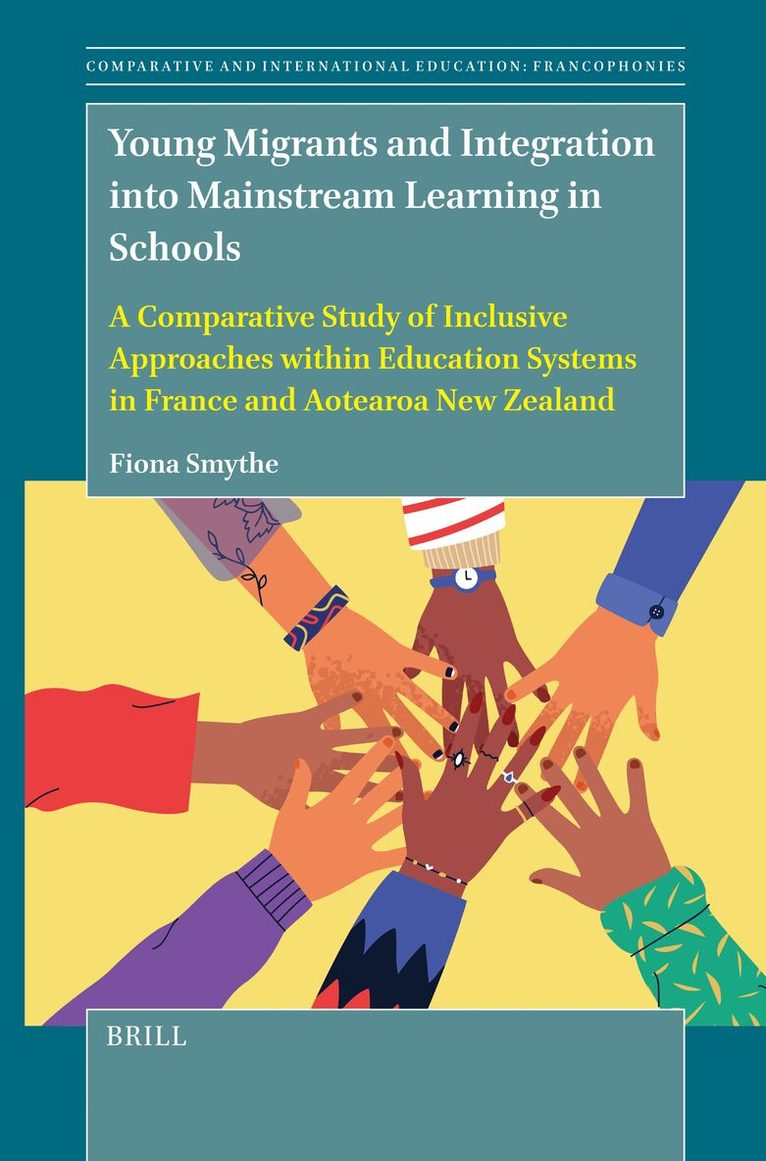
    Young Migrants and Integration into Mainstream Learning in Schools

    A Comparative Study of Inclusive Approaches within Education Systems in France and Aotearoa New Zealand

    AvFiona Smythe

    Häftad, Engelska, 2025

    Del 3 i serien Comparative and International Education: Francophonies

    1 061 kr

    Beställningsvara. Skickas inom 3-6 vardagar. Fri frakt över 249 kr.

    Fler format och utgåvor

    Inbunden

    2 778 kr

    Beskrivning

    Written during “the refugee crisis” (2017–2020) and the increasingly hostile international response to immigration at that time, this book reports on an in-schools study carried out with young migrants in two countries with highly diverse populations: France and Aotearoa New Zealand. Backgrounded by questions of how minority language speakers can succeed within monolingual education systems, case studies are presented of newly-arrived migrant, asylum-seeker and refugee-background teenagers learning in mainstream classes.A critical, comparative approach is taken to investigate background and foreground phenomena that construct and sustain inequalities in education. Findings highlight useful and effective solutions for teachers working in culturally and linguistically diverse classrooms.

    Produktinformation

    • Utgivningsdatum:2025-01-09
    • Mått:155 x 235 x 23 mm
    • Vikt:676 g
    • Format:Häftad
    • Språk:Engelska
    • Serie:Comparative and International Education: Francophonies
    • Antal sidor:376
    • Förlag:Brill
    • ISBN:9789004720398

    Utforska kategorier

    • Utbildningsstrategier och utbildningspolitik inom Psykologi och pedagogik
    • Pedagogik inom Psykologi och pedagogik

    Mer om författaren

    Fiona Smythe is a comparative education researcher at the Université de Bordeaux, France. Her research examines equitable education for culturally and linguistically diverse students in different school systems. Her publications include Young Migrants and Plurilingualism in Schools (Brill, 2024).

    Innehållsförteckning

    • Series Editor’s ForewordRégis MaletForewordStephen DobsonPrefaceAcknowledgementsList of Figures and TablesPART 1: Immigration: Policies and Practices in France and Aotearoa New ZealandIntroduction to Part 11 Introduction1 The Context and Motivation for This Study2 Why Research with Young Migrants and Their Teachers?3 Why Compare France and Aotearoa New Zealand?4 Researcher’s Views, Hypothesis, Main Questions5 Terminology6 Overview of the Case Studies of Young Migrants in Schools7 Theoretical Aspects of the Research8 Structure of the Book2 Immigration1 Introduction2 EU Anti-Immigration Policies3 Two Responses to the Refugee Crisis in France and Aotearoa New Zealand4 Conclusion: The Refugee Crisis and the Challenge to Educational Environments3 National Identities: Histories of Immigrants1 Introduction2 Histories Still Influence the Present3 Who Is “Really” French or Kiwi?4 How Do Language and Culture Signify Belonging?5 Stereotypes of Immigrants6 New Zealand Stereotypes of Immigrants7 Comparing Histories of Immigration in Both Countries8 Conclusion: Stereotypes of Immigrants in Both Countries9 Secularity, Cultural Ideals and “Othering”10 Conclusion: Equity of Participation4 Assimilation vs. Integration1 Introduction2 Assimilation through “Education of the Savages”3 Assimilation in France: The Background Story4 Assimilationist Past in New Zealand: From Missionaries to Multiculturalism5 Conclusion: New Zealand and France Share a Colonial Shame6 Steps along the Intégration/Integration Continuum7 Regional and Indigenous Languages8 Revival of Māori Language and Culture: Aotearoa New Zealand Turns towards Integration9 Conclusion: Different Versions of Integration10 How Does the Integration Model Look Today in France and Aotearoa New Zealand?11 Comparing Two Concepts of “Integration”12 Conclusion: Future Directions for Integration13 Conclusion: Assimilation vs. Integration5 Integration and Young Migrants in Schools1 Introduction2 What Is Integration?3 OECD Integration Measures for Young Migrants4 Key Findings from This Study about School Integration and Young Migrants5 France and “Intégration” of Migrant Youth6 Aotearoa New Zealand and Migrant Youth Integration7 Conclusion: Integration as a Two-Way Process6 Immigrant Students and “Success” in Schooling1 Introduction2 Defining “Success”: OECD Benchmarks, PISA Testing3 How Are Young Migrants Performing at School?4 Reducing the Performance Gap between Immigrant and Non-Immigrant Students5 The Negative Effects of Grade Repetition, Streaming and Vocational Tracking6 Conclusion: OECD Findings on Immigrant Students’ Success7 The Role of Parents in the Child’s Success at School8 The Child at the Centre of Contemporary Forms of Migration9 Studies of Parental Influence on Young Migrants’ Success10 Contextualising Studies in France and Aotearoa New Zealand11 Research Findings on How Parents Influence the Child’s Success at School12 How May Parents Influence the Child’s Success at School? 16213 Conclusion: Definitions and Influences on Young Migrants’ Success at School7 Asylum-Seeking and Refugee Families1 Introduction2 Seeking Asylum in France3 Proposed Changes to Asylum-Seeking Process in France, 2017–20184 Expulsion of Asylum Seekers5 Housing for Asylum Seekers6 Families Living in CADA (Centre d’Accueil des Demandeurs d’Asile)7 Conclusion: Asylum-Seeking Parents8 Refugee Families in Aotearoa New Zealand9 Conclusion: Asylum Seeker and Refugee Families in Both Countries8 Teacher Education: Preparing Teachers for Working with Immigrant Students1 Introduction: Teacher Education to Support Young Migrants’ Achievement2 Inquiry Processes3 CASNAV4 Example from New Zealand “Inquiry Model” (Ministry of Education tki.org.nz [te kete ipurangi])5 Conclusion: Teaching as Inquiry Model in Teacher TrainingPART 2: Empirical Study/Field Research: Case Studies of Newly-Arrived Immigrant Students and Integration into Mainstream Learning in Two Schools—Bordeaux and WellingtonIntroduction to Part 29 Methodology1 Introduction2 Aims and objectives3 Terrains of Field Research4 Organisation of Field Research5 Terrain 1: Schools6 Terrain 2: Teacher Education Institutions7 Terrain 3: Agencies Working in Refugee Resettlement8 Conclusion10 The Case Studies: Qualitative Data on Integration into Mainstream Learning: 4 Newly-Arrived Immigrant Students and Their Classroom Learning Behaviours1 Introduction2 How the Case Studies Were Conducted3 Two “Special” Case Studies4 Testing the Hypothesis5 The Case Studies11 Two “Special” Case Studies: Mahala (Iraqi, 12 Years Old, in the French School) and Bashiir (Somali, 17 Years Old, in the New Zealand School)1 Introduction2 Case Study of Mahala, 12 Years Old, Iraqi (in the French School)3 Case Study of Bashiir, 17 Years Old, Somali (in the New Zealand School)12 Comparison of Qualitative Findings1 Introduction2 Student Surveys3 Results of Student Surveys in Both Schools4 Why Are Students Passive Learners in Mainstream Classes?5 Findings Compared: How Do Two Schools in France and Aotearoa New Zealand Integrate Newly-Arrived Immigrant Students into Mainstream Learning?6 Classroom Organisation (Teaching and Learning Style, Seating, Classroom Culture)7 Structure of Learning (Lesson Structure, Learning Activities)8 Language Use (Language of Schooling, First Languages)9 Summary: Students Work Actively in Plurilingual Learning Spaces10 Conclusion: Classroom Organisation, Structure of Learning and Language UsePART 3: Conclusion: Young Migrants and Integration into Mainstream Learning in SchoolsIntroduction to Part 313 Conclusion to Findings: The In-Schools Study1 Introduction2 The In-Schools Study3 The Main Questions4 Testing the Hypothesis/Outcomes5 Looking Forward: Working Transversally across BordersIndex