• Fri frakt över 249 kr
  • •
  • Snabba leveranser
  • •
  • Billiga böcker
Kundservice

Du är på sajten för privatpersoner.

Företag, bibliotek eller offentlig verksamhet?

Du handlar på classic.bokus.com, där alla dina funktioner finns intakta.
Till classic.bokus.com
Bokus logotyp. Gå till startsidan.
  • Erbjudanden
  • Nyheter
  • Student
  • Topplistor
  • Barn & ungdom
  • Bokus Play
  • E-böcker
  • Pocketböcker
  • Spel & pussel

10% studentrabatt med kod TERM26

Sidfot

Mina sidor

    Hjälp

    • Kundservice
    • Vanliga frågor och svar
    • Frakt och leverans
    • Retur vid ångerrätt
    • Reklamera vara
    • Betalning
    • Köpvillkor
    • Allmänna villkor
    • Information om webbplatsens tillgänglighet

    Om Bokus

    • Om oss
    • Pressrum
    • För studenter
    • För företag
    • För bibliotek och offentlig verksamhet
    • För leverantörer
    • Hållbarhet

    Populärt

    • Aktuella erbjudanden
    • Presentkort
    • Studentlitteratur
    • Nya böcker
    • Topplistor
    • Signerade böcker
    • Engelska böcker

    Inspiration

    • Boktips
    • BookTok
    • Populära bokserier
    • Barnbokskaraktärer
    • Populära författare
    Logotyp för Bokus
    Följ oss på Facebook (extern länk)Följ oss på Instagram (extern länk)Följ oss på YouTube (extern länk)Följ oss på TikTok (extern länk)
    bokus @ CookiesAnpassa cookiesIntegritetspolicyKöpvillkor
    Till Citymail hemsida (extern länk)Till Budbee hemsida (extern länk)Till Postnord hemsida (extern länk)Till Schenker hemsida (extern länk)Till Early Bird hemsida (extern länk)Till Walleys hemsida (extern länk)
    1. Språk och ordböcker
    2. Språkvetenskap och lingvistik

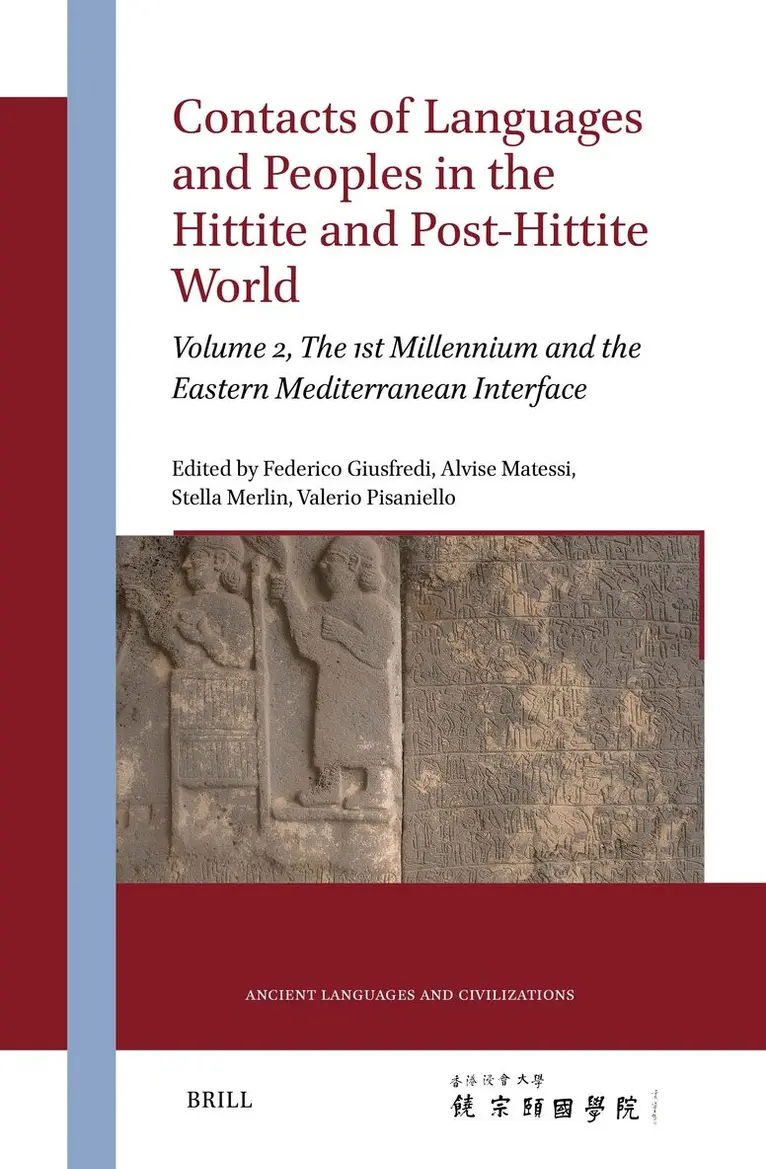
    Contacts of Languages and Peoples in the Hittite and Post-Hittite World

    Volume 2, The 1st Millennium and the Eastern Mediterranean Interface

    AvAlvise Matessi,Federico Giusfredi

    Inbunden, Engelska, 2025

    Del 11 i serien Ancient Languages and Civilizations

    1 650 kr

    Beställningsvara. Skickas inom 3-6 vardagar. Fri frakt över 249 kr.

    Beskrivning

    During the 1st millennium BCE, Pre-Classical Anatolia acted as a melting pot and crossroads of languages, cultures and peoples. The political map of the world changed after the collapse of the Bronze Age, the horizon of sea routes was expanded to new interregional networks, new writing systems emerged including the alphabets. The Mediterranean world changed dramatically, and Indo-European languages – Luwic, Lydian, but also Phrygian and Greek – interacted with increasing intensity with each other and with the neighbouring idioms and cultures of the Syro-Mesopotamian, Iranian and Aegean worlds.With an innovative combination of linguistic, historical and philological work, this book will provide a state-of-the-art description of the contacts at the linguistic and cultural boundary between the East and the West.

    Produktinformation

    • Utgivningsdatum:2025-06-12
    • Mått:155 x 235 x 38 mm
    • Vikt:973 g
    • Format:Inbunden
    • Språk:Engelska
    • Serie:Ancient Languages and Civilizations
    • Antal sidor:494
    • Förlag:Brill
    • ISBN:9789004729698

    Utforska kategorier

    • Språkvetenskap och lingvistik inom Språk och ordböcker
    • Arkeologiska perioder och områden inom Historia och arkeologi

    Mer om författaren

    Federico Giusfredi is associate professor of Ancient Near Eastern History at the University of Verona. His research focuses on the languages, texts and cultures of Pre-Classical Near East. Alvise Matessi is a postdoctoral researcher at the University of Verona. His research focuses on cultural and political landscapes and historical geography of the Pre-Classical Near East. Stella Merlin is a postdoctoral researcher at the Federico II University of Naples. Her research within the PALaC project mainly focuses on the language contact between Greek and Anatolian languages of the 1st millennium. Valerio Pisaniello is associate professor of Historical and General Linguistics at the "G. d'Annunzio" University of Chieti and Pescara. His research mainly focuses on linguistics and philology of the ancient Anatolian languages.

    Innehållsförteckning

    • List of FiguresAbbreviations1 Introduction to Volume 2F. Giusfredi, A. Matessi, S. Merlin and V. Pisaniello1 What is this volume?2 The structure of the book3 Multi-authored Chapters4 Chronologies: Addendum5 Philological Conventions: AddendumPart 1 The Ancient Near-Eastern Interface During the First Millennium2 The Dark AgeFederico Giusfredi and Alvise Matessi1 Toward the Iron Age in Anatolia and Syria: An introduction2 The political reorganization of the Ancient Near East during the Dark Age3 The fall of Hatti and its aftermath in central Anatolia4 Luwian Syro-Anatolia5 The linguistic map of the Ancient Near East after the end of the Bronze Age3 The Iron AgeAlvise Matessi and Federico Giusfredi1 Introduction2 The Syro-Anatolian area from the 10th century until the Assyrian conquest3 The Phrygian area4 Western Anatolia from the 10th century to the Achaemenids5 Concluding remarks4 Cilicia in the Iron AgeH. Craig Melchert1 Defining the topic2 The land3 Languages and speakers4 History5 Iron Age Luwian in its Anatolian and Syro-Mesopotamian contextsFederico Giusfredi and Valerio Pisaniello1 Introduction2 Lexical interference3 Grammatical interference4 Onomastics5 Concluding remarks6 Lycian and the Achaemenid EmpireValerio Pisaniello1 Lycia under Persian domination2 The Lycian language3 Sources for the study of Lycian–Iranian language contact4 Iranian influence on Lycian5 Lycian influence on Aramaic6 Lycians in the Achaemenid sources7 Concluding remarks7 Lydian and the languages of the Achaemenid EmpireElena Martínez Rodríguez1 Introduction2 Onomastics and phonetic interference3 Lexical interference4 Grammatical interference5 Concluding remarks8 Linguistic contact in the Anatolian Iron Age: The Phrygian dataBartomeu Obrador-Cursach1 Introduction: Phrygian, the Balkan language in central Anatolia2 Lexical borrowings concerning Phrygian3 Phonetic influences concerning Phrygian4 Morphological influences?5 Syntactical influences on Phrygian6 Phrygian bilinguals in the Iron Age7 Textual convergence concerning Phrygian8 Concluding remarks9 On the fringes: Kartvelian, Armenian, Etruscan, and LemnianZsolt Simon1 Introduction2 The northeastern periphery: The Kartvelian languages3 The northeastern periphery: Armenian4 The northwestern periphery: Etruscan and LemnianPart 2 The Eastern Mediterranean and Aegean Interface10 The Aegean–Anatolian Interface: Overview of the Late Bronze and Iron Age evidence (ca. 1400–700 BCE)Alvise Matessi1 Introduction2 The Ahhiyawa question and the historical interactions between Hittites and Mycenaeans3 Wiluša4 Sea Peoples and Philistines: An Aegean migration?5 Philistines in the north?6 Greeks in Cilicia? The problem of Hiyawa7 Concluding remarks11 The Mediterranean interface: Anatolia and the Aegean in the Bronze AgeStella Merlin and Valerio Pisaniello1 Introduction2 The challenge of Pre-Greek: issues, boundaries, and limits.3 The Greeks and the Ancient Near East4 Narrowing the focus: Greece and Bronze Age Anatolia5 The problem of Mycenaean–Anatolian contacts6 Concluding remarks12 Homer and AnatolianFilip De Decker and Stella Merlin1 Introduction2 Homeric Greek and Anatolian3 Concluding remarks13 The problem of the scholarly and late evidence: Anatolian glosses in GreekStella Merlin1 Introduction2 Types of sources and types of evidence3 Theoretical and methodological issues4 Long-memory echoes of Anatolian languages in Greek5 Concluding remarks14 The problem of lexical borrowings from Anatolian languages into GreekStella Merlin and Bartomeu Obrador-Cursach1 Theoretical premises2 Linguistic analysis of the relevant lexicon3 Summary and general discussion4 Concluding remarks15 Greek and the Anatolian languages of the first millennium: Lycian, Lydian, and CarianElena Martínez-Rodríguez and Stella Merlin1 Introduction2 Phonetic and morphological interference3 Grammatical interference4 Concluding remarks16 Late languages of marginal attestation: Pamphylian, Sidetic, and PisidianStella Merlin and Valerio Pisaniello1 Introduction2 Pamphylian3 Sidetic4 Pisidian5 Concluding remarks17 Conclusions to Volume 2F. Giusfredi, A. Matessi, S. Merlin and V. PisanielloAppendices: Addenda to Volume 1Appendix 1: A note on the language of KalašmaElisabeth Rieken and Ilya YakubovichAppendix 2: The language of KBo 19.164+David SassevilleReferencesIndex