• Fri frakt över 249 kr
  • •
  • Snabba leveranser
  • •
  • Billiga böcker
Kundservice

Du är på sajten för privatpersoner.

Företag, bibliotek eller offentlig verksamhet?

Du handlar på classic.bokus.com, där alla dina funktioner finns intakta.
Till classic.bokus.com
Bokus logotyp. Gå till startsidan.
  • Erbjudanden
  • Nyheter
  • Student
  • Topplistor
  • Barn & ungdom
  • Bokus Play
  • E-böcker
  • Pocketböcker
  • Spel & pussel

10% rabatt på allt med kod: NYSTART10 →

Sidfot

Mina sidor

    Hjälp

    • Kundservice
    • Vanliga frågor och svar
    • Frakt och leverans
    • Retur vid ångerrätt
    • Reklamera vara
    • Betalning
    • Köpvillkor
    • Allmänna villkor
    • Information om webbplatsens tillgänglighet

    Om Bokus

    • Om oss
    • Pressrum
    • För studenter
    • För företag
    • För bibliotek och offentlig verksamhet
    • För leverantörer
    • Hållbarhet

    Populärt

    • Aktuella erbjudanden
    • Presentkort
    • Studentlitteratur
    • Nya böcker
    • Topplistor
    • Signerade böcker
    • Engelska böcker

    Inspiration

    • Boktips
    • BookTok
    • Populära bokserier
    • Barnbokskaraktärer
    • Populära författare
    Logotyp för Bokus
    Följ oss på Facebook (extern länk)Följ oss på Instagram (extern länk)Följ oss på YouTube (extern länk)Följ oss på TikTok (extern länk)
    bokus @ CookiesAnpassa cookiesIntegritetspolicyKöpvillkor
    Till Citymail hemsida (extern länk)Till Budbee hemsida (extern länk)Till Postnord hemsida (extern länk)Till Schenker hemsida (extern länk)Till Early Bird hemsida (extern länk)Till Walleys hemsida (extern länk)
    1. Språk och ordböcker
    2. Språkvetenskap och lingvistik

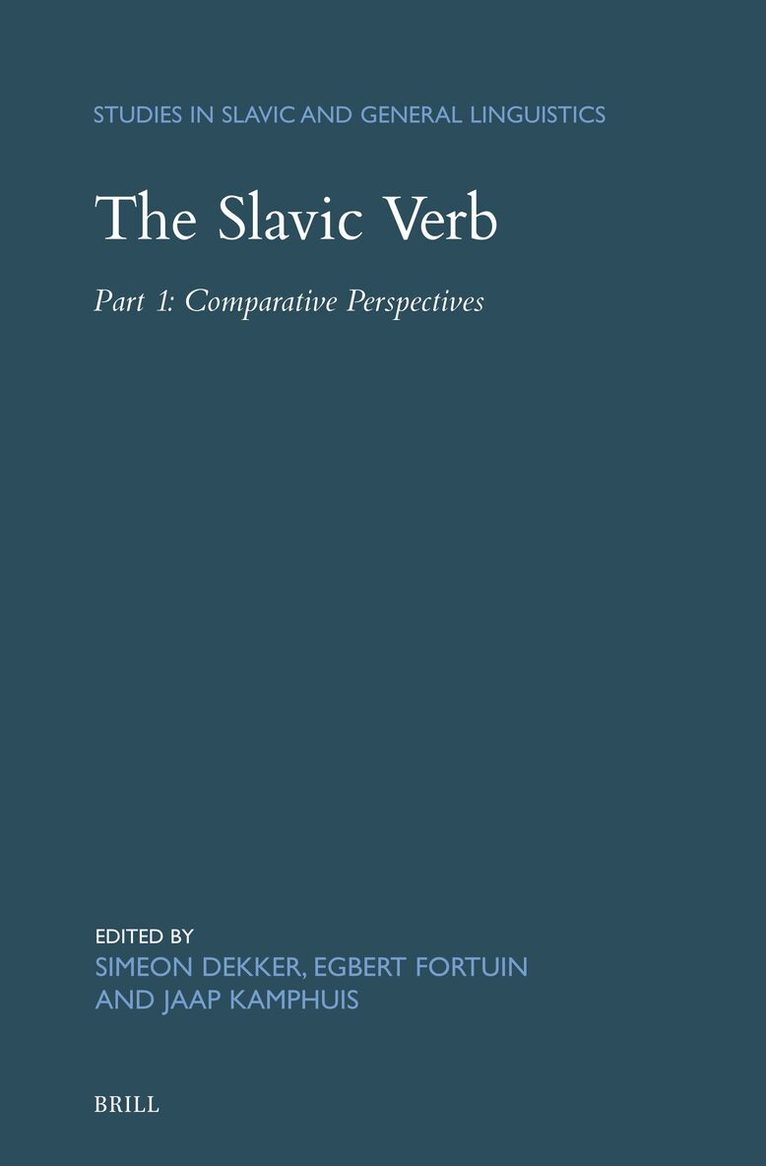
    Slavic Verb

    Part 1: Comparative Perspectives

    Inbunden, Engelska, 2025

    Del 48 i serien Studies in Slavic and General Linguistics

    2 254 kr

    Beställningsvara. Skickas inom 3-6 vardagar. Fri frakt över 249 kr.

    Beskrivning

    Both general linguists and Slavic specialists will find the Slavic verb to be a rich source of linguistic data. This book offers insights that contribute to a deeper understanding of both the Slavic languages and language structure more broadly.The first volume of this two-part work presents studies on the Slavic verb from a comparative perspective, focusing on analyses involving two or more Slavic languages. It includes contributions on verbal aspect (including biaspectuality, the East Slavic perfective, and the perfective present), semelfactive verbs, the pluperfect, phasal verbs, dative reflexive constructions, and anankastic modals. The empirical data span a broad range of Slavic languages—including Croatian, Russian, Serbian, Slovene dialects in Friuli, and Štokavian dialects in Albania—as well as studies adopting a cross-Slavic approach.

    Produktinformation

    • Utgivningsdatum:2025-12-11
    • Mått:155 x 235 x 28 mm
    • Vikt:732 g
    • Format:Inbunden
    • Språk:Engelska
    • Serie:Studies in Slavic and General Linguistics
    • Antal sidor:348
    • Förlag:Brill
    • ISBN:9789004731592

    Utforska kategorier

    • Språkvetenskap och lingvistik inom Språk och ordböcker

    Mer om författaren

    Simeon Dekker, Ph.D. (2016, Leiden University), is a researcher at the Justus Liebig University, Giessen. He investigates language contact between Polish and Ruthenian, cultural-historical terminology transfer in the Polish-Lithuanian Commonwealth, and the comparative use and development of verbal tenses in the history of the Slavic languages.Egbert Fortuin, Ph.D (2001, University of Amsterdam), is professor of Russian linguistics at Leiden University. He has published both on Russian grammar, syntax and semantics, and comparative grammar (syntax and semantics). He is currently editor of the journal Russian Linguistics. Jaap Kamphuis, Ph.D. (2016, Leiden University), has a background in South-Slavic linguistics and has published articles and a monograph on verbal aspect in Old Church Slavonic (OCS), as well as articles on the verb and verbal aspect in Macedonian, OCS, and from a typological perspective.