• Fri frakt över 249 kr
  • •
  • Snabba leveranser
  • •
  • Billiga böcker
Kundservice

Du är på sajten för privatpersoner.

Företag, bibliotek eller offentlig verksamhet?

Du handlar på classic.bokus.com, där alla dina funktioner finns intakta.
Till classic.bokus.com
Bokus logotyp. Gå till startsidan.
  • Erbjudanden
  • Nyheter
  • Student
  • Topplistor
  • Barn & ungdom
  • Bokus Play
  • E-böcker
  • Pocketböcker
  • Spel & pussel

10% rabatt på allt med kod: NYSTART10 →

Sidfot

Mina sidor

    Hjälp

    • Kundservice
    • Vanliga frågor och svar
    • Frakt och leverans
    • Retur vid ångerrätt
    • Reklamera vara
    • Betalning
    • Köpvillkor
    • Allmänna villkor
    • Information om webbplatsens tillgänglighet

    Om Bokus

    • Om oss
    • Pressrum
    • För studenter
    • För företag
    • För bibliotek och offentlig verksamhet
    • För leverantörer
    • Hållbarhet

    Populärt

    • Aktuella erbjudanden
    • Presentkort
    • Studentlitteratur
    • Nya böcker
    • Topplistor
    • Signerade böcker
    • Engelska böcker

    Inspiration

    • Boktips
    • BookTok
    • Populära bokserier
    • Barnbokskaraktärer
    • Populära författare
    Logotyp för Bokus
    Följ oss på Facebook (extern länk)Följ oss på Instagram (extern länk)Följ oss på YouTube (extern länk)Följ oss på TikTok (extern länk)
    bokus @ CookiesAnpassa cookiesIntegritetspolicyKöpvillkor
    Till Citymail hemsida (extern länk)Till Budbee hemsida (extern länk)Till Postnord hemsida (extern länk)Till Schenker hemsida (extern länk)Till Early Bird hemsida (extern länk)Till Walleys hemsida (extern länk)
    1. Språk och ordböcker
    2. Språkvetenskap och lingvistik

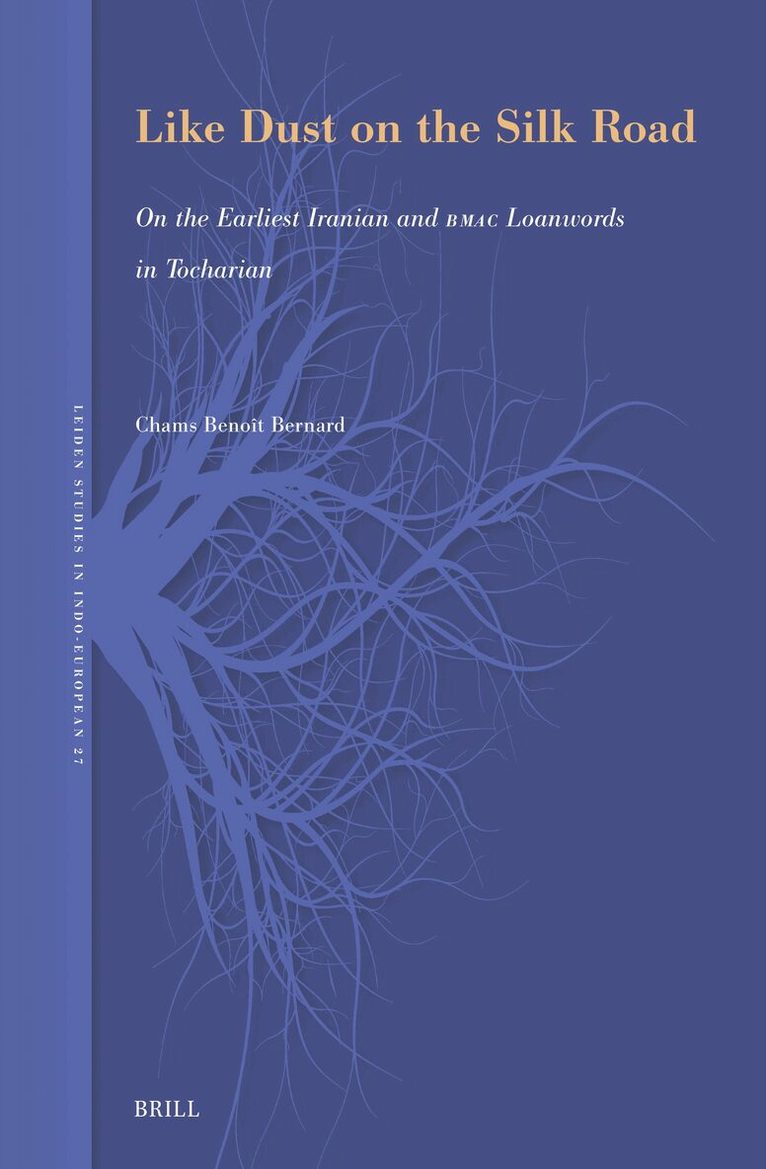
    Like Dust on the Silk Road

    On the Earliest Iranian and BMAC Loanwords in Tocharian

    AvChams Benoît Bernard

    Inbunden, Engelska, 2025

    Del 27 i serien Leiden Studies in Indo-European

    2 340 kr

    Beställningsvara. Skickas inom 3-6 vardagar. Fri frakt över 249 kr.

    Beskrivning

    "How did the Tocharians reach China?" "Who did they meet on the way?” are some of the most intriguing questions in Indo-European studies. This book is zooming in on a specific part of the question: on their way to China, Tocharians were in contact with an Iranian people living in the south Siberian Steppes, and with a people related to the Oxus Civilization (BMAC). This Iranian people spoke a specific language, called here “Old Steppe Iranian”. They gave Tocharians many words, such as mañiye ‘servant’, etswe ‘burden-carrying horse’ or ‘mule’, pāke ‘portion, share’. The BMAC-related people gave the Tocharians other words such as etre ‘hero’ and kercapo ‘donkey’. This book reconstructs features of the language of both these peoples, and examines how they influenced the Tocharians. Based on the latest archaeological findings, it also suggests a reconstruction of the chronology and the way the Tocharians followed before entering the Tarim Basin. Winner of the 2nd prize for the best dissertation of the Indogermanische Gesellschaft prize for the best Indo-European studies dissertation.

    Produktinformation

    • Utgivningsdatum:2025-06-12
    • Mått:155 x 235 x 25 mm
    • Vikt:636 g
    • Format:Inbunden
    • Språk:Engelska
    • Serie:Leiden Studies in Indo-European
    • Antal sidor:296
    • Förlag:Brill
    • ISBN:9789004732520

    Utforska kategorier

    • Språkvetenskap och lingvistik inom Språk och ordböcker

    Mer om författaren

    Chams Benoît Bernard, Ph.D. (2023), is an independent scholar, a linguist and an Arabic and Persian interpreter. He works on literature, poetry, and has a particular interest in the history of languages, and etymology. He has published articles and works on various topics, such as Middle and New Persian, Tocharian etymology, Judeo-Persian, Indo-European and Semitic languages as well as religious studies.

    Innehållsförteckning

    • Acknowledgments1 Introduction1.1 Tocharian and Iranian1.2 State of the art1.3 Research issues1.4 Methodology1.5 Structure1.6 Spelling of Tocharian stress1.7 Alphabetic order2 Old Steppe Iranian Loanwords in Tocharian2.1 Introduction2.2 Old Steppe Iranian borrowings: plausible cases2.3 Old Steppe Iranian borrowings: possible cases2.4 Old Steppe Iranian borrowings: difficult cases2.5 Old Steppe Iranian borrowings: rejected cases2.6 Old Steppe Iranian calques in Tocharian2.7 Discussion of the features of Old Steppe Iranian3 BMAC Words in Tocharian (a Selective Survey)3.1 Introduction3.2 Analysis of potential BMAC loanwords in Tocharian3.3 Other possible BMAC loanwords in Tocharian3.4 Discussion4 Conclusion4.1 Results4.2 The Tocharian wayAppendix 1: The Tocharian Word for ‘Parrot’ and Its OriginAppendix 2: On the Etymology of Tocharian B patstsāṅk and Tocharian A pātsaṅk ‘Window’BibliographyIndex