• Fri frakt över 249 kr
  • •
  • Snabba leveranser
  • •
  • Billiga böcker
Kundservice

Du är på sajten för privatpersoner.

Företag, bibliotek eller offentlig verksamhet?

Du handlar på classic.bokus.com, där alla dina funktioner finns intakta.
Till classic.bokus.com
Bokus logotyp. Gå till startsidan.
  • Erbjudanden
  • Nyheter
  • Student
  • Topplistor
  • Barn & ungdom
  • Bokus Play
  • E-böcker
  • Pocketböcker
  • Spel & pussel

10% rabatt på allt med kod: NYSTART10 →

Sidfot

Mina sidor

    Hjälp

    • Kundservice
    • Vanliga frågor och svar
    • Frakt och leverans
    • Retur vid ångerrätt
    • Reklamera vara
    • Betalning
    • Köpvillkor
    • Allmänna villkor
    • Information om webbplatsens tillgänglighet

    Om Bokus

    • Om oss
    • Pressrum
    • För studenter
    • För företag
    • För bibliotek och offentlig verksamhet
    • För leverantörer
    • Hållbarhet

    Populärt

    • Aktuella erbjudanden
    • Presentkort
    • Studentlitteratur
    • Nya böcker
    • Topplistor
    • Signerade böcker
    • Engelska böcker

    Inspiration

    • Boktips
    • BookTok
    • Populära bokserier
    • Barnbokskaraktärer
    • Populära författare
    Logotyp för Bokus
    Följ oss på Facebook (extern länk)Följ oss på Instagram (extern länk)Följ oss på YouTube (extern länk)Följ oss på TikTok (extern länk)
    bokus @ CookiesAnpassa cookiesIntegritetspolicyKöpvillkor
    Till Citymail hemsida (extern länk)Till Budbee hemsida (extern länk)Till Postnord hemsida (extern länk)Till Schenker hemsida (extern länk)Till Early Bird hemsida (extern länk)Till Walleys hemsida (extern länk)
    1. Psykologi och pedagogik
    2. Pedagogik

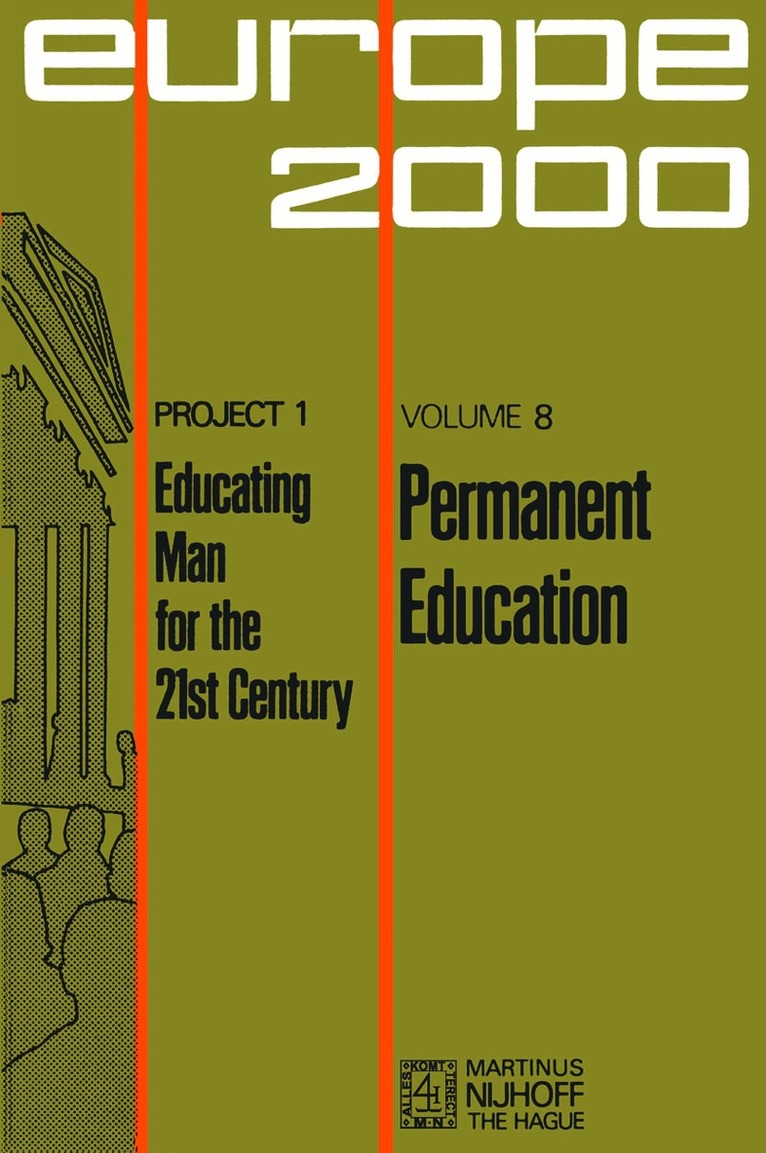
    Permanent Education

    AvB. Schwartz

    Häftad, Engelska, 1974

    Del i serien Plan Europe 2000, Project 1: Educating Man for the 21st Century

    1 055 kr

    Beställningsvara. Skickas inom 10-15 vardagar. Fri frakt över 249 kr.

    Fler format och utgåvor

    E-bok

    1 373 kr

    Beskrivning

    The educational study presented here is an attempted synthesis of work carried out over the past two years by different people each of whom in his or her own special field of activity has enquired into the means of implementing a policy of permanent education. Although I naturally assume entire responsibility for the final text, the latter must, however, be regarded as the culmination of collective work. Huguette Flamand and Fram;ois Lebouteux have together with myself been responsible for the development of the project in all its stages. We have benefited from the contributions of Messrs. Amiot, Antoine, Balcon, Berbain, Mrs. de Boissieu, Mr. Boulanger, Mrs. Castaguo, Messrs. Cousin, Durand, Elie, Guigou, Hautenauve, Hum- bert jean, Mrs. Knecht, Messrs. Littoz-Baritel, Malglaive, Perriault, Miss Remy, Mr. Schmidt. With their agreement, their texts, a list of which is given in an appendix, have been integrated into the study without specific mention. Others who have been kind enough, at our request, to assume the thankless role of adviser and critic at various stages in the course of this work are Mrs. Puybasset, Messrs.Caspar, Girod de l'Ain, Migne, Palmade, Pechenart and Sicard-Alliot. I thank them all here, hoping that I have in no way betrayed their intentions and think they will find in this text a faithful reflection of their ideas and the echo of their own concerns. Finally, we have benefited from the many contacts which we were able to make in France and abroad.

    Produktinformation

    • Utgivningsdatum:1974-11-30
    • Mått:155 x 235 x 15 mm
    • Vikt:417 g
    • Format:Häftad
    • Språk:Engelska
    • Serie:Plan Europe 2000, Project 1: Educating Man for the 21st Century
    • Antal sidor:269
    • Upplaga:1974
    • Förlag:Springer
    • ISBN:9789024716487

    Utforska kategorier

    • Pedagogik inom Psykologi och pedagogik

    Innehållsförteckning

    • I. System of Values Underlying This Project.- What Type of Society?.- For What Kind of Man?.- II. Main Trends and Margins of Choice.- Central Hypotheses.- Concentration of Means of Production.- Concentration of Decision-Making.- Increasing Division of Labour.- Increasing Leisure Time.- Increasing Consumption of Goods and Services.- Proliferation of Information.- Increasing Demand for Education.- A Plan for Education is Always a Political Plan.- III. The Political and the Educational.- Education: Product and Motive Force.- Under What Circumstances Can Social Conditions be a Cultural Factor?.- To What Extent Can the Educational System Correct Cultural Inequalities?.- The Proposal We are Backing: Permanent Education.- IV. Guiding Principles of Our Plan.- Continuity in Space and Time — Structural Incidences.- Developing and Using Human Faculties to the Full — Definition of This Principle — Structural incidences.- V. General Structures.- Pre-School Education.- The Basic School.- Post-School Education.- VI. General Education and Specialization.- What is General Education?.- Curricula Only Have Meaning When Related to Objectives.- Definition of General Education — Our Aims.- General Education and Common Curriculum.- General Education and Special Options.- VII. Assisted Independent Learning, Auto-Assessment and Autonomy.- Introductory remarks.- How Modern Technology is Likely to Affect the Fundamentals of Teaching Methods.- Methods of Self-Education.- Self-Assessment.- Assisting Independent Learners.- By Way of Conclusion: Pluralism.- VIII. Creativity and Socialization.- Education for Personal Development.- Development of Creativity.- Development of Man as a Social Being.- IX. The Educational and Cultural District.- Purposes and Size of the District.- The DistrictAdministration Knows, Informs and Guides the Consumers.- The District Offers Courses Matched to Demand.- The District Recruits, Manages and Trains Its Teaching Staff.- The District Organizes, Manages and Distributes Aids and Equipment.- The District as a Public Concern.- X. Functions of Central Administration.- Definition and Implementation of an Educational Policy.- Predicting demand and planning. Programmes and curricula. Evaluation of methods. Legislation.- Organizing Public Information and Participation.- Implementation of a Policy for Teacher Training and Utilization.- Implementation of a Policy for the Development of Educational Technology.- Implementation of a Policy for Educational Research and Innovation.- Conclusion.- The Problem of Costs.- Initial Steps — the Transition Period.- Annexes.- I — Educational credit.- II — System of capitalizable units.- III — An example of a primary school in Great Britain.- V — An adult education scheme in the Lorraine Iron Ore Mining District.- VI — Implications of open-plan schools.- VII — The use of a medium (film) as an aid in self-instruction.- VIII — The Handen (Sweden) public library.- The Author.