• Fri frakt över 249 kr
  • •
  • Snabba leveranser
  • •
  • Billiga böcker
Kundservice

Du är på sajten för privatpersoner.

Företag, bibliotek eller offentlig verksamhet?

Du handlar på classic.bokus.com, där alla dina funktioner finns intakta.
Till classic.bokus.com
Bokus logotyp. Gå till startsidan.
  • Erbjudanden
  • Nyheter
  • Student
  • Topplistor
  • Barn & ungdom
  • Bokus Play
  • E-böcker
  • Pocketböcker
  • Spel & pussel

10% rabatt på allt med kod NYSTART10 →

Sidfot

Mina sidor

    Hjälp

    • Kundservice
    • Vanliga frågor och svar
    • Frakt och leverans
    • Retur vid ångerrätt
    • Reklamera vara
    • Betalning
    • Köpvillkor
    • Allmänna villkor
    • Information om webbplatsens tillgänglighet

    Om Bokus

    • Om oss
    • Pressrum
    • För studenter
    • För företag
    • För bibliotek och offentlig verksamhet
    • För leverantörer
    • Hållbarhet

    Populärt

    • Aktuella erbjudanden
    • Presentkort
    • Studentlitteratur
    • Nya böcker
    • Topplistor
    • Signerade böcker
    • Engelska böcker

    Inspiration

    • Boktips
    • BookTok
    • Populära bokserier
    • Barnbokskaraktärer
    • Populära författare
    Logotyp för Bokus
    Följ oss på Facebook (extern länk)Följ oss på Instagram (extern länk)Följ oss på YouTube (extern länk)Följ oss på TikTok (extern länk)
    bokus @ CookiesAnpassa cookiesIntegritetspolicyKöpvillkor
    Till Citymail hemsida (extern länk)Till Budbee hemsida (extern länk)Till Postnord hemsida (extern länk)Till Schenker hemsida (extern länk)Till Early Bird hemsida (extern länk)Till Walleys hemsida (extern länk)
    1. Naturvetenskap och teknik
    2. Matematik och naturvetenskap
    3. Astronomi

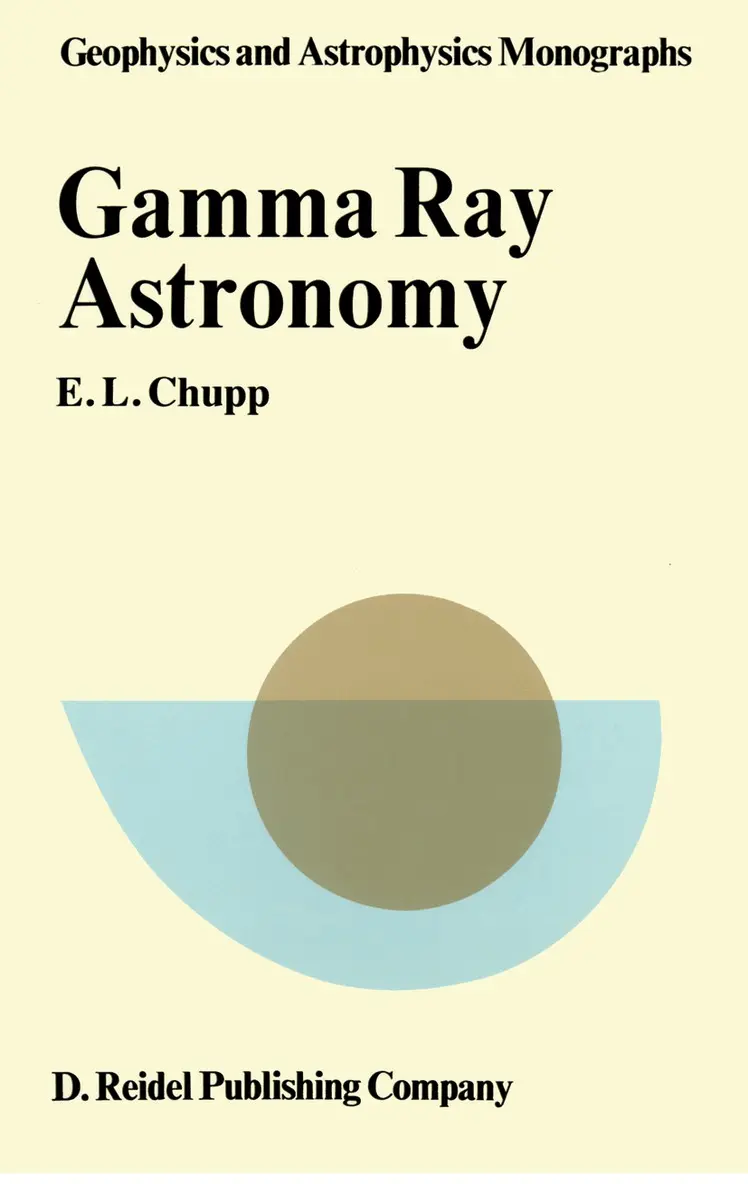
    Gamma-Ray Astronomy

    Nuclear Transition Region

    AvE.L. Chupp

    Häftad, Engelska, 1976

    Del i serien Geophysics and Astrophysics Monographs

    1 085 kr

    Beställningsvara. Skickas inom 10-15 vardagar. Fri frakt över 249 kr.

    Fler format och utgåvor

    E-bok

    1 416 kr

    Beskrivning

    Observation of discrete energy electromagnetic emissions from celestial objects in the radio, IR, optical, lN, and X-ray spectral regions has dramatically advanced our know­ ledge in the field of astrophysics. It is expected that identification of nuclear 'Y-ray line emissions from any cosmic source would also prove to be a powerful new tool for probing the Universe. Since the publication of Morrison's work in 1958, many experiments were carried out searching for evidence of 'Y-ray lines from cosmic sources, however with little success. Only a few positive experimental results have been reported, in spite of an expenditure of considerable effort by many people: in particular, the possible Galactic Center emission line (473 to 530keV) and 'Y-ray lines at several energies (e. g. , 0. 5 MeV and 2. 2 MeV) associated with large solar flares. Both of these observations are unconfirmed by indepen­ dent observations (ca. 1975). The high energy 'Y-rays (>30MeV) from the Galactic Center are at least partly due to the decay of 1[0 mesons, which are of unique energy (67. 5 MeV) in the 1[0 rest frame only. The reasons for the limited amount of data avail­ able in this field, even though early theoretical predictions were very optimistic regarding fluxes of nuclear lines, are that experimental efforts are plagued with high backgrounds and low fluxes, and that development of instruments with telescopic properties in the energy range of interest is difficult.

    Produktinformation

    • Utgivningsdatum:1976-12-31
    • Mått:155 x 235 x 19 mm
    • Vikt:511 g
    • Format:Häftad
    • Språk:Engelska
    • Serie:Geophysics and Astrophysics Monographs
    • Antal sidor:336
    • Förlag:Springer
    • ISBN:9789027706966

    Utforska kategorier

    • Astronomi inom Naturvetenskap och teknik

    Innehållsförteckning

    • I. Introduction.- 1.1. Brief History of Attempts to Detect Celestial ?-Rays < 50 MeV.- 1.2. Astrophysical Significance of ?-Ray Line Astronomy.- II. Mechanisms for ?-Ray Line and Continuum Production.- 2.1. Basic Mechanisms and Sources.- 2.2. Thermal Radiation Field.- 2.3. Particle-Field Interactions.- 2.4. Particle-Matter Interactions.- 2.5. Special Effects.- 2.6. Summary of ?-Ray Spectra.- III. Theoretical Estimates of ?-Ray Emission.- 3.1. Solar ?-Rays.- 3.2. Cosmic Sources (Point and Localized).- 3.3. Cosmic Diffuse Sources.- IV. Interaction of ?-Rays with Matter.- 4.1. ?-Ray Properties.- 4.2. Interaction Processes.- V. ?-Ray Flux Observations.- 5.1. Solar Observations.- 5.2. Cosmic Observations (Point and Localized Sources).- 5.3. Diffuse ?-Ray Flux Observations (100 keV to 100 MeV).- 5.4. Transient ?-Ray Bursts.- VI. Experimental Considerations for Nuclear ?-Ray Astronomy.- 6.1. Background Factors.- 6.2. Design Limitations.- 6.3. Current Detection Methods.- VII. Conclusions.- Notes Added in Proof.- Appendices.- A. Attenuation Coefficients for ?-Ray Interactions.- B. Conversion Factors for Energy Units.- References.