• Fri frakt över 249 kr
  • •
  • Snabba leveranser
  • •
  • Billiga böcker
Kundservice

Du är på sajten för privatpersoner.

Företag, bibliotek eller offentlig verksamhet?

Du handlar på classic.bokus.com, där alla dina funktioner finns intakta.
Till classic.bokus.com
Bokus logotyp. Gå till startsidan.
  • Erbjudanden
  • Nyheter
  • Student
  • Topplistor
  • Barn & ungdom
  • Bokus Play
  • E-böcker
  • Pocketböcker
  • Spel & pussel

10% rabatt på allt med kod: NYSTART10 →

Sidfot

Mina sidor

    Hjälp

    • Kundservice
    • Vanliga frågor och svar
    • Frakt och leverans
    • Retur vid ångerrätt
    • Reklamera vara
    • Betalning
    • Köpvillkor
    • Allmänna villkor
    • Information om webbplatsens tillgänglighet

    Om Bokus

    • Om oss
    • Pressrum
    • För studenter
    • För företag
    • För bibliotek och offentlig verksamhet
    • För leverantörer
    • Hållbarhet

    Populärt

    • Aktuella erbjudanden
    • Presentkort
    • Studentlitteratur
    • Nya böcker
    • Topplistor
    • Signerade böcker
    • Engelska böcker

    Inspiration

    • Boktips
    • BookTok
    • Populära bokserier
    • Barnbokskaraktärer
    • Populära författare
    Logotyp för Bokus
    Följ oss på Facebook (extern länk)Följ oss på Instagram (extern länk)Följ oss på YouTube (extern länk)Följ oss på TikTok (extern länk)
    bokus @ CookiesAnpassa cookiesIntegritetspolicyKöpvillkor
    Till Citymail hemsida (extern länk)Till Budbee hemsida (extern länk)Till Postnord hemsida (extern länk)Till Schenker hemsida (extern länk)Till Early Bird hemsida (extern länk)Till Walleys hemsida (extern länk)
    1. Naturvetenskap och teknik
    2. Matematik och naturvetenskap
    3. Astronomi

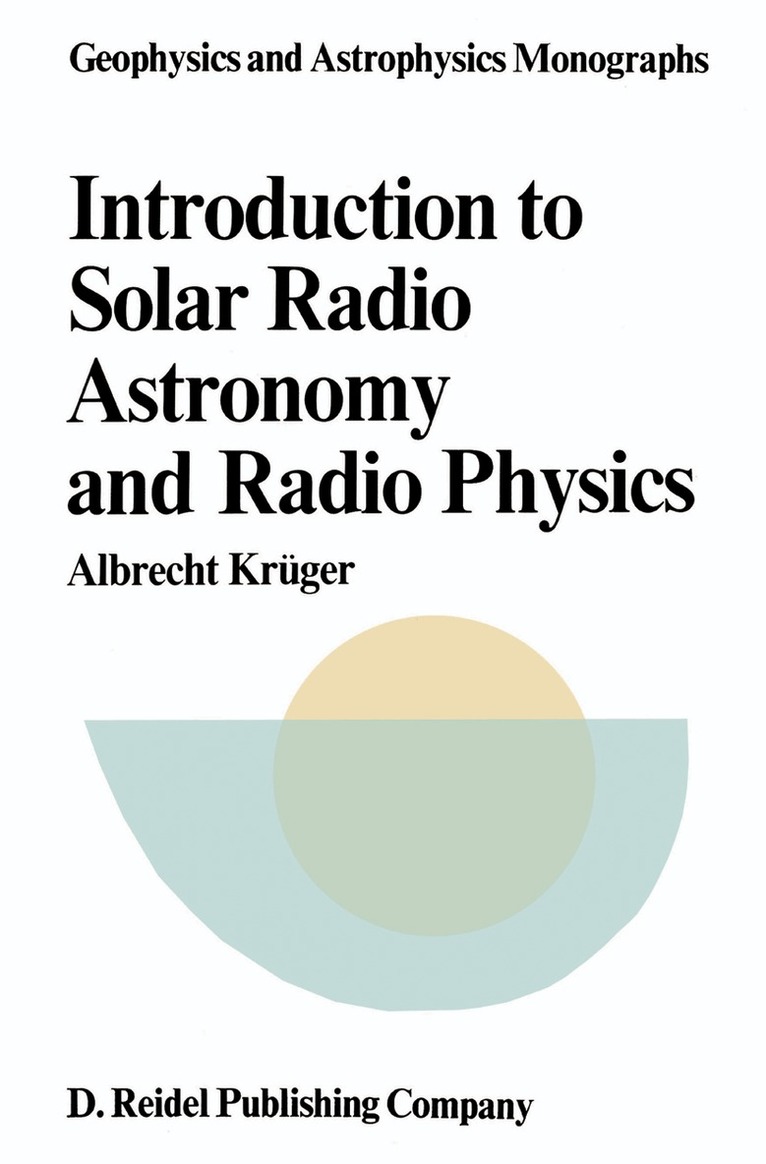
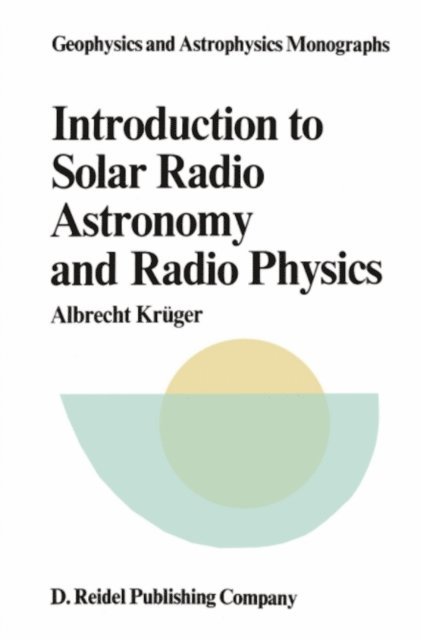
    Introduction to Solar Radio Astronomy and Radio Physics

    AvA. Krüger

    Inbunden, Engelska, 1979

    Del i serien Geophysics and Astrophysics Monographs

    1 626 kr

    Beställningsvara. Skickas inom 10-15 vardagar. Fri frakt över 249 kr.

    Fler format och utgåvor

    Häftad

    1 626 kr

    E-bok

    2 044 kr

    Beskrivning

    1. 1. Short History of Solar Radio Astronomy Since its birth in the forties of our century, solar radio astronomy has grown into an extensive scientific branch comprising a number of quite different topics covering technical sciences, astrophysics, plasma physics, solar-terrestrial physics, and other disciplines. Historically, the story of radio astronomy goes back to the times of James Clerk Maxwell, whose well known phenomenological electromagnetic field equations have become the basis of present-time radio physics. As a direct consequence of these equations, Maxwell was able to prognosticate the existence of radio waves which fifteen years later were experimentally detected by the famous work of Heinrich Hertz (1887/88). However, all attempts to detect radio waves from cosmic objects failed until 1932, which was mainly due to the early stage of development of receiving techniques and the as yet missing knowledge of the existence of a screening ionosphere (which was detected in 1925). Therefore, famous inventors like Thomas Edison and A. E. Kennelly, as well as Sir Oliver Lodge, were unsuccessful in receiving any radio emission from the Sun or other extraterrestrial sources. Another hindering point was that nobody could a priori expect that solar radio emission should have something to do with solar activity so that unfortunately by chance some experiments were carried out just at periods of low solar activity. This was also why Karl Guthe Jansky at the birth of radio astronomy detected galactic radio waves but no emission from the Sun.


    Produktinformation

    • Utgivningsdatum:1979-10-31
    • Mått:155 x 235 x 24 mm
    • Vikt:696 g
    • Format:Inbunden
    • Språk:Engelska
    • Serie:Geophysics and Astrophysics Monographs
    • Antal sidor:332
    • Upplaga:1979
    • Förlag:Springer
    • ISBN:9789027709578

    Utforska kategorier

    • Astronomi inom Naturvetenskap och teknik

    Innehållsförteckning

    • I Introduction.- 1.1. Short History of Solar Radio Astronomy.- 1.2. General Views of the Sun.- 1.3. Some Astronomical Fundamentals.- II Instrumental Background.- 2.1. Fundamentals of Radio Observations.- 2.2. Radio Telescope Aerials.- 2.3. Radio Astronomy Receivers.- 2.4. Polarization Measurements.- 2.5. Absolute Calibration Experiments.- 2.6. Spectrography.- 2.7 Interferometry and Heliography.- 2.8. Aperture-Synthesis Methods.- III Phenomenology of Solar Radio Emission.- 3.1. The ‘Quiet’ Sun.- 3.2. The Slowly Varying Component.- 3.3. Solar Continuum Bursts (a): Microwave Bursts.- 3.4. Fast-Drift Bursts.- 3.5. Slow-Drift Bursts.- 3.6. Continuum Bursts (b): The Type IV Burst Complex.- 3.7. Noise Storms.- 3.8. Solar Radio Pulsations.- IV Theory of Solar Radio Emission.- 4.1. Basic Properties of the Solar Atmosphere as a Plasma Medium.- 4.2. Fundamentals of the Emission and Propagation of Radio Waves.- 4.3. Single-Particle Approximation: An Account of Direct Radio Emission Mechanisms.- 4.4. Cold-Plasma Approximation: Some Aspects of Synchrotron Radiation and Cerenkov Radiation.- 4.5. Warm-Plasma Effects: Gyroresonance Absorption and Plasma Waves.- 4.6. Wave-Mode Transformations: Wave-Particle and Wave-Wave Interactions.- 4.7. Instabilities and Coherent Emission.- V Integration of Radio Astronomy into Solar and Solar-Terrestrial Physics.- 5.1. Estimation of Solar Plasma Parameters.- 5.2. The Flare Phenomenon.- 5.3. Particle Acceleration and Energy Release.- 5.4. Particle Radiation and Radio Waves.- 5.5. Shock Waves and Magnetospheric Disturbances.- 5.6. Burst Origin and Flare Theories.- 5.7. Summary and Prospects.- Literature.- List of Symbols.