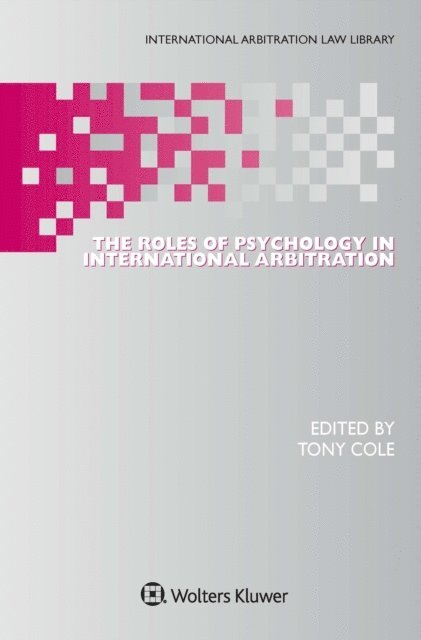
E-bok, Engelska, 2017
Roles of Psychology in International Arbitration
Av Tony Cole
2641 kr
Skickas tisdag 13/10
Beskrivning
The system of international arbitration is built on private contractual relations, yet has been endorsed by governments around the world as a fair and reliable alternative to litigation in State courts. As a private process, however, its authority and legitimacy derive entirely from the views and actions of those involved in the arbitral process, whether arbitrators, counsel, or parties. It is, though increasingly clear that psychological factors complicate, and in some cases radically change, every arbitral proceeding. In this context, psychological insights are crucial for understanding how international arbitration genuinely operates, and whether the legal framework currently applied to it is well-suited to achieving the aims of ensuring a fair and reliable dispute resolution procedure. This is the first book to focus on this important issue: the insights into international arbitration that can be gained from contemporary psychology.
With contributions from nineteen internationally known figures in their fields – arbitrators, mediators, lawyers, law professors, psychology professors, psychologists – and drawing from a longer term project on the role of psychology in arbitration, this ground-breaking volume addresses a range of topics, including the following:
- - the decision-making processes of arbitrators;
- - the ability of arbitration to serve as a genuine dispute resolution mechanism;
- - the impact of particular procedures on the arbitral process;
- - bias, self-deception and vested interests in judgment and decision-making;
- - the role of arbitrators in managing the arbitral process;
- - cultural differences in the evaluation of arguments;
- - psychological influences on witness testimony;
- - the impact of tribunal composition on arbitral decision-making;
- - the influence of arbitration’s professional context on arbitrators and legal counsel; and
- - methods for arbitrators and legal counsel to more effectively manage the arbitral process.
Informed by the behavioural insights in these essays, counsel and arbitrators will be enabled to think critically about the underlying assumptions and the potential behavioural effects of a prospective arbitration, while individuals researching arbitration will gain a greater understanding of the psychological context in which every arbitration occurs.
This book meets the increasingly recognized need for understanding the role of psychology in arbitral proceedings, and forms an indispensable foundation for subsequent work in this area. Its innovative and forward-thinking analysis will be of immeasurable value to the international arbitration community, as well as to institutions supporting arbitration and to academics in the field.
Produktinformation
- Utgivningsdatum: 2017-03-15
- Språk: Engelska
- Filformat: PDF
- Kopieringsskydd: LCP
- ISBN: 9789041166050
- Förlag: Wolters Kluwer
Utforska kategorier
Betyg & recensioner
0 recensioner
Inga recensioner tillgängliga.