• Fri frakt över 249 kr
  • •
  • Snabba leveranser
  • •
  • Billiga böcker
Kundservice

Du är på sajten för privatpersoner.

Företag, bibliotek eller offentlig verksamhet?

Du handlar på classic.bokus.com, där alla dina funktioner finns intakta.
Till classic.bokus.com
Bokus logotyp. Gå till startsidan.
  • Erbjudanden
  • Nyheter
  • Student
  • Topplistor
  • Barn & ungdom
  • Bokus Play
  • E-böcker
  • Pocketböcker
  • Spel & pussel

10% rabatt på allt med kod: NYSTART10 →

Sidfot

Mina sidor

    Hjälp

    • Kundservice
    • Vanliga frågor och svar
    • Frakt och leverans
    • Retur vid ångerrätt
    • Reklamera vara
    • Betalning
    • Köpvillkor
    • Allmänna villkor
    • Information om webbplatsens tillgänglighet

    Om Bokus

    • Om oss
    • Pressrum
    • För studenter
    • För företag
    • För bibliotek och offentlig verksamhet
    • För leverantörer
    • Hållbarhet

    Populärt

    • Aktuella erbjudanden
    • Presentkort
    • Studentlitteratur
    • Nya böcker
    • Topplistor
    • Signerade böcker
    • Engelska böcker

    Inspiration

    • Boktips
    • BookTok
    • Populära bokserier
    • Barnbokskaraktärer
    • Populära författare
    Logotyp för Bokus
    Följ oss på Facebook (extern länk)Följ oss på Instagram (extern länk)Följ oss på YouTube (extern länk)Följ oss på TikTok (extern länk)
    bokus @ CookiesAnpassa cookiesIntegritetspolicyKöpvillkor
    Till Citymail hemsida (extern länk)Till Budbee hemsida (extern länk)Till Postnord hemsida (extern länk)Till Schenker hemsida (extern länk)Till Early Bird hemsida (extern länk)Till Walleys hemsida (extern länk)
    1. Skönlitteratur
    2. Litteraturvetenskap

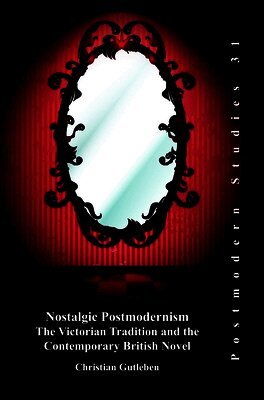
    Nostalgic Postmodernism

    The Victorian Tradition and the Contemporary British Novel

    AvChristian Gutleben

    Häftad, Engelska, 2001

    Del 31 i serien Postmodern Studies

    2 076 kr

    Beställningsvara. Skickas inom 5-8 vardagar. Fri frakt över 249 kr.

    Beskrivning

    Why do so many contemporary British novels revert to the Victorian tradition in order to find a new source of inspiration? What does it mean from an ideological point of view to build a modern form of art by resurrecting and recycling an art of the past? From a formal point of view what are the aesthetic priorities established by these postmodernist novels? Those are the main questions tackled by this study intended for anybody interested in the aesthetic and ideological evolution of very recent fiction.What this analysis ultimately proposes is a reevaluation and a redefinition of postmodernism such as it is illustrated by the British novels which paradoxically both praise and mock, honour and debunk, imitate and subvert their Victorian models. Unashamedly opportunistic and deliberately exploiting the spirit of the time, this late form of postmodernism cannibalizes and reshapes not only Victorianism but all the other previous aesthetic movements - including early postmodernism.

    Produktinformation

    • Utgivningsdatum:2001-01-01
    • Mått:155 x 235 x 13 mm
    • Vikt:386 g
    • Format:Häftad
    • Språk:Engelska
    • Serie:Postmodern Studies
    • Antal sidor:4
    • Förlag:Brill
    • ISBN:9789042012974

    Utforska kategorier

    • Litteraturvetenskap inom Skönlitteratur

    Recensioner i media

    ”…a rewarding read for anyone interested in postmodernist literature in general and, more specifically, in those novels that rewrite the Victorian tradition …” in: Miscelánea: a Journal of English and American Studies 26 (2002), pp. 103-108

    Innehållsförteckning

    • Introduction.Part I: Pastiche, pastiche: the fascination of Victorianism. Chapter 1: Victorian echoes: resurrected voices. The epigraphs, or the voices of the masters. The quotational practice: an aesthetic surplus. The derivative nature of pastiche. The parodic transformation of voices: depreciation or homage? The foregrounding of Victorian outcasts: the voices of postmodern fashion. When Victorian voices invade a whole novel... Chapter 2: On the surface of the looking glass: an aesthetic and ideological model. ‘The fascination of Narrative’. The metonymic pole. The documentary aspect. David Lodge’s Nice Work: plus ça change... A.S. Byatt’s Possession: ‘making the past your world’.Part II: Postmodernism as otherness: the temptation of revisitation. Chapter 1: The parodic vein: ludic subversion. The disfigurement of the great Victorian figures. When playfulness becomes a guiding principle. Invigorating the new with the old: the regenerative art of parody in John Fowles’s The French Lieutenant’s Woman. Chapter 2: Postmodern strategies of distanciation. An in-depth change of the surface. An aesthetics of the unsavoury. The delights of uncertainty. Fragmentation as the new consensus. The epitome of late twentieth-century postmodernist aesthetics: Graham Swift’s Ever After. Part III: Nostalgic Postmodernism: the paradox of an iconoclastic homage. Chapter 1: The limits of subversion: the tyranny of the politically correct. The precedents of modernism and early postmodernism. Further qualifications and clarifications. A favourable climate or a profitable vein. Sex and crinolines: a combination aimed at seduction. How to be subversive and seductive at the same time: D.M. Thomas’s Charlotte: The final journey of Jane Eyre. Chapter 2: Postmodernism and the past: An ambiguous relation to the Victorian ancestors. An equivocal kinship. Nostalgic subversion: an oxymoric art. Evolution, not revolution: postmodernism as illustrated by retro-Victorian fiction. Conclusion. Works Cited. Index.