• Fri frakt över 249 kr
  • •
  • Snabba leveranser
  • •
  • Billiga böcker
Kundservice

Du är på sajten för privatpersoner.

Företag, bibliotek eller offentlig verksamhet?

Du handlar på classic.bokus.com, där alla dina funktioner finns intakta.
Till classic.bokus.com
Bokus logotyp. Gå till startsidan.
  • Erbjudanden
  • Nyheter
  • Student
  • Topplistor
  • Barn & ungdom
  • Bokus Play
  • E-böcker
  • Pocketböcker
  • Spel & pussel

10% rabatt på allt med kod: NYSTART10 →

Sidfot

Mina sidor

    Hjälp

    • Kundservice
    • Vanliga frågor och svar
    • Frakt och leverans
    • Retur vid ångerrätt
    • Reklamera vara
    • Betalning
    • Köpvillkor
    • Allmänna villkor
    • Information om webbplatsens tillgänglighet

    Om Bokus

    • Om oss
    • Pressrum
    • För studenter
    • För företag
    • För bibliotek och offentlig verksamhet
    • För leverantörer
    • Hållbarhet

    Populärt

    • Aktuella erbjudanden
    • Presentkort
    • Studentlitteratur
    • Nya böcker
    • Topplistor
    • Signerade böcker
    • Engelska böcker

    Inspiration

    • Boktips
    • BookTok
    • Populära bokserier
    • Barnbokskaraktärer
    • Populära författare
    Logotyp för Bokus
    Följ oss på Facebook (extern länk)Följ oss på Instagram (extern länk)Följ oss på YouTube (extern länk)Följ oss på TikTok (extern länk)
    bokus @ CookiesAnpassa cookiesIntegritetspolicyKöpvillkor
    Till Citymail hemsida (extern länk)Till Budbee hemsida (extern länk)Till Postnord hemsida (extern länk)Till Schenker hemsida (extern länk)Till Early Bird hemsida (extern länk)Till Walleys hemsida (extern länk)
    1. Psykologi och pedagogik
    2. Psykologi
    3. Psykologiska teorier och skolor

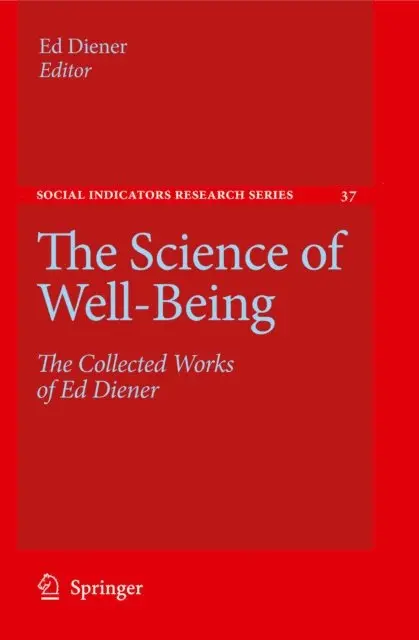
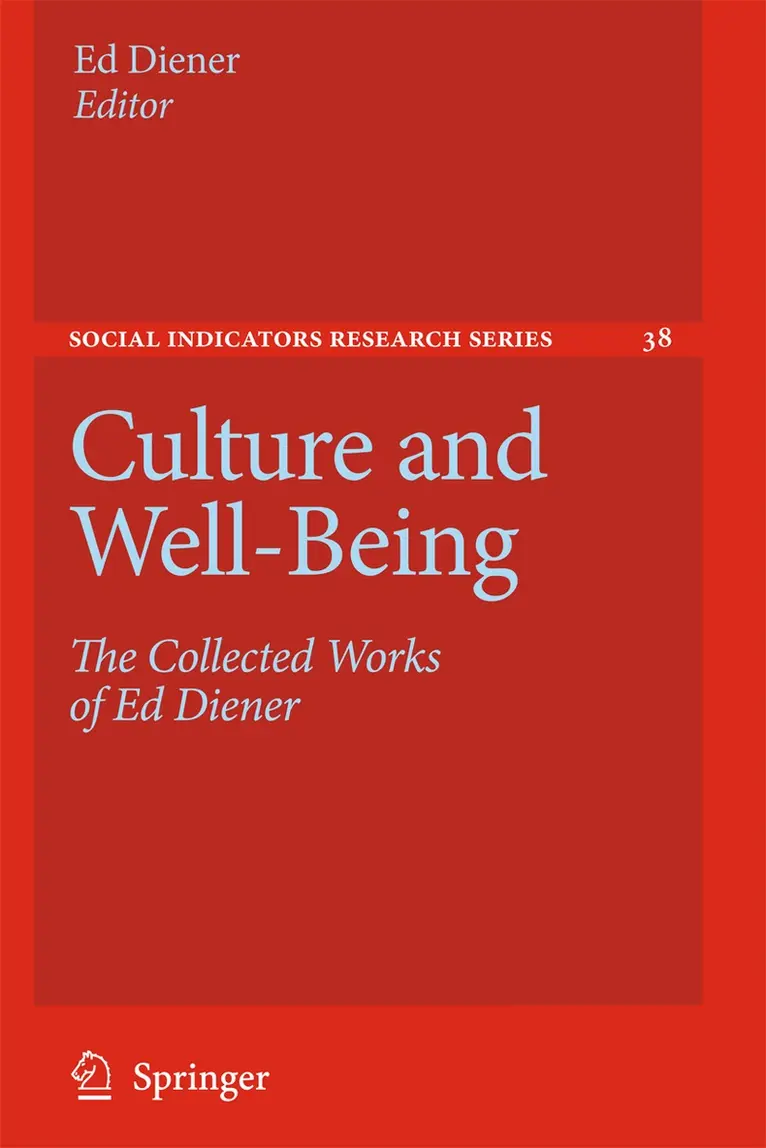
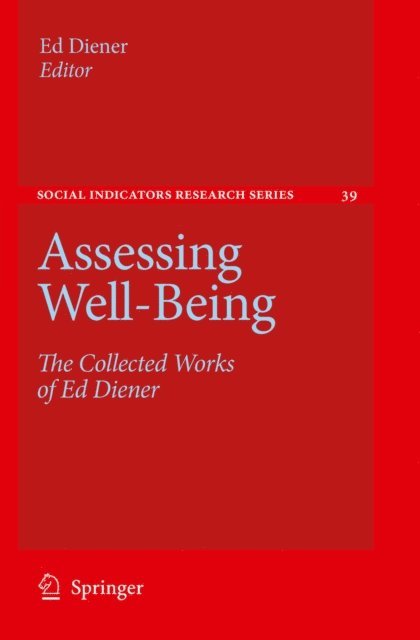
    Science of Well-Being

    The Collected Works of Ed Diener

    AvEd Diener

    Häftad, Engelska, 2009

    Del i serien Social Indicators Research Series

    1 370 kr

    Beställningsvara. Skickas inom 10-15 vardagar. Fri frakt över 249 kr.

    Beskrivning

    Major Theoretical Questions Theories about subjective well-being have grown over the past several decades, but have been re ned only slowly as adequate data have been compiled to test them. We can characterize the theories describing happiness along several dimensions. The rst dimension is whether the theory places the locus of happiness in external conditions such as income and status, as many sociological theories do, or within the attitudes and temperament of the individual, as many psychological theories do. Some have maintained that people adapt to all circumstances over time, so that only individual personality matters for producing happiness, whereas others believe that economicandothersocietalfactorsarethedominantforcesinproducingwell-being. Throughout my writings there is a mix of both the internal and external factors that in uence well-being. A second dimension that characterizes scholarship on well-being is the issue of whether the factors affecting well-being are relative or absolute. That is, are there standards used by people at all times and places in judging their lives and in reacting to events? Or are standards dependent on what other people possess, on expec- tions,andonadaptationlevelsbasedonpastcircumstances?Again,thereisevidence supporting the role of both universal and relative standards. People around the globe are probably in uenced by common factors such as friendship versus loneliness, but even these universal in uences on happiness are probably subject to some degree of comparison depending on what the person is used to and what others have. However, some factors might be much more comparative than other in uences, as Hsee, Yang, Li, and Shen (in press) have described.

    Produktinformation

    • Utgivningsdatum:2009-06-09
    • Mått:155 x 235 x 16 mm
    • Vikt:438 g
    • Format:Häftad
    • Språk:Engelska
    • Serie:Social Indicators Research Series
    • Antal sidor:274
    • Upplaga:2009
    • Förlag:Springer
    • ISBN:9789048123490

    Utforska kategorier

    • Psykologiska teorier och skolor inom Psykologi och pedagogik

    Mer om författaren

    Ed Diener is the Joseph R. Smiley Distinguished Professor of Psychology at the University of Illinois. He received his doctorate at the University of Washington in 1974, and has been a faculty member at the University of Illinois for the past 34 years. Dr. Diener was the president of both the International Society of Quality of Life Studies and the Society of Personality and Social Psychology. Currently he is the president of the International Positive Psychology Association. Dr. Diener was the editor of the Journal of Personality and Social Psychology and the Journal of Happiness Studies, and he is the founding editor of Perspectives on Psychological Science. Diener has over 240 publications, with about 190 being in the area of the psychology of well-being, and is listed as one of the most highly cited psychologists by the Institute of Scientific Information with over 12,000 citations to his credit. He won the Distinguished Researcher Award from the International Society of Quality of Life Studies, the first Gallup Academic Leadership Award, and the Jack Block Award for Personality Psychology. Dr. Diener also won several teaching awards, including the Oakley-Kundee Award for Undergraduate Teaching at the University of Illinois.

    Recensioner i media

    From the reviews: "The Science of Well-Being, is a potpourri of papers-literature reviews and theory pieces-that overview the field that Diener helped establish. ... Certainly academic researchers interested in well-being will find them extremely useful. ... The audience should extend beyond research psychologists and include policy makers as well as interested members of the general public. ... the collected works of Ed Diener are timely, impressive, and useful." (Christopher Peterson, PsycCRITIQUES, Vol. 54 (50), 2009)

    Innehållsförteckning

    • Introduction—The Science of Well-Being: Reviews and Theoretical Articles by Ed Diener.- Subjective Well-Being.- In Pursuit of Happiness: Empirical Answers to Philosophical Questions.- Personality and Subjective Well-Being.- Beyond the Hedonic Treadmill: Revising the Adaptation Theory of Well-Being.- Will Money Increase Subjective Well-Being?: A Literature Review and Guide to Needed Research.- The Well-Being of Nations: Linking Together Trust, Cooperation, and Democracy.- The Optimum Level of Well-Being: Can People Be Too Happy?.- Beyond Money: Toward an Economy of Well-Being.- Conclusion: The Well-Being Science Needed Now.