• Fri frakt över 249 kr
  • •
  • Snabba leveranser
  • •
  • Billiga böcker
Kundservice

Du är på sajten för privatpersoner.

Företag, bibliotek eller offentlig verksamhet?

Du handlar på classic.bokus.com, där alla dina funktioner finns intakta.
Till classic.bokus.com
Bokus logotyp. Gå till startsidan.
  • Erbjudanden
  • Nyheter
  • Student
  • Topplistor
  • Barn & ungdom
  • Bokus Play
  • E-böcker
  • Pocketböcker
  • Spel & pussel

10% rabatt på allt med kod: NYSTART10 →

Sidfot

Mina sidor

    Hjälp

    • Kundservice
    • Vanliga frågor och svar
    • Frakt och leverans
    • Retur vid ångerrätt
    • Reklamera vara
    • Betalning
    • Köpvillkor
    • Allmänna villkor
    • Information om webbplatsens tillgänglighet

    Om Bokus

    • Om oss
    • Pressrum
    • För studenter
    • För företag
    • För bibliotek och offentlig verksamhet
    • För leverantörer
    • Hållbarhet

    Populärt

    • Aktuella erbjudanden
    • Presentkort
    • Studentlitteratur
    • Nya böcker
    • Topplistor
    • Signerade böcker
    • Engelska böcker

    Inspiration

    • Boktips
    • BookTok
    • Populära bokserier
    • Barnbokskaraktärer
    • Populära författare
    Logotyp för Bokus
    Följ oss på Facebook (extern länk)Följ oss på Instagram (extern länk)Följ oss på YouTube (extern länk)Följ oss på TikTok (extern länk)
    bokus @ CookiesAnpassa cookiesIntegritetspolicyKöpvillkor
    Till Citymail hemsida (extern länk)Till Budbee hemsida (extern länk)Till Postnord hemsida (extern länk)Till Schenker hemsida (extern länk)Till Early Bird hemsida (extern länk)Till Walleys hemsida (extern länk)
    1. Språk och ordböcker
    2. Språk: referensverk och allmänt

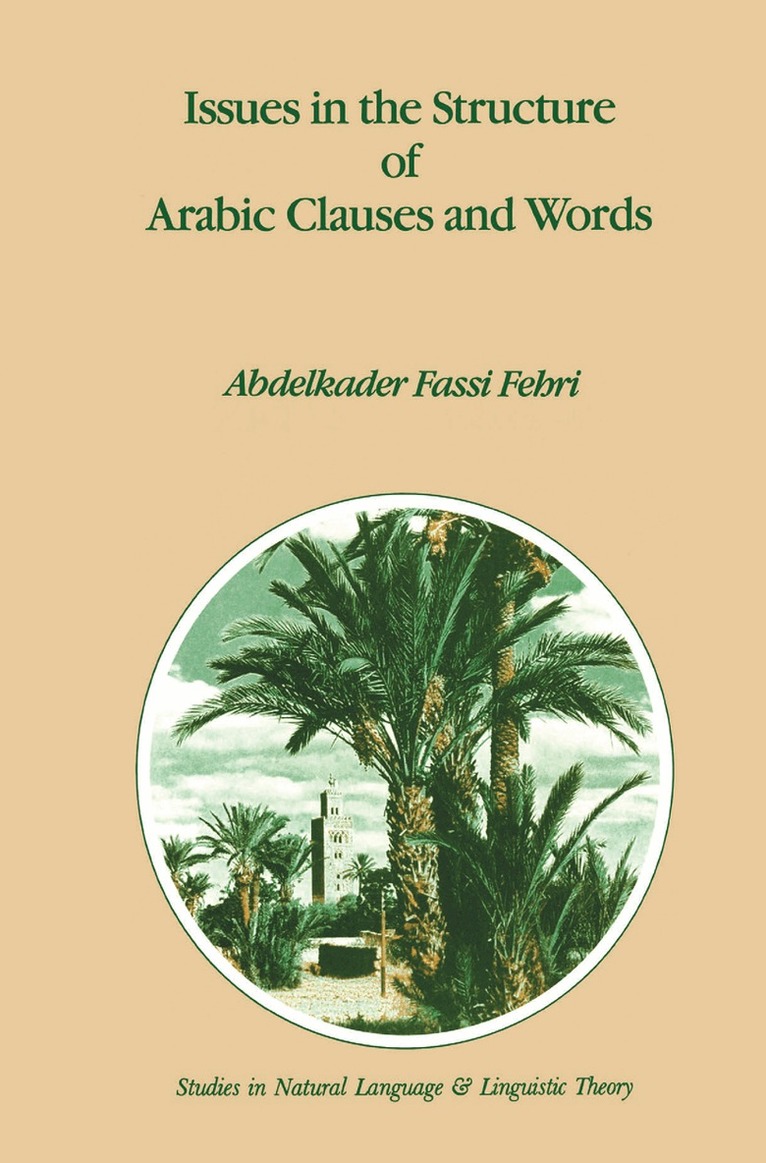
    Issues in the Structure of Arabic Clauses and Words

    AvA. Fassi Fehri

    Häftad, Engelska, 2010

    Del i serien Studies in Natural Language and Linguistic Theory

    1 674 kr

    Beställningsvara. Skickas inom 10-15 vardagar. Fri frakt över 249 kr.

    Fler format och utgåvor

    Inbunden

    1 674 kr

    E-bok

    2 105 kr

    Beskrivning

    This study has a twofold goal. First, it investigates the internal structure of words and clauses in Standard Arabic (SA), in the light of recent developments of Government and Binding Theory (GB). Second, it argues for a specific theory of typology, and proposes a particular view of how parametrization can be construed and executed. SA is a language used throughout the Arab world, in contrast to specific local dialects which are limited to a particular area. The language has a number of features which make it particularly suitable for cross-linguistic comparative morpho-syntax, as well as research in different modules of the theory of grammar. SA morphology is essentially non-concatenative, though a rich analytic affixation system makes word formation hierarchical. Word order in SA is basically VSO, but the language has alternative SVO structures as well. Sentences can be 'nominal' (i.e. with no verb or copula realized at surface structure), or verbal. Arguments can be left syntacti­cally unexpressed (i.e. SA is a null argument language). SA is an agreement language, with a rich and complex agreement system interacting with word order, pronominal incorporation, and expletive structures. It also has a productive morphological case system. Tense, Aspect, Modal, and Negation properties interact in intriguing ways. Finally, SA's DP system exhibits interesting complementary distributions between overt determiners, genitive complements, and possessive markers. It also uses different licensing strategies for Genitive Case marking.

    Produktinformation

    • Utgivningsdatum:2010-12-15
    • Mått:155 x 235 x 19 mm
    • Vikt:511 g
    • Format:Häftad
    • Språk:Engelska
    • Serie:Studies in Natural Language and Linguistic Theory
    • Antal sidor:316
    • Förlag:Springer
    • ISBN:9789048142286

    Utforska kategorier

    • Språk: referensverk och allmänt inom Språk och ordböcker
    • Språkvetenskap och lingvistik inom Språk och ordböcker

    Innehållsförteckning

    • Preface. 1. Principles, Parameters, and Modules. 2. Word Order, Agreement, and Case. 3. Pronouns, Incorporation, and Feature Specification. 4. Temporal, Aspectual, and Modal Categories. 5. Inflectional Projections in Noun Phrases. Conclusion. Bibliography. Index.