• Fri frakt över 249 kr
  • •
  • Snabba leveranser
  • •
  • Billiga böcker
Kundservice

Du är på sajten för privatpersoner.

Företag, bibliotek eller offentlig verksamhet?

Du handlar på classic.bokus.com, där alla dina funktioner finns intakta.
Till classic.bokus.com
Bokus logotyp. Gå till startsidan.
  • Erbjudanden
  • Nyheter
  • Student
  • Topplistor
  • Barn & ungdom
  • Bokus Play
  • E-böcker
  • Pocketböcker
  • Spel & pussel

10% studentrabatt med kod TERM26

Sidfot

Mina sidor

    Hjälp

    • Kundservice
    • Vanliga frågor och svar
    • Frakt och leverans
    • Retur vid ångerrätt
    • Reklamera vara
    • Betalning
    • Köpvillkor
    • Allmänna villkor
    • Information om webbplatsens tillgänglighet

    Om Bokus

    • Om oss
    • Pressrum
    • För studenter
    • För företag
    • För bibliotek och offentlig verksamhet
    • För leverantörer
    • Hållbarhet

    Populärt

    • Aktuella erbjudanden
    • Presentkort
    • Studentlitteratur
    • Nya böcker
    • Topplistor
    • Signerade böcker
    • Engelska böcker

    Inspiration

    • Boktips
    • BookTok
    • Populära bokserier
    • Barnbokskaraktärer
    • Populära författare
    Logotyp för Bokus
    Följ oss på Facebook (extern länk)Följ oss på Instagram (extern länk)Följ oss på YouTube (extern länk)Följ oss på TikTok (extern länk)
    bokus @ CookiesAnpassa cookiesIntegritetspolicyKöpvillkor
    Till Citymail hemsida (extern länk)Till Budbee hemsida (extern länk)Till Postnord hemsida (extern länk)Till Schenker hemsida (extern länk)Till Early Bird hemsida (extern länk)Till Walleys hemsida (extern länk)
    1. Ekonomi och Ledarskap
    2. Nationalekonomi
    3. Internationell ekonomi

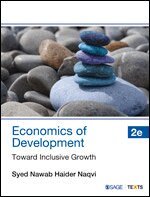
    Economics of Development

    Toward Inclusive Growth

    AvSyed Nawab Haider Naqvi

    Häftad, Engelska, 2020

    503 kr

    Tillfälligt slut

    Beskrivning

    The second, revised and updated, edition of Economics of Development: Toward Inclusive Growth continues to focus on the argument that rather than concentrating on growth, income distribution, and poverty reduction separately, the basic objective of development policies should be to achieve inclusive growth. This book looks at the issues of development in comparative light, and investigates and analyzes successful and unsuccessful policies implemented by developing economies.A result of decades of research and years of experience in policy formulation and implementation, the textbook lucidly elaborates upon the origin and progress of development revolution, the liberalist model, and the human development approach to inclusive growth.Key Features • The change in nature of world capitalism and its implications for growth possibilities of the developing countries. • The enlarged scope of globalization (essentially an international extension of capitalism) at the cost of the vital interests of the developing countries. • The "behavioral economics revolution" involving introduction of psychology in economics, which challenges the assumption of rationality in economic thinking.

    Produktinformation

    • Utgivningsdatum:2020-02-26
    • Mått:184 x 241 x undefined mm
    • Vikt:540 g
    • Format:Häftad
    • Språk:Engelska
    • Antal sidor:280
    • Upplaga:2
    • Förlag:SAGE Publications India Pvt Ltd
    • ISBN:9789353282950

    Utforska kategorier

    • Internationell ekonomi inom Ekonomi och Ledarskap

    Mer om författaren

    Syed Nawab Haider Naqvi is at present HEC Distinguished National Professor and Director General at Federal Urdu University of Arts, Science and Technology, Islamabad. He was awarded the Life-Time Academic Achievement Award in December 2009 in recognition of his long and distinguished academic career.He got his MA from Yale University (1961) and PhD from Princeton University (1966) and did his post-Doctoral work at Harvard University (1971). He has published a large number of articles, books, and monographs on diverse aspects of economics. Some of the prominent academic and policy-making positions he has held so far include: Visiting OECD Professor at Middle East Technical University (1972–1975); Professor of Economics at Quid-e-Azam University, Islamabad (1975–1980); Visiting Professor, Heidelberg University (1978) on leave from Quaid-e-Azam University; Director, Pakistan Institute of Development Economics for 18 years (1979–1995), Founder-President of the Society of Development Economists, Islamabad; and National Professor of Economics, Government of Pakistan (1996–2004). He was Chairman and member of the Board Management of the Asia-Pacific Development Center in Kuala Lumpur from 1982 to 1993. He was member and Chairman of the United Nation’s Sub-Link Project for several years. He was Chairman of the Committee on Economic and Social Well-being for the Eighth Five Year Plan, constituted by the Government of Pakistan, 1992; and Chairman, Committee on Islamization, appointed by the Finance Minister, Government of Pakistan, 1980.Professor Naqvi was awarded the Sitara-e-Imtiaz in Economic Science in 1991 by the President of Pakistan, and given the ECO award for doing distinguished work in economics in 1992 at the Istanbul Summit Meeting of the Heads of State.

    Innehållsförteckning

    • Preface to the Second EditionPreface to the First EditionAcknowledgementsPART I: SPREADING OUT THE WINGSRival Perspectives on Development Policies for Inclusive Growth Since 1950: A PreviewDevelopment ExperiencePART II: ANATOMY OF DEVELOPMENT REVOLUTIONThe Development Revolution Revisited: Was It Real?The Mainsprings of Development RevolutionDevelopment Revolution: Was It Open or Closed?Development Revolution’s Pursuit of Inclusive GrowthPART III THE LIBERALIST DYSTOPIAThe Neoliberalist DisorderThe Chemistry of NeoliberalismLiberalist Moral Rights Philosophy and Its Economic AgendaLiberalism’s (Non) Pursuit of Inclusive GrowthPART IV: ROLLING BACK THE LIBERALIST TIDETheoretical Challenges to LiberalismThe Downside of PrivatizationStructural Adjustment Programs Have Not HelpedPart V: THE HUMAN DEVELOPMENT INITIATIVEHuman Development ParadigmThe Human Development-led StrategyChoice between a Human Development-led Strategy and a Growth-mediated StrategyThe Human Development Paradigm: Some Distinguishing CharacteristicsThe Moral Basis of Human Development ProgramPART VI: TOWARD INCLUSIVE GROWTH STRATEGYOutlines of the Proposed Inclusive Growth StrategyBasic Relationships among Growth, Equity, and Poverty and Inclusive GrowthThe Moral Motivation of the Inclusive Growth StrategyBehavioral Economics, Welfare State, and Inclusive GrowthHolding Mirror to “Reality”BibliographyIndex