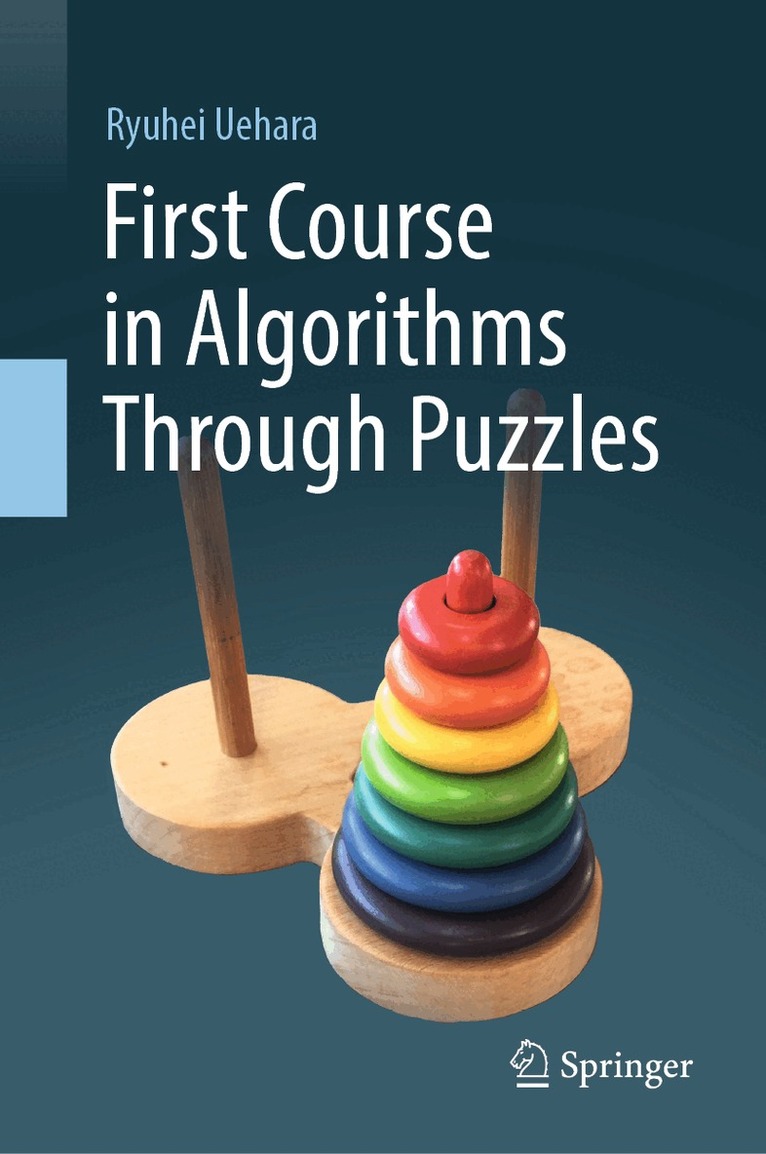
Inbunden, Engelska, 2019
First Course in Algorithms Through Puzzles
541 kr
Beställningsvara. Skickas inom 11-20 vardagar. Fri frakt över 249 kr.
Beskrivning
This textbook introduces basic algorithms and explains their analytical methods. All algorithms and methods introduced in this book are well known and frequently used in real programs. Intended to be self-contained, the contents start with the basic models, and no prerequisite knowledge is required. This book is appropriate for undergraduate students in computer science, mathematics, and engineering as a textbook, and is also appropriate for self-study by beginners who are interested in the fascinating field of algorithms.
More than 40 exercises are distributed throughout the text, and their difficulty levels are indicated. Solutions and comments for all the exercises are provided in the last chapter. These detailed solutions will enable readers to follow the author's steps to solve problems and to gain a better understanding of the contents.
Although details of the proofs and the analyses of algorithms are also provided, the mathematical descriptions in this book are not beyond the range of high school mathematics. Some famous real puzzles are also used to describe the algorithms. These puzzles are quite suitable for explaining the basic techniques of algorithms, which show how to solve these puzzles.
Produktinformation
- Utgivningsdatum: 2019-01-31
- Mått: 155 x 235 x 14 mm
- Vikt: 430 g
- Format: Inbunden
- Språk: Engelska
- Antal sidor: 175
- Förlag: Springer Verlag, Singapore
- ISBN: 9789811331879
Utforska kategorier
Betyg & recensioner
0 recensioner
Inga recensioner tillgängliga.