• Fri frakt över 249 kr
  • •
  • Snabba leveranser
  • •
  • Billiga böcker
Kundservice

Du är på sajten för privatpersoner.

Företag, bibliotek eller offentlig verksamhet?

Du handlar på classic.bokus.com, där alla dina funktioner finns intakta.
Till classic.bokus.com
Bokus logotyp. Gå till startsidan.
  • Erbjudanden
  • Nyheter
  • Student
  • Topplistor
  • Barn & ungdom
  • Bokus Play
  • E-böcker
  • Pocketböcker
  • Spel & pussel

10% rabatt på allt med kod: NYSTART10 →

Sidfot

Mina sidor

    Hjälp

    • Kundservice
    • Vanliga frågor och svar
    • Frakt och leverans
    • Retur vid ångerrätt
    • Reklamera vara
    • Betalning
    • Köpvillkor
    • Allmänna villkor
    • Information om webbplatsens tillgänglighet

    Om Bokus

    • Om oss
    • Pressrum
    • För studenter
    • För företag
    • För bibliotek och offentlig verksamhet
    • För leverantörer
    • Hållbarhet

    Populärt

    • Aktuella erbjudanden
    • Presentkort
    • Studentlitteratur
    • Nya böcker
    • Topplistor
    • Signerade böcker
    • Engelska böcker

    Inspiration

    • Boktips
    • BookTok
    • Populära bokserier
    • Barnbokskaraktärer
    • Populära författare
    Logotyp för Bokus
    Följ oss på Facebook (extern länk)Följ oss på Instagram (extern länk)Följ oss på YouTube (extern länk)Följ oss på TikTok (extern länk)
    bokus @ CookiesAnpassa cookiesIntegritetspolicyKöpvillkor
    Till Citymail hemsida (extern länk)Till Budbee hemsida (extern länk)Till Postnord hemsida (extern länk)Till Schenker hemsida (extern länk)Till Early Bird hemsida (extern länk)Till Walleys hemsida (extern länk)
    1. Språk och ordböcker
    2. Språkvetenskap och lingvistik

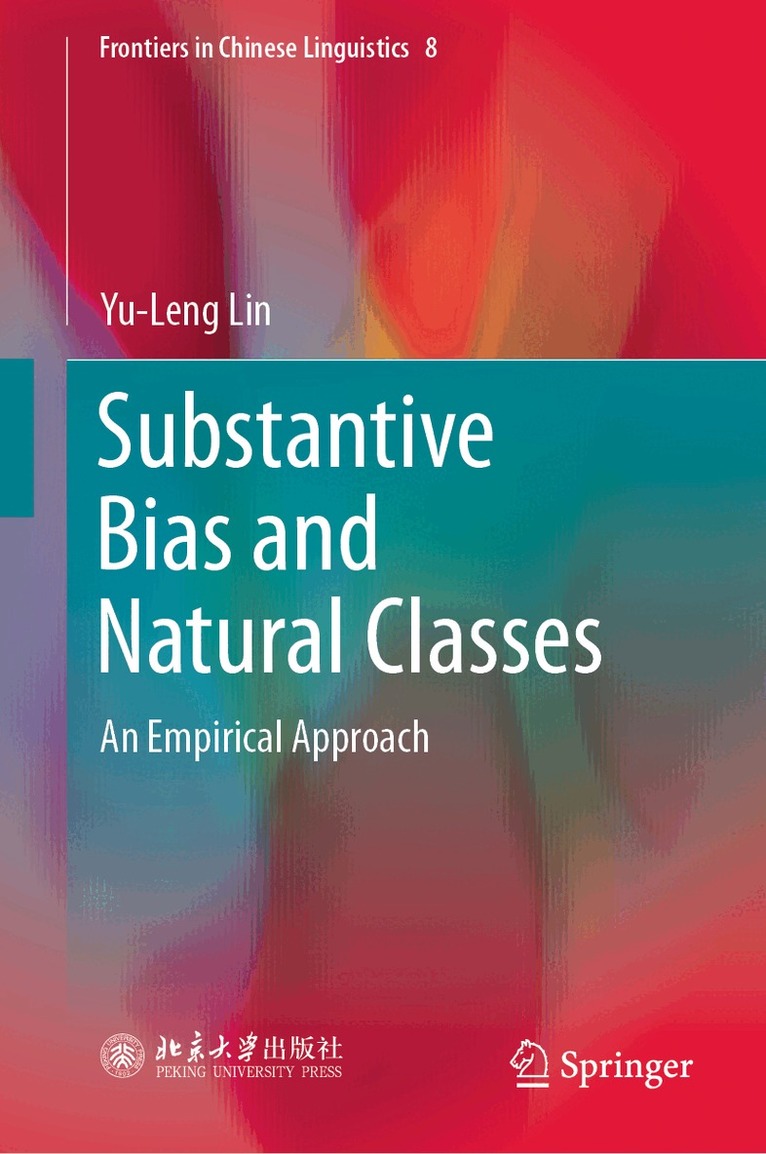
    Substantive Bias and Natural Classes

    An Empirical Approach

    AvYu-Leng Lin

    Inbunden, Engelska, 2019

    Del 8 i serien Frontiers in Chinese Linguistics

    563 kr

    Beställningsvara. Skickas inom 10-15 vardagar. Fri frakt över 249 kr.

    Fler format och utgåvor

    E-bok

    732 kr

    Beskrivning

    This book offers a laboratory phonological analysis of the sonority hierarchy and natural classes in nasal harmony using an artificial grammar-learning paradigm. It is aimed at postgraduate students and linguists in general whose research interests lie in phonology, phonetics, and/or  psycholinguistics. It is useful for linguists who are struggling to figure out how to effectively design an artificial phonological grammar and those who have not designed experiments on their own but would like to do so as an additional means to testing linguistic theories. This book is also a valuable resource for anyone building crosslinguistic artificial grammar paradigm resources.

    Produktinformation

    • Utgivningsdatum:2019-01-21
    • Mått:155 x 235 x 14 mm
    • Vikt:383 g
    • Format:Inbunden
    • Språk:Engelska
    • Serie:Frontiers in Chinese Linguistics
    • Antal sidor:122
    • Förlag:Springer Verlag, Singapore
    • ISBN:9789811335334

    Utforska kategorier

    • Språkvetenskap och lingvistik inom Språk och ordböcker

    Mer om författaren

    ​Yu-Leng Lin is an Assistant Professor in the Department of Foreign Languages and Literature at the Feng Chia University. She received her PhD degree from the Department of Linguistics at the University of Toronto in 2016. Before joining the Feng Chia University, she served as a postdoctoral fellow in the Hong Kong Polytechnic University’s Department of Chinese and Bilingual Studies. Her research interests include psycholinguistics, Chinese linguistics, laboratory phonology, and sociophonetics. Her publications include a journal paper, a book chapter and conference proceedings, and she has presented her work – ranging from learning bias, speech perception and production, tonal studies, and comparative studies among Mandarin, Taiwan Southern Min, Cantonese, and English – at several international conferences.

    Innehållsförteckning

    • Chapter 1 Introduction.- Chapter 2An introduction to Vowel-consonant nasal harmony.- Chapter 3 Introduction to artificial goals and challenges.- Chapter 4 Experiment 1.- Chapter 5 Experiment 2: sonority effects.- Chapter 6 Conclusions.- References.- Appendix I.- Appendix II.