• Fri frakt över 249 kr
  • •
  • Snabba leveranser
  • •
  • Billiga böcker
Kundservice

Du är på sajten för privatpersoner.

Företag, bibliotek eller offentlig verksamhet?

Du handlar på classic.bokus.com, där alla dina funktioner finns intakta.
Till classic.bokus.com
Bokus logotyp. Gå till startsidan.
  • Erbjudanden
  • Nyheter
  • Student
  • Topplistor
  • Barn & ungdom
  • Bokus Play
  • E-böcker
  • Pocketböcker
  • Spel & pussel

10% rabatt på allt med kod NYSTART10 →

Sidfot

Mina sidor

    Hjälp

    • Kundservice
    • Vanliga frågor och svar
    • Frakt och leverans
    • Retur vid ångerrätt
    • Reklamera vara
    • Betalning
    • Köpvillkor
    • Allmänna villkor
    • Information om webbplatsens tillgänglighet

    Om Bokus

    • Om oss
    • Pressrum
    • För studenter
    • För företag
    • För bibliotek och offentlig verksamhet
    • För leverantörer
    • Hållbarhet

    Populärt

    • Aktuella erbjudanden
    • Presentkort
    • Studentlitteratur
    • Nya böcker
    • Topplistor
    • Signerade böcker
    • Engelska böcker

    Inspiration

    • Boktips
    • BookTok
    • Populära bokserier
    • Barnbokskaraktärer
    • Populära författare
    Logotyp för Bokus
    Följ oss på Facebook (extern länk)Följ oss på Instagram (extern länk)Följ oss på YouTube (extern länk)Följ oss på TikTok (extern länk)
    bokus @ CookiesAnpassa cookiesIntegritetspolicyKöpvillkor
    Till Citymail hemsida (extern länk)Till Budbee hemsida (extern länk)Till Postnord hemsida (extern länk)Till Schenker hemsida (extern länk)Till Early Bird hemsida (extern länk)Till Walleys hemsida (extern länk)
    1. Historia och arkeologi
    2. Arkeologi

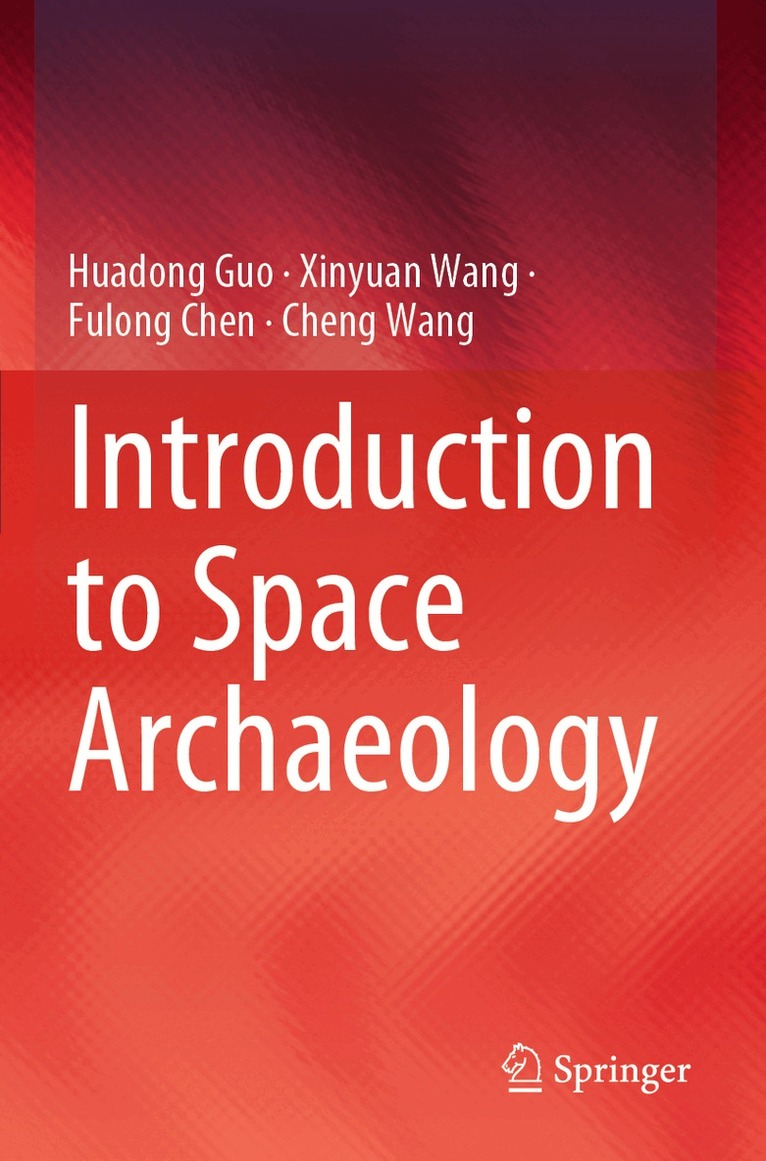
    Introduction to Space Archaeology

    AvHuadong Guo,Xinyuan Wang

    Häftad, Engelska, 2025

    1 450 kr

    Beställningsvara. Skickas inom 10-15 vardagar. Fri frakt över 249 kr.

    Fler format och utgåvor

    Inbunden

    1 450 kr

    Beskrivning

    This book presents the basic principles and the latest advances in space archaeology. Following general reviews of the state of the art of Earth observation technologies and archaeology, the book introduces the principles and methods of space archaeology, remote sensing methods for archaeological survey, and integrated archaeological survey methods including geophysics, virtual reality, web technologies, global positioning systems (GPS), geographical information systems (GIS), and big data. The book then presents two chapters on case studies of word heritage sites in Asia, Europe, Africa, and Americas, including three major world heritage sites in China: The Great Wall, Grand Canal, and Silk Road. The last chapter of the book discusses the future of space archaeology. This book has an interdisciplinary appeal and scholars with an interest in cultural heritage and remote sensing technologies for Earth value its contribution.

    Produktinformation

    • Utgivningsdatum:2025-02-18
    • Mått:155 x 235 x 22 mm
    • Vikt:710 g
    • Format:Häftad
    • Språk:Engelska
    • Antal sidor:403
    • Förlag:Springer Verlag, Singapore
    • ISBN:9789819969678
    • Originaltitel:Introduction to Space Archaeology (空间考古学)

    Utforska kategorier

    • Arkeologi inom Historia och arkeologi
    • Tillämpad fysik inom Naturvetenskap och teknik
    • Tillämpad datateknik inom Data och IT

    Mer om författaren

    Huadong Guo is Director General of International Research Center of Big Data for Sustainable Development Goals, Director of the International Centre on Space Technologies for Natural and Cultural Heritage under the Auspices of UNESCO,  Professor at the Aerospace Information Research Institute of the Chinese Academy of Sciences (CAS), Academician of CAS, Foreign Member of the Russian Academy of Sciences, Foreign Member of the Finnish Society of Sciences and Letters, Fellow of TWAS and Fellow of International Science Council. He presently serves as Honorary President of the International Society for Digital Earth(ISDE),Editor-in-Chief of the International Journal of Digital Earth and the Big Earth Data Journal. He served as President of ICSU Committee on Data for Science and Technology and President of ISDE. He has over 40 years of experience in Earth observation, specializing in radar remote sensing and Digital Earth science.Wang Xinyuan is Professorat International Research Center of Big Data for Sustainable Development Goals (CBAS) and the Aerospace Information Research Institute of the Chinese Academy of Sciences (CAS). He is also serving as Deputy Director of International Centre on Space Technologies for Natural and Cultural Heritage (HIST) under the Auspices of UNESCO, Chair of Digital Heritage Specialized Committee of China National Committee, International Society for Digital Earth (ISDE), Co-Chair of the Heritage Working Group of the Digital Belt and Road Programme (DBAR), Member of International Council on Monuments and Sites (ICOMOS), Executive Member of ICOMOS-China, and Member of the World Heritage Expert Committee of the State Forestry and Grass Administration of China. He is engaged in the research of remote sensing archaeology and digital heritage conservation. His current research interest focuses on adapting Big Earth Data technologies to the needs of space archaeology and the SDG11.4 assessment.Fulong Chen is Professor at International Research Center of Big Data for Sustainable Development Goals (CBAS) and the Aerospace Information Research Institute of the Chinese Academy of Sciences (CAS). He serves as Deputy Director of International Centre on Space Technologies for Natural and Cultural Heritage under the Auspices of UNESCO, Editorial Board Member of Remote Sensing, Heritage and International Journal of Digital Earth, and Deputy Director of cultural heritage conservation Specialized Committee, Chinese Society of Surveying and Mapping. He was selected as the 100-Talents Program of CAS. His current research interests include remote sensing for achieving SDGs, interferometric SAR for geohazards and cultural applications, and intelligent remote sensing data processing and modelling, which are the areas where he has more than 100 academic papers and been PI for more than 20 national and provincial sponsored projects.  Cheng Wang is Professor at International Research Center of Big Data for Sustainable Development Goals (CBAS), the Aerospace Information Research Institute of the Chinese Academy of Sciences (CAS) and the International Centre on Space Technologies for Natural and Cultural Heritage under the Auspices of UNESCO. He received his Ph.D. degree in remote sensing from the University of Strasbourg, France, in 2005. He has over 20 years of experience in LiDAR remote sensing mechanism, LiDAR data processing, and LiDAR industry applications. He has been Principal Investigator for over 15 national projects related to LiDAR in China. He has been teaching a course called LiDAR Remote Sensing in the University of Chinese Academy of Sciences for about 10 years. Prof. Wang has published more than 200 papers and four books and is the principal awardee of 10 domestic science and technology prizes.

    Innehållsförteckning

    • Introduction.- Chapter 1. Earth Observation Technologies.-1. Remote sensing for Earth observation.- 2. Quantitative analysis of research literature on space observation of cultural heritage.- 3. Summary.- Chapter 2. Archaeology and Its Advances.-1. Origin of western archaeology.-2. Birth of archaeology in China.-3. Advances of archaeology in China.- 4. Basic techniques and methods in archaeology.-5. Theoretical developments of archaeology.- Chapter 3. Theory and Methods of Space Archaeology.- 1. Spatiotemporal features of archaeology.-2. Electromagnetic spectrum.-3. Applicability of space archaeology.-Chapter 4. Remote Sensing for Archaeological Survey.-1. Optical remote sensing for archaeological survey.-2. Microwave remote sensing for archaeological survey.-3. LiDAR remote sensing for archaeological survey.-Chapter 5. Integrated Technologies for Space Archaeology.-1. Geophysical technology.-2. Virtual reality.-technology.-3. Web technology.-4. Global navigation satellite system.-5. Geographical information system.-6. Big data.-Chapter 6. Interpretation of world cultural heritage sites from space.-1. Asia.-2. Europe.-3. Africa.-4. Americas.- Chapter 7. Interpretation of cultural heritage sites in China.-1. Silk Road.-2. Grand Canal.-3. Great Wall.-Chapter 8. Future of Space Archaeology.-1. Development of archaeology.-2. From archaeology to space archaeology.-3. Research agenda in space archaeology.-4. Disciplinary development and education in space archaeology.-5. Broad outlook of space archaeology for cultural heritage sites.-Appendix 1. International organizations on space archaeology.-Appendix 2. Major conferences on space archaeology.