
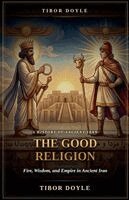
Good Religion: A History of Fire, Wisdom, and Empire in Ancient Iran
E-bok
Engelska, 202684 kr
Läs direkt i Bokus Reader – eller ladda ned till din enhet
Beskrivning
For more than a millennium, the ancient Iranian world venerated a supreme god of wisdom and cosmic order whose worship modern readers know only through the narrower lens of Zoroastrianism. The truth is far richer. Long before Zarathustra's reform, and long after it, Mazdaism thrived as a living, adaptive tradition: a religion of pastoral steppe clans, imperial courts, and cosmopolitan trading cities alike. and shaping the moral architecture of religions still practiced today. Drawing on archaeology, comparative philology, and the testimony of ancient historians, this account recovers a Mazdaism far stranger, more contested, and more enduring than the tidy monotheism later orthodoxy remembered. It is a history of fire that never went out, and of the ordinary believers — herders, merchants, priests, and kings — who kept it burning.
Produktinformation
Hoppa över listan








Du kanske också är intresserad av
- 10% rabatt på allt
- 10% rabatt på allt
Del 11
- Signerad!
Del 3
- 10% rabatt på allt
Del 3
- -19%
Del 4
- 10% rabatt på allt
- 10% rabatt på allt
Del 9
- 10% rabatt på allt
- -19%