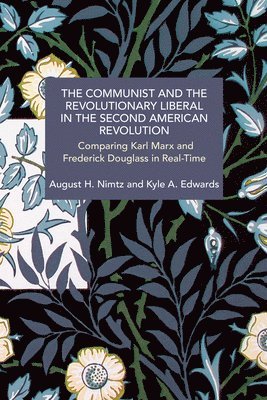
Häftad, Engelska, 2025
Communist and the Revolutionary Liberal in the Second American Revolution
Comparing Karl Marx and Frederick Douglass in Real-Time
Av August H. Nimtz Jr., Kyle A. Edwards
Del i serien Historical Materialism
425 kr
Beställningsvara. Skickas inom 5-8 vardagar. Fri frakt över 249 kr.
Beskrivning
Produktinformation
- Utgivningsdatum: 2025-09-02
- Mått: 228 x 152 x 22 mm
- Vikt: 567 g
- Format: Häftad
- Språk: Engelska
- Serie: Historical Materialism
- Antal sidor: 417
- Förlag: Haymarket Books
- ISBN: 9798888905395
Utforska kategorier
Recensioner i media
“Nimtz and Edwards offer a meticulous, strikingly original, deeply researched, and profoundly insightful comparison of the real-time responses of Frederick Douglass and Karl Marx to the U.S. Civil War. They show that Douglass operated as part of a liberal abolitionist movement in which ending the institution of slavery and achieving full political rights for former slaves was an end in its own right. Yet, thousands of miles away, Marx (along with Engels) saw correctly that ending slavery could only be but one step in an inevitably longer journey. For Marx recognized that former slaves would become workers subject to capitalist exploitation. He realized that true freedom and equality required abolishing private property in general. The moral of this story applies today as much as it did then: formal democratic rights, racial inclusion, and electoral participation must not be mistaken as the end goal for working people.” – James Mahoney, Professor of Political Science and Sociology, Northwestern University
Betyg & recensioner
0 recensioner
Inga recensioner tillgängliga.