A. P. Dawid – författare
Visar alla böcker från författaren A. P. Dawid. Handla med fri frakt och snabb leverans.
5 produkter
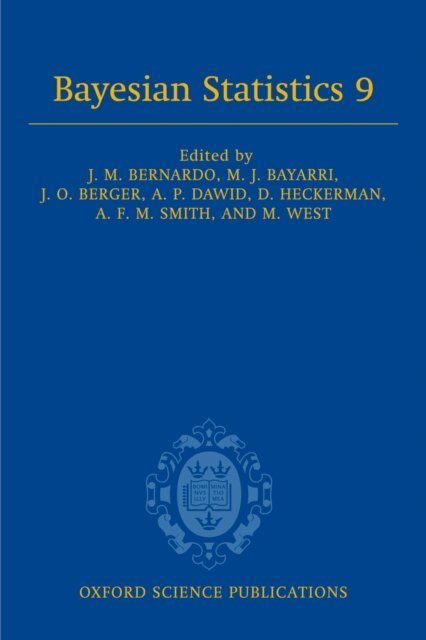
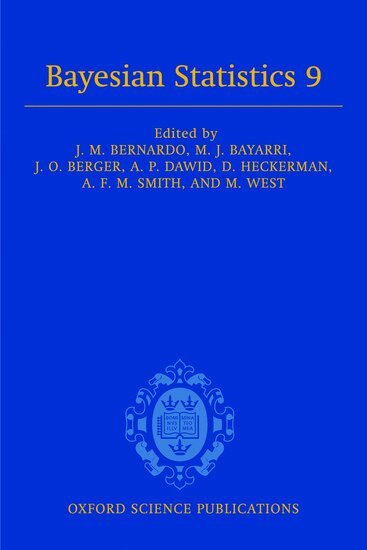
Bayesian Statistics 9
Av Mike West, Adrian F. M. Smith m. fl.
E-bok, 2011
2420 kr
Lägg i varukorg
The Valencia International Meetings on Bayesian Statistics - established in 1979 and held every four years - have been the forum for a definitive overview of current concerns and activities in Bayesian statistics. These are the edited Proceedings of the Ninth meeting, and contain the invited papers …
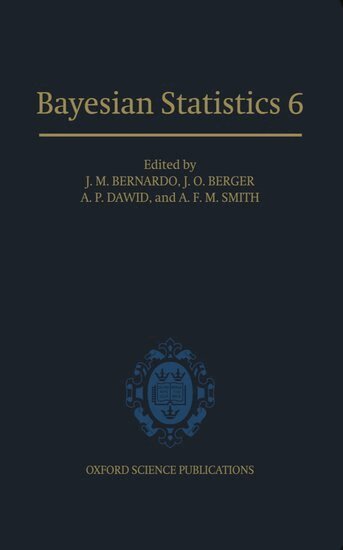
Bayesian Statistics 6
Proceedings of the Sixth Valencia International Meeting
Av BERNARDO, José M. Bernardo m. fl.
Inbunden, 1999
4643 kr
Lägg i varukorg
The Valencia International Meetings on Bayesian Statistics, held every four years, provide the main forum for researchers in the area to come together to present and discuss frontier developments in the field. The resulting Proceedings provide a definitive, up-to-date overview encompassing a wide …
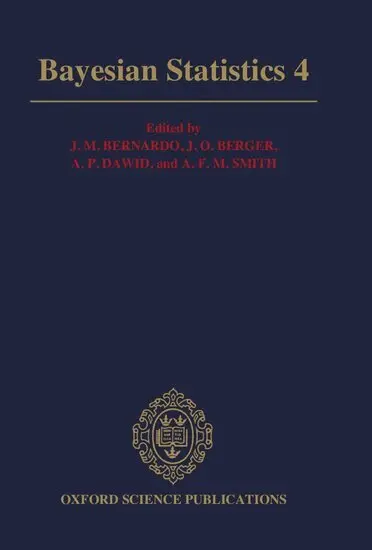
Bayesian Statistics 4
Proceedings of the Fourth Valencia International Meeting: Dedicated to the memory of Morris H. DeGroot, 1931-1989: April 15-20, 1991
Av BERNARDO, J. M. Bernardo m. fl.
Inbunden, 1992
1756 kr
Lägg i varukorg
The Valencia International Meetings on Bayesian Statistics, held every four years, provide the forum for researchers to come together to present and discuss frontier developments in the field. The resulting Proceedings provide a definitive, up-to-date overview encompassing a wide range of …
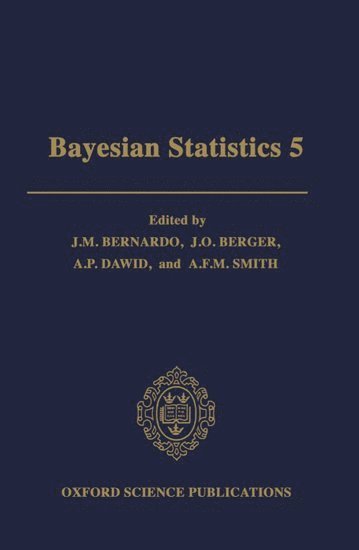
Bayesian Statistics 5
Proceedings of the Fifth Valencia International Meeting, June 5-9, 1994
Av J. M. Bernardo, J. O. Berger m. fl.
Inbunden, 1996
1216 kr
Lägg i varukorg
The Valencia International Meetings on Bayesian Statistics, held every four years, provide the forum for researchers to come together and discuss frontier developments in the field. The resulting Proceedings provide a definitive, up-to-date overview encompassing a wide range of theoretical and …
Bayesian Statistics 9
Av BERNARDO ET AL, José M. Bernardo m. fl.
Inbunden, 2011
3819 kr
Lägg i varukorg
The Valencia International Meetings on Bayesian Statistics - established in 1979 and held every four years - have been the forum for a definitive overview of current concerns and activities in Bayesian statistics. These are the edited Proceedings of the Ninth meeting, and contain the invited papers …