Adam R. Nelson – författare
Visar alla böcker från författaren Adam R. Nelson. Handla med fri frakt och snabb leverans.
8 produkter
8 produkter
Häftad, Engelska, 2005
355 kr
Skickas inom 5-8 vardagar
In recent years, federal mandates on education have become the subject of increasing debate. Adam R. Nelson's The Elusive Ideal - a postwar history of federal involvement in the Boston public school system - provides lessons from the past that shed light on the continuing struggles of urban public schools today. This wide-reaching analysis examines the failure of educational policy at local, state, and federal levels to afford all students equal educational opportunity. Exploring a deep-seated tension between the educational ideals of integration and academic achieyement over time, Nelson considers the development and implementation of policies targeted at diverse groups of urban students, including policies related to racial desegregation, bilingual education, special education, school funding, and standardized testing. An ambitious study that spans more than thirty years and examines all facets of educational policy from legality to funding, The Elusive Ideal provides a model from which future inquiries will proceed.A probing and provocative work of urban history with deep relevance for urban public schools today, Nelson's book reveals why equal educational opportunity remains such an elusive ideal.
Inbunden, Engelska, 2023
427 kr
Skickas inom 5-8 vardagar
The first volume of an ambitious new economic history of American higher education.Exchange of Ideas launches a breathtakingly ambitious new economic history of American higher education. In this volume, Adam R. Nelson focuses on the early republic, explaining how knowledge itself became a commodity, as useful ideas became salable goods and American colleges were drawn into transatlantic commercial relations. American scholars might once have imagined that higher education could sit beyond the sphere of market activity—that intellectual exchange could transcend vulgar consumerism—but already by the end of the eighteenth century, they saw how ideas could be factored into the nation’s balance of trade. Moreover, they concluded that it was the function of colleges to oversee the complex process whereby knowledge could be priced and purchased. The history of capitalism and the history of higher education, Nelson reveals, are intimately intertwined—which raises a host of important and strikingly urgent questions. How do we understand knowledge and education as commercial goods? Who should pay for them? And, fundamentally, what is the optimal system of higher education in a capitalist democracy?
Inbunden, Engelska, 2024
403 kr
Skickas inom 5-8 vardagar
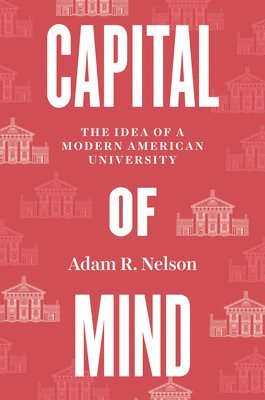
The second volume of an ambitious new economic history of American higher education.Capital of Mind is the second volume in a breathtakingly ambitious new economic history of American higher education. Picking up from the first volume, Exchange of Ideas, Adam R. Nelson looks at the early decades of the nineteenth century, explaining how the idea of the modern university arose from a set of institutional and ideological reforms designed to foster the mass production and mass consumption of knowledge. This “industrialization of ideas” mirrored the industrialization of the American economy and catered to the demands of a new industrial middle class for practical and professional education. From Harvard in the north to the University of Virginia in the south, new experiments with the idea of a university elicited intense debate about the role of scholarship in national development and international competition, and whether higher education should be supported by public funds, especially in periods of fiscal austerity. The history of capitalism and the history of the university, Nelson reveals, are intimately intertwined—which raises a host of important questions that remain salient today. How do we understand knowledge and education as commercial goods? Should they be public or private? Who should pay for them? And, fundamentally, what is the optimal system of higher education for a capitalist democracy?
Häftad, Engelska, 2009
336 kr
Skickas inom 5-8 vardagar
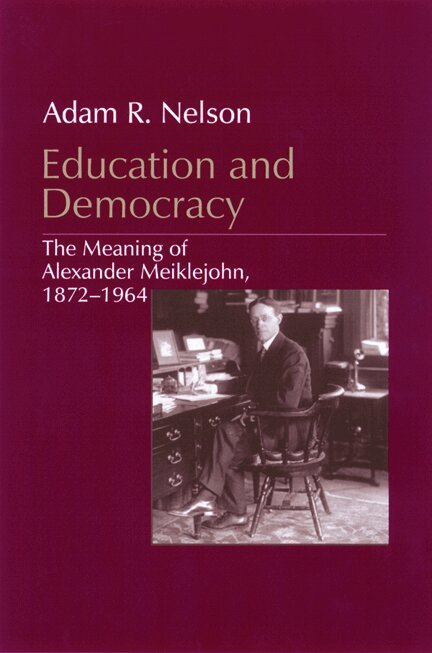
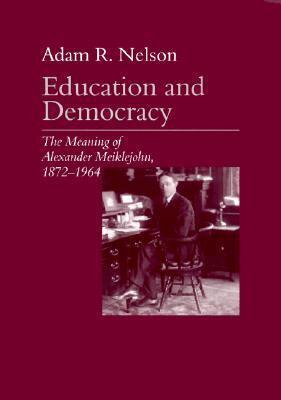
This definitive biography of the charismatic Alexander Meiklejohn tracks his turbulent career as an educational innovator at Brown University, Amherst College, and the University of Wisconsin's 'Experimental College' in the early twentieth century and his later work as a civil libertarian in the Joe McCarthy era. The central question Meiklejohn asked throughout his life's work remains essential today: How can education teach citizens to be free?
Häftad, Engelska, 2010
312 kr
Skickas inom 10-15 vardagar
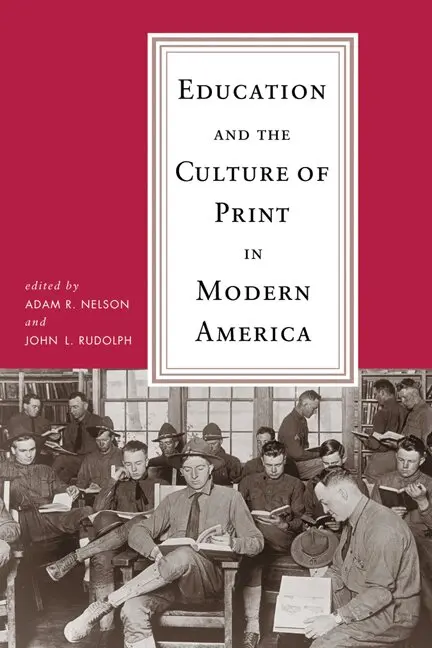
Vividly revealing the multiple layers on which print has been produced, consumed, regulated, and contested for the purpose of education since the mid-nineteenth century, the historical case studies in Education and the Culture of Print in Modern America deploy a view of education that extends far beyond the confines of traditional classrooms. The nine essays examine “how print educates” in settings as diverse as depression-era work camps, religious training, and broadcast television—all the while revealing the enduring tensions that exist among the controlling interests of print producers and consumers. This volume exposes what counts as education in American society and the many contexts in which education and print intersect. Offering perspectives from print culture history, library and information studies, literary studies, labor history, gender history, the history of race and ethnicity, the history of science and technology, religious studies, and the history of childhood and adolescence, Education and the Culture of Print in Modern America pioneers an investigation into the intersection of education and print culture.
Inbunden, Engelska, 2025
795 kr
Skickas inom 10-15 vardagar
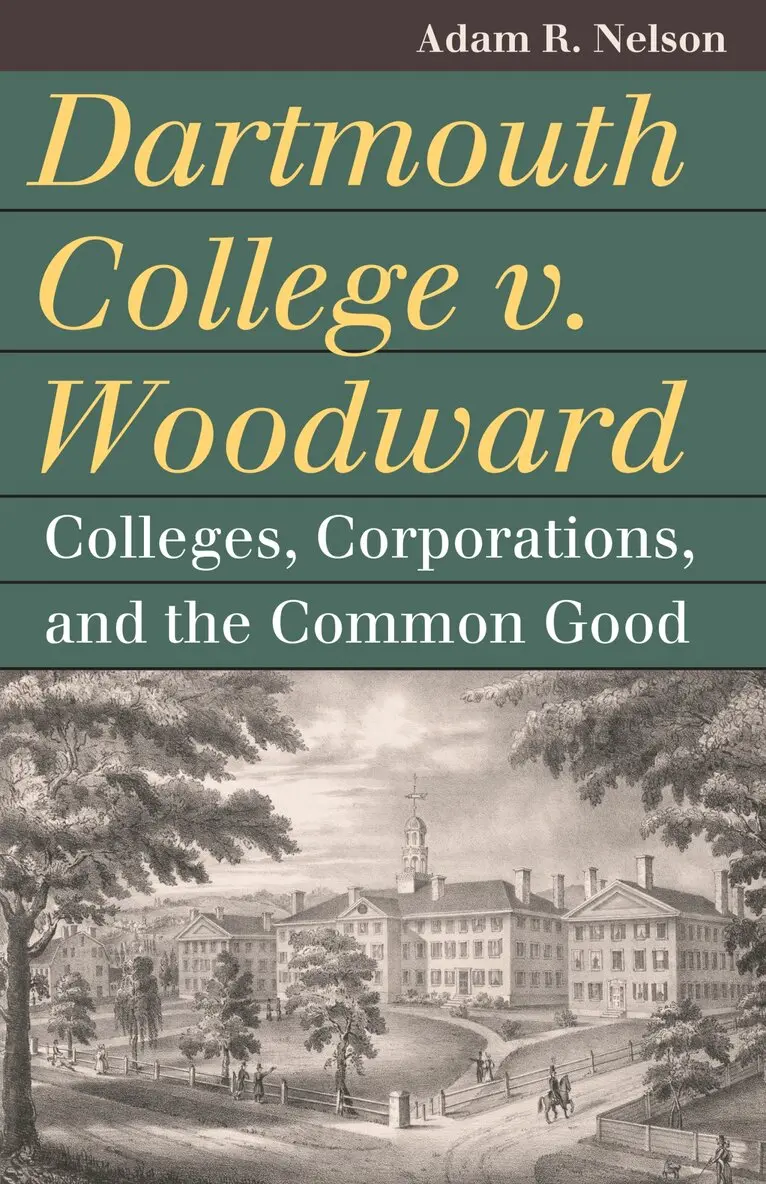
Dartmouth College v. Woodward examines the landmark case decided by the United States Supreme Court in 1819 after New Hampshire’s state legislature attempted to amend Dartmouth’s charter to place the college under greater public control. Adam R. Nelson interprets the case not only as one about higher-education governance or American corporate law in an emerging constitutional order, and not simply as a case about the Marshall Court’s preference for “private” over “public” initiative as the primary driver of social and commercial development. More fundamentally, Nelson uses the case to illustrate a broad ideological shift from commonwealth republicanism to market liberalism in both education and jurisprudence during the early nineteenth century.The question at the heart of the case was: should Dartmouth College be subject to legislative authority? This book finds that when the state court said “yes” but the US Supreme Court said “no,” the divergence between these decisions stemmed not only from different applications of the contracts clause but also from disagreements about the degree to which core institutions in a democracy—whether colleges or churches or companies—should be overseen or regulated by political majorities. Implicit in the Dartmouth case, though never clarified, was the question of whether higher education was a private or public good, and thus whether colleges are better off under private or public control. By choosing the private path, Dartmouth reinforced a gradual privatization of what might otherwise have been considered public goods. Americans today live with the consequences of this decision.A landmark in American corporate law, the Dartmouth College case has been cited in a wide variety of subsequent decisions, including Citizens United (2010) and Burwell v. Hobby Lobby Stores (2014). Adam Nelson’s informative work provides an accessible introduction to this important piece of American legal history.
Häftad, Engelska, 2025
302 kr
Skickas inom 10-15 vardagar
Dartmouth College v. Woodward examines the landmark case decided by the United States Supreme Court in 1819 after New Hampshire’s state legislature attempted to amend Dartmouth’s charter to place the college under greater public control. Adam R. Nelson interprets the case not only as one about higher-education governance or American corporate law in an emerging constitutional order, and not simply as a case about the Marshall Court’s preference for “private” over “public” initiative as the primary driver of social and commercial development. More fundamentally, Nelson uses the case to illustrate a broad ideological shift from commonwealth republicanism to market liberalism in both education and jurisprudence during the early nineteenth century.The question at the heart of the case was: should Dartmouth College be subject to legislative authority? This book finds that when the state court said “yes” but the US Supreme Court said “no,” the divergence between these decisions stemmed not only from different applications of the contracts clause but also from disagreements about the degree to which core institutions in a democracy—whether colleges or churches or companies—should be overseen or regulated by political majorities. Implicit in the Dartmouth case, though never clarified, was the question of whether higher education was a private or public good, and thus whether colleges are better off under private or public control. By choosing the private path, Dartmouth reinforced a gradual privatization of what might otherwise have been considered public goods. Americans today live with the consequences of this decision.A landmark in American corporate law, the Dartmouth College case has been cited in a wide variety of subsequent decisions, including Citizens United (2010) and Burwell v. Hobby Lobby Stores (2014). Adam Nelson’s informative work provides an accessible introduction to this important piece of American legal history.
Inbunden, Engelska, 2005
951 kr
Tillfälligt slut
In recent years, federal mandates on education have become the subject of increasing debate. Adam R. Nelson's The Elusive Ideal - a postwar history of federal involvement in the Boston public school system - provides lessons from the past that shed light on the continuing struggles of urban public schools today. This wide-reaching analysis examines the failure of educational policy at local, state, and federal levels to afford all students equal educational opportunity. Exploring a deep-seated tension between the educational ideals of integration and academic achieyement over time, Nelson considers the development and implementation of policies targeted at diverse groups of urban students, including policies related to racial desegregation, bilingual education, special education, school funding, and standardized testing. An ambitious study that spans more than thirty years and examines all facets of educational policy from legality to funding, The Elusive Ideal provides a model from which future inquiries will proceed.A probing and provocative work of urban history with deep relevance for urban public schools today, Nelson's book reveals why equal educational opportunity remains such an elusive ideal.