Adrianna J. Kezar – författare
Visar alla böcker från författaren Adrianna J. Kezar. Handla med fri frakt och snabb leverans.
6 produkter
6 produkter
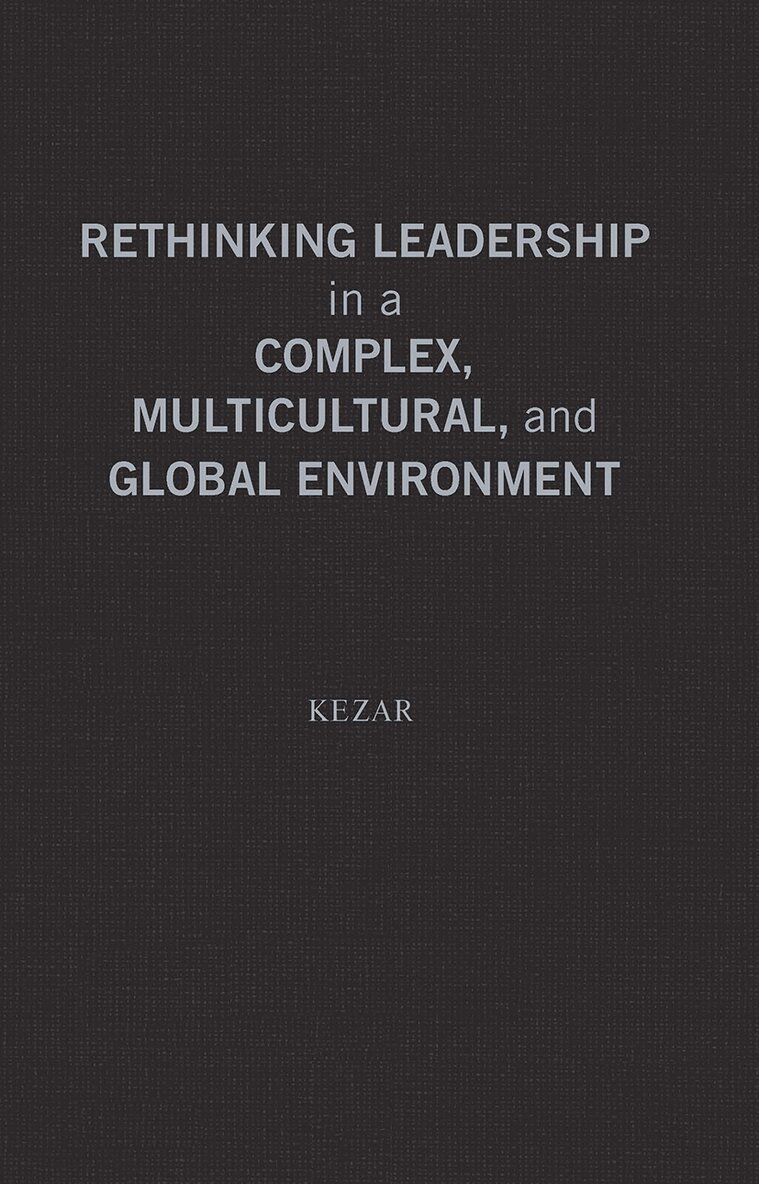
Rethinking Leadership in a Complex, Multicultural, and Global Environment
New Concepts and Models for Higher Education
Inbunden, Engelska, 2009
2 053 kr
Skickas inom 10-15 vardagar
The complexity of the decisions that today’s higher education leaders face—as they engage with a diversifying student body, globalization and technological advances—requires embracing new ways of thinking about leadership. This book examines the new theories and concepts of leadership that are described in the multidisciplinary literature on leadership, and are being applied in other sectors—from government to the non-profit and business communities—to explore the implications for leaders and leadership programs in higher education. At a time when the heroic, controlling, and distant leader of the past has given way to a focus on teams, collectives and social change, the contributors to this book ask: What new skills and competencies should leaders and programs be addressing?The recognition of the interdependence of groups within organizations, and between organizations; of cultural and social differences; and of how technology has sped up decision time and connected people across the globe; have changed the nature of leadership as well as made the process more complex and diffuse. This book is addressed to anyone developing institutional, regional or national leadership development programs; to aspiring leaders planning to participate in such programs; and to campus leaders concerned with the development and pipeline of emerging leaders. It will be particularly useful for administrators in faculty development offices who are planning and creating workshops in leadership training, and for staff in human resource offices who offer similar training.Contributors: Laurel Beesemyer; Rozana Carducci; Pamela Eddy; Tricia Bertram Gallant; Lynn Gangone; Cheryl Getz; Jeni Hart; Jerlando F. L. Jackson; Lara Jaime; Adrianna Kezar; Bridget R. McCurtis; Sharon McDade; Robert J. Nash; Elizabeth M. O’Callahan; Sue V. Rosser; Lara Scott.
Rethinking Leadership in a Complex, Multicultural, and Global Environment
New Concepts and Models for Higher Education
Häftad, Engelska, 2009
469 kr
Skickas inom 10-15 vardagar
The complexity of the decisions that today’s higher education leaders face—as they engage with a diversifying student body, globalization and technological advances—requires embracing new ways of thinking about leadership. This book examines the new theories and concepts of leadership that are described in the multidisciplinary literature on leadership, and are being applied in other sectors—from government to the non-profit and business communities—to explore the implications for leaders and leadership programs in higher education. At a time when the heroic, controlling, and distant leader of the past has given way to a focus on teams, collectives and social change, the contributors to this book ask: What new skills and competencies should leaders and programs be addressing?The recognition of the interdependence of groups within organizations, and between organizations; of cultural and social differences; and of how technology has sped up decision time and connected people across the globe; have changed the nature of leadership as well as made the process more complex and diffuse. This book is addressed to anyone developing institutional, regional or national leadership development programs; to aspiring leaders planning to participate in such programs; and to campus leaders concerned with the development and pipeline of emerging leaders. It will be particularly useful for administrators in faculty development offices who are planning and creating workshops in leadership training, and for staff in human resource offices who offer similar training.Contributors: Laurel Beesemyer; Rozana Carducci; Pamela Eddy; Tricia Bertram Gallant; Lynn Gangone; Cheryl Getz; Jeni Hart; Jerlando F. L. Jackson; Lara Jaime; Adrianna Kezar; Bridget R. McCurtis; Sharon McDade; Robert J. Nash; Elizabeth M. O’Callahan; Sue V. Rosser; Lara Scott.
Envisioning Public Scholarship for Our Time
Models for Higher Education Researchers
Inbunden, Engelska, 2018
2 053 kr
Skickas inom 10-15 vardagar
This book proposes a new paradigm of public scholarship for our time, one that shifts from the notion of the public intellectual to the model of the engaged scholar.The editors’ premise is that the work of public scholarship should be driven by a commitment to supporting a diverse democracy and promoting equity and social justice. The contributors to this volume present models that eschew the top-down framing of policy to advocate for practice that drives bottom-up change by arming the widest range of stakeholders -- especially members of marginalized communities -- with relevant research.They demonstrate how public scholarship in higher education can increase its impact on practice and policy and compellingly argue that public scholarship should be recognized as normative practice for all scholars and indeed integrated into the curriculum of graduate courses.The chapters describe multiple types of public scholarship and different strategies that move beyond informing policymakers, faculty, and administrators to engage publics such as students and parents, media, the general public, and particularly groups that may have had little or no access to research. Examples include partnering with a community agency to design a research project and disseminate results; writing for practitioner or policy venues and magazines outside the traditional academic journals; serving on boards for national groups that impact decisions related to your area of research; and the use of social media.Whether scholar, director of graduate education, or graduate student of higher education, this book opens up a new vision of how research can inform practice that promotes the public good.
Envisioning Public Scholarship for Our Time
Models for Higher Education Researchers
Häftad, Engelska, 2018
469 kr
Skickas inom 10-15 vardagar
This book proposes a new paradigm of public scholarship for our time, one that shifts from the notion of the public intellectual to the model of the engaged scholar.The editors’ premise is that the work of public scholarship should be driven by a commitment to supporting a diverse democracy and promoting equity and social justice. The contributors to this volume present models that eschew the top-down framing of policy to advocate for practice that drives bottom-up change by arming the widest range of stakeholders -- especially members of marginalized communities -- with relevant research.They demonstrate how public scholarship in higher education can increase its impact on practice and policy and compellingly argue that public scholarship should be recognized as normative practice for all scholars and indeed integrated into the curriculum of graduate courses.The chapters describe multiple types of public scholarship and different strategies that move beyond informing policymakers, faculty, and administrators to engage publics such as students and parents, media, the general public, and particularly groups that may have had little or no access to research. Examples include partnering with a community agency to design a research project and disseminate results; writing for practitioner or policy venues and magazines outside the traditional academic journals; serving on boards for national groups that impact decisions related to your area of research; and the use of social media.Whether scholar, director of graduate education, or graduate student of higher education, this book opens up a new vision of how research can inform practice that promotes the public good.
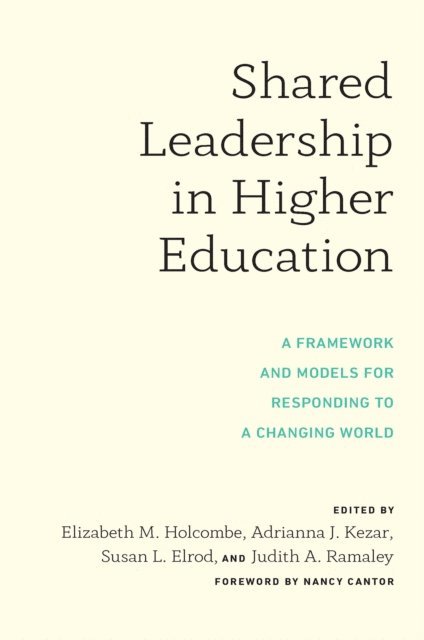
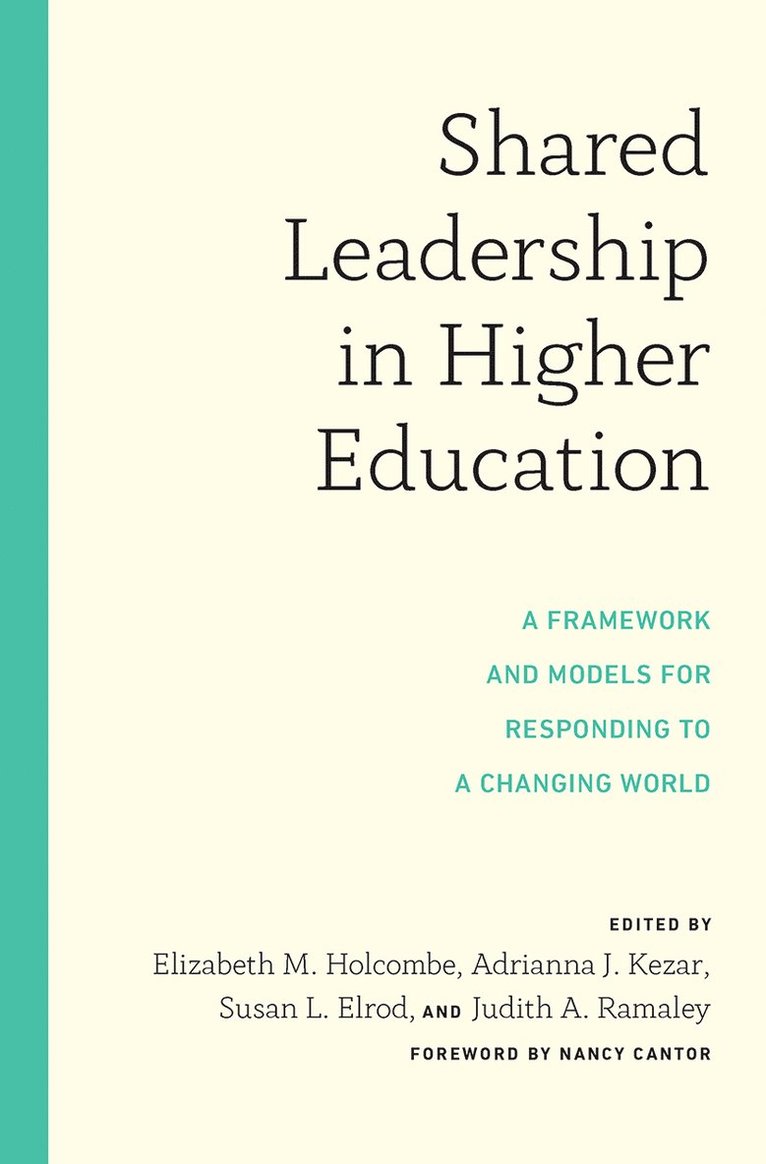
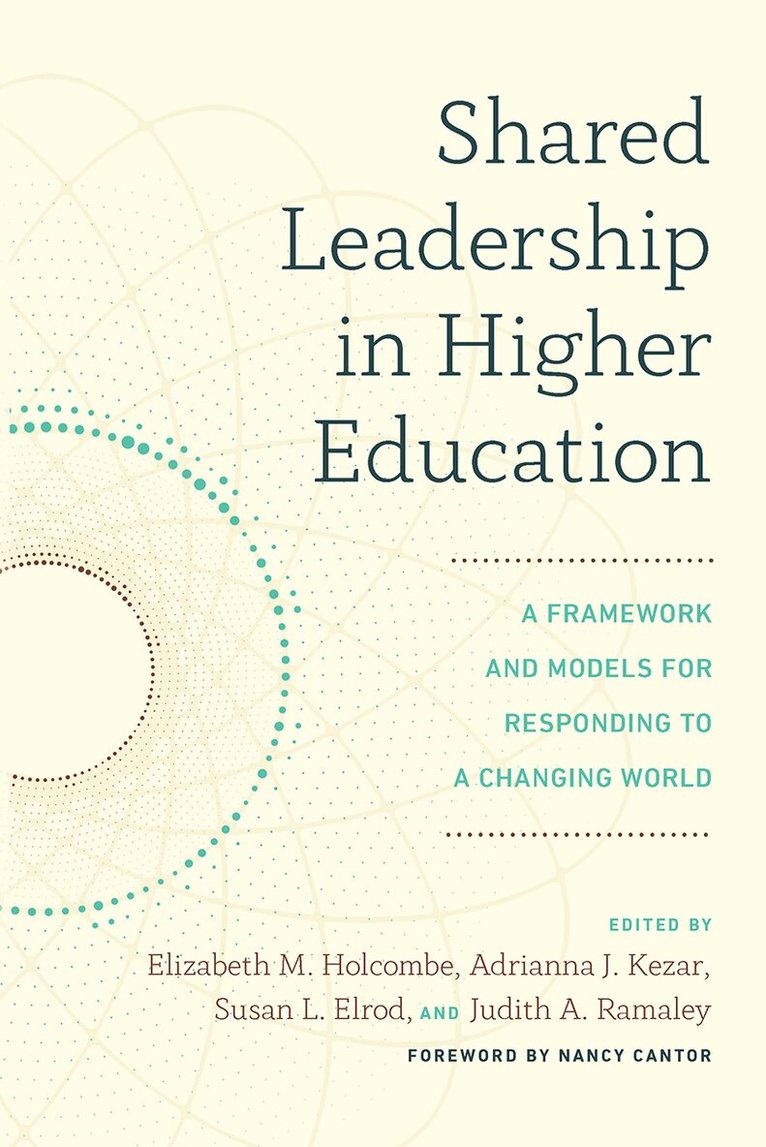
Shared Leadership in Higher Education
A Framework and Models for Responding to a Changing World
Inbunden, Engelska, 2021
2 053 kr
Skickas inom 10-15 vardagar
Today’s higher education challenges necessitate new forms of leadership. A volatile financial environment and the need for new business models and partnerships to address the impact of new technologies, changing demographics, and emerging societal needs, demand more effective and innovative forms of leadership. This book focusses on a leadership approach that has emerged as particularly effective for organizations facing complex challenges: shared leadership. Rather than concentrating power and authority in an individual leader at the top of an organization, shared leadership involves multiple people influencing one another across varying levels and at different times. It is a flexible, collective, and non-hierarchical approach to leadership. Organizations that have implemented shared leadership have been better able to learn, innovate, perform, and adapt to the types of external challenges that campuses now face and that will continue to shape higher education in the future. This book brings together the two foremost scholars of higher education who have studied, described and evaluated the impact of shared leadership, a university chancellor with prior experience of facilitating systemic institutional change at two university systems, and the former president of three universities where she coordinated processes that led to the transformational changes needed renew institutional mission and purpose. Opening with four chapters that define the nature of shared leadership, describe its key characteristics, and how to build institutional capacity, the book then presents ten institutional cases. Ranging from institution-wide initiatives at four year colleges and a community college, to examples of managing change in a college, a center, and across STEM departments, the contributing authors describe the context and drivers of the need for change, the building of shared vision to create coalitions, lessons learned, and outcomes. Intended as a resource for leaders at the highest levels such as Presidents and Provosts as well as mid-level leaders such as deans, directors, and department chairs, the book is also addressed to faculty and staff who are interested in collaborating with campus leaders on institutional decision-making or creating new change initiatives. It is intended to build capacity for shared leadership across institutions and for use in leadership courses and programs.
Shared Leadership in Higher Education
A Framework and Models for Responding to a Changing World
Häftad, Engelska, 2021
469 kr
Skickas inom 10-15 vardagar
Today’s higher education challenges necessitate new forms of leadership. A volatile financial environment and the need for new business models and partnerships to address the impact of new technologies, changing demographics, and emerging societal needs, demand more effective and innovative forms of leadership. This book focusses on a leadership approach that has emerged as particularly effective for organizations facing complex challenges: shared leadership. Rather than concentrating power and authority in an individual leader at the top of an organization, shared leadership involves multiple people influencing one another across varying levels and at different times. It is a flexible, collective, and non-hierarchical approach to leadership. Organizations that have implemented shared leadership have been better able to learn, innovate, perform, and adapt to the types of external challenges that campuses now face and that will continue to shape higher education in the future. This book brings together the two foremost scholars of higher education who have studied, described and evaluated the impact of shared leadership, a university chancellor with prior experience of facilitating systemic institutional change at two university systems, and the former president of three universities where she coordinated processes that led to the transformational changes needed renew institutional mission and purpose. Opening with four chapters that define the nature of shared leadership, describe its key characteristics, and how to build institutional capacity, the book then presents ten institutional cases. Ranging from institution-wide initiatives at four year colleges and a community college, to examples of managing change in a college, a center, and across STEM departments, the contributing authors describe the context and drivers of the need for change, the building of shared vision to create coalitions, lessons learned, and outcomes. Intended as a resource for leaders at the highest levels such as Presidents and Provosts as well as mid-level leaders such as deans, directors, and department chairs, the book is also addressed to faculty and staff who are interested in collaborating with campus leaders on institutional decision-making or creating new change initiatives. It is intended to build capacity for shared leadership across institutions and for use in leadership courses and programs.