Agnieszka Olechnicka - Böcker
Visar alla böcker från författaren Agnieszka Olechnicka. Handla med fri frakt och snabb leverans.
4 produkter
4 produkter
635 kr
Skickas inom 10-15 vardagar
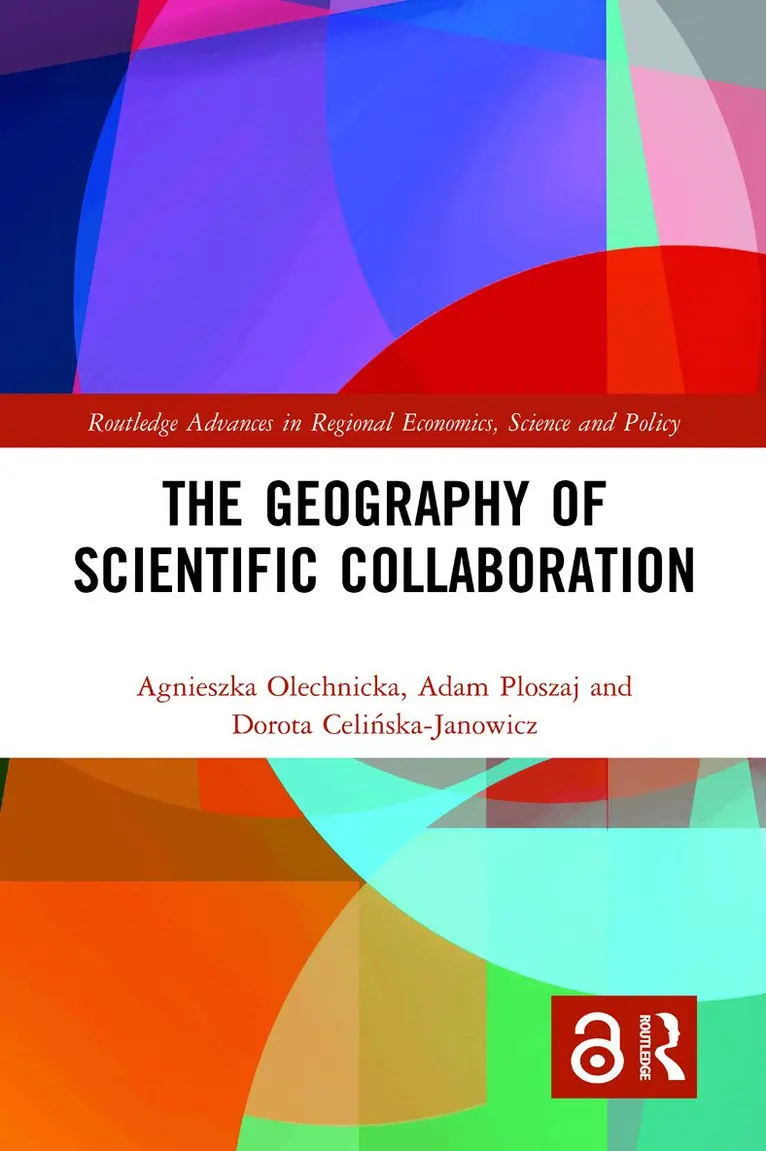
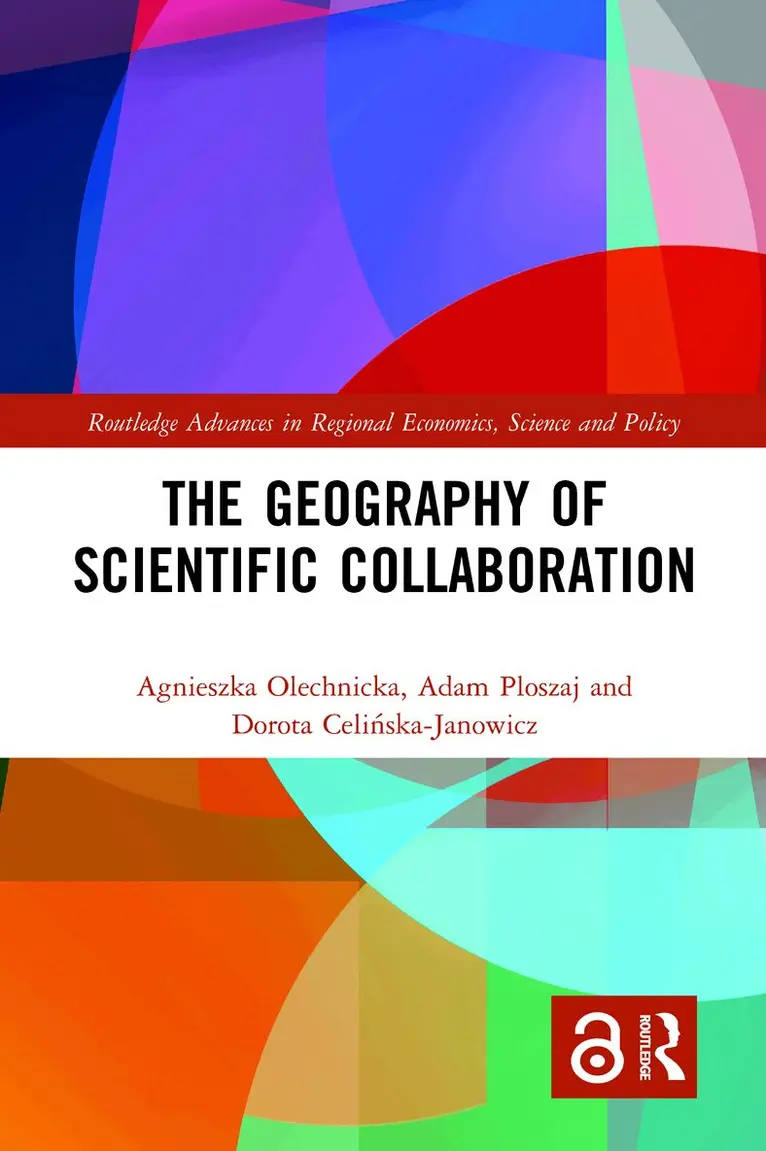
Science is increasingly defined by multidimensional collaborative networks. Despite the unprecedented growth of scientific collaboration around the globe – the collaborative turn – geography still matters for the cognitive enterprise. This book explores how geography conditions scientific collaboration and how collaboration affects the spatiality of science.This book offers a complex analysis of the spatial aspects of scientific collaboration, addressing the topic at a number of levels: individual, organizational, urban, regional, national, and international. Spatial patterns of scientific collaboration are analysed along with their determinants and consequences. By combining a vast array of approaches, concepts, and methodologies, the volume offers a comprehensive theoretical framework for the geography of scientific collaboration. The examples of scientific collaboration policy discussed in the book are taken from the European Union, the United States, and China. Through a number of case studies the authors analyse the background, development and evaluation of these policies. This book will be of interest to researchers in diverse disciplines such as regional studies, scientometrics, R&D policy, socio-economic geography and network analysis. It will also be of interest to policymakers, and to managers of research organisations.
2 485 kr
Skickas inom 10-15 vardagar
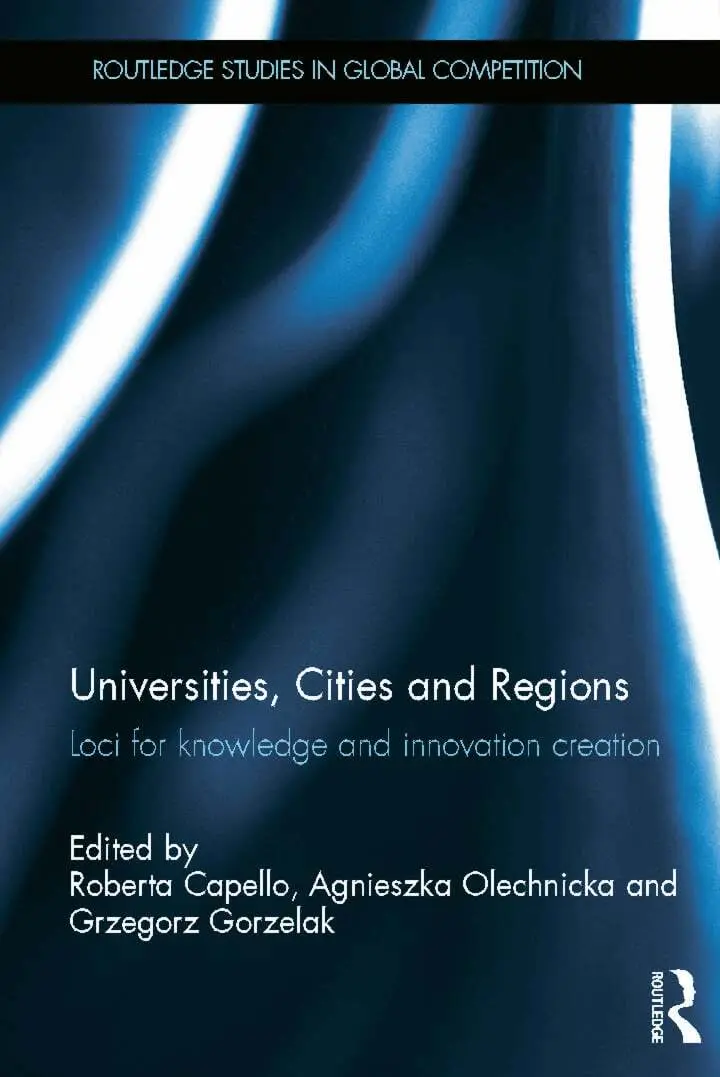
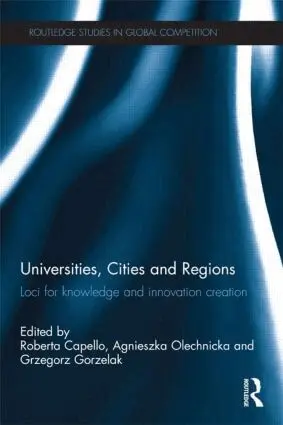
Regions and cities are the natural loci where knowledge is created, and where it can be easily turned into a commercial product. Regions are territories where, under certain socio-economic conditions, a strong sense of belonging and mutual trust develops the ability to transform information and inventions into innovation and productivity increases, through cooperative or market interaction. Especially in contexts characterised by a plurality of agents — such as cities or industrial districts — knowledge is the result of cooperative learning processes, nourished by spatial proximity, network relations, interaction, creativity and recombination capability.This book explains the logic behind these interactions and cooperative attitudes in regions and cities. One of the most significant channels comes from the presence of a university and its collaboration with firms and scientific research centres. These mutual relations between academic institutions and enterprises are of key importance. The significance of universities in driving economic well being and regional development has been well documented for some time now. Much of the research, however, has centred upon countries in Western Europe and the United States. Increasingly, and since the expansion of the European Union in 2004 in particular, themes of academic entrepreneurship, university-business links, knowledge and innovation have become important on a Europe-wide scale. This book draws together key thinkers from across the continent to analyze the importance of higher educational institutions in fostering development.
2 088 kr
Skickas inom 10-15 vardagar
Science is increasingly defined by multidimensional collaborative networks. Despite the unprecedented growth of scientific collaboration around the globe – the collaborative turn – geography still matters for the cognitive enterprise. This book explores how geography conditions scientific collaboration and how collaboration affects the spatiality of science.This book offers a complex analysis of the spatial aspects of scientific collaboration, addressing the topic at a number of levels: individual, organizational, urban, regional, national, and international. Spatial patterns of scientific collaboration are analysed along with their determinants and consequences. By combining a vast array of approaches, concepts, and methodologies, the volume offers a comprehensive theoretical framework for the geography of scientific collaboration. The examples of scientific collaboration policy discussed in the book are taken from the European Union, the United States, and China. Through a number of case studies the authors analyse the background, development and evaluation of these policies. This book will be of interest to researchers in diverse disciplines such as regional studies, scientometrics, R&D policy, socio-economic geography and network analysis. It will also be of interest to policymakers, and to managers of research organisations. The Open Access version of this book, available at http://www.taylorfrancis.com, has been made available under a Creative Commons Attribution-Non Commercial-No Derivatives 4.0 license.
731 kr
Skickas inom 10-15 vardagar
Regions and cities are the natural loci where knowledge is created, and where it can be easily turned into a commercial product. Regions are territories where, under certain socio-economic conditions, a strong sense of belonging and mutual trust develops the ability to transform information and inventions into innovation and productivity increases, through cooperative or market interaction. Especially in contexts characterised by a plurality of agents — such as cities or industrial districts — knowledge is the result of cooperative learning processes, nourished by spatial proximity, network relations, interaction, creativity and recombination capability.This book explains the logic behind these interactions and cooperative attitudes in regions and cities. One of the most significant channels comes from the presence of a university and its collaboration with firms and scientific research centres. These mutual relations between academic institutions and enterprises are of key importance. The significance of universities in driving economic well being and regional development has been well documented for some time now. Much of the research, however, has centred upon countries in Western Europe and the United States. Increasingly, and since the expansion of the European Union in 2004 in particular, themes of academic entrepreneurship, university-business links, knowledge and innovation have become important on a Europe-wide scale. This book draws together key thinkers from across the continent to analyze the importance of higher educational institutions in fostering development.