A/GNP-BC Meredith Wallace Kazer, PhD, APRN – författare
987 kr
Läs direkt efter köp
"[This book] is an important reference for nurses seeking to take the certification exam to validate their own practice. The practice of nursing over the next decades will demand age-specific knowledge for people across the life span. Nurses need to develop expertise in the area of geriatrics and have that expertise validated through certification."
Tara A. Cortes, PhD, RN, FAANThe Hartford Institute for Geriatric Nursing(From the Foreword)
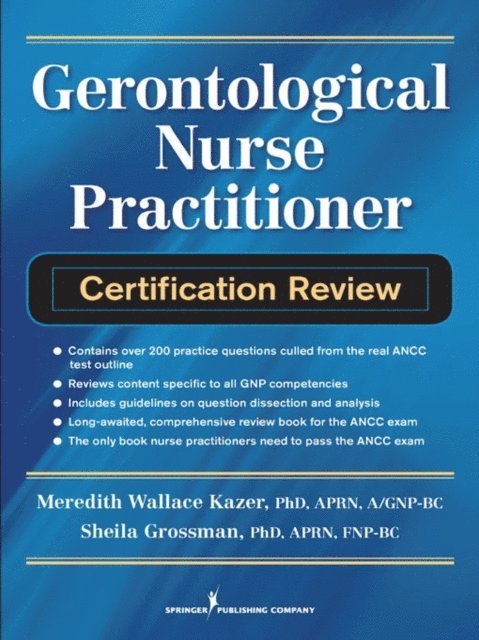
Nurse practitioners have long required a comprehensive certification review book for the American Nurses Credentialing Center (ANCC) and the American Academy of Nurse Practitioners Gerontological Nurse Practitioner (GNP) certification examinations.
Gerontological Nurse Practitioner Certification Review is the first book to provide a thorough review of test content to effectively prepare nurses to successfully pass the GNP certification exam. With over 200 practice questions culled from the real ANCC test outline, this is the only book nurse practitioners need to pass the ANCC exam.Challenging and reflective questions and answers are provided at the end of each chapter for topic review, with a final test offered at the end of the book. By providing students the ability to take the "mock test," this book instills confidence, preparing students for the actual certification exam.
Gerontological Nurse Practitioner Certification Review contains:
Guidelines on question dissection and analysis, as well as over 200 questions culled from the real ANCC test outline A comprehensive review of health promotion and disease prevention, assessment of acute and chronic illness, clinical management and pharmacological/nonpharmacological interventions, professional role and policy issues, and more An examination of the nurse practitioner and patient relationshipAdditionally, this book helps students in gerontological nurse practitioner, family nurse practitioner, and adult nurse practitioner programs with course program examinations that refer to older adults.
2 961 kr
Läs direkt efter köp
Named a 2013 Doody''s Essential Purchase!
Named a "Choice Outstanding Academic Title" for 2007 and an "AJN Book of the Year"
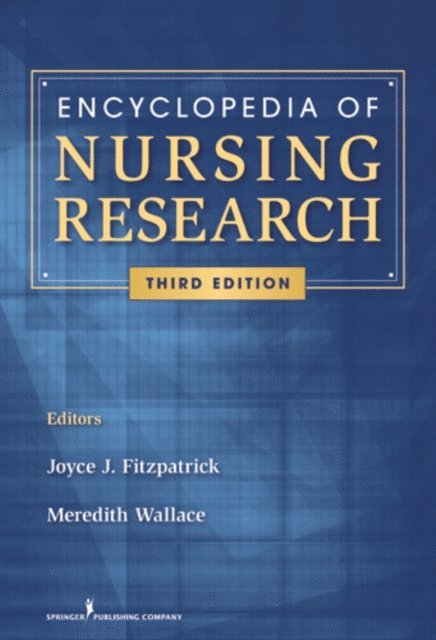
The award-winning Encyclopedia of Nursing Research, now in its third edition, is the comprehensive resource for tracking developments in the field. With over 20 new areas of research, and meticulous updates of original entries, the encyclopedia presents key terms and concepts and their application to practice. Pithy entries provide the most relevant and current research perspectives, and will be a starting point for future content and references. Nurse researchers, educators, students, and all clinical specialties will find the encyclopedia an important introduction to the breadth of nursing research today.
New topics include NIH-funded research areas, a comprehensive survey of major nursing research journals, addictions care, palliative care, translational science, simulation, trauma care, family-centered care, mild cognitive impairment, active surveillance for cancer care, workplace and empowerment research, nurse engagement, nurse-physician collaboration, CAM and empowerment research, spirituality, synthesis and action research, mixed methods research, systematic review, ethnopharmacology, and more.
Key Features:
Includes NIH-funded research topicsProvides a comprehensive survey of major nursing research journals Adds over 20 new areas of research and updates original entriesWritten by over 200 nursing research experts Organized alphabetically for easy access to information1 022 kr
Läs direkt efter köp
Essentials of Gerontological Nursing presents the best practices needed to care for older adults. Its brief, yet comprehensive, grasp of issues in elder care is a refreshing addition to the current literature, which is more commonly focused on theory than on clinical practice. Designed primarily for students in gerontological nursing courses in BSN and graduate programs, the book provides:
Essential clinical information and "best practices" needed to care for older adults Current research and new patient approaches in gerontological nursing Overviews of rarely discussed issues, such as elder abuse, cultural considerations, and restraint alternatives Clinical specifications and practical applications Content designed to fit into a one-semester course Essentials of Gerontological Nursing is everything the nursing student needs to know when caring for older adults.1 022 kr
Läs direkt efter köp
Features evidence-based, practical, and effective strategies for creating and maintaining optimal quality of life for older adults
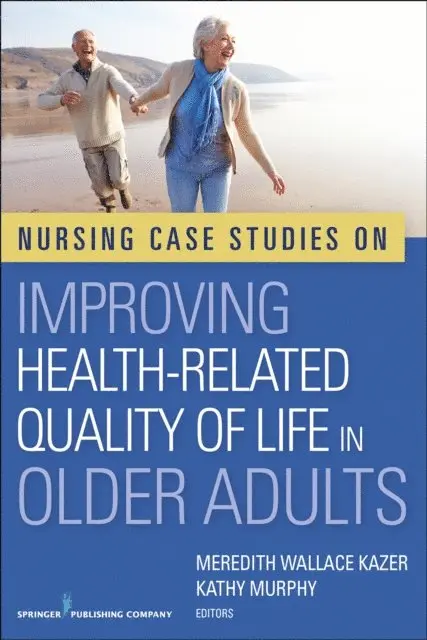
This globally focused resource integrates sound research evidence, real-life case scenarios, and effective, practical strategies to address a key health care initiative of the 21st century: optimal quality of life for older adults. Distinguished by its broad outlook, the book includes contributions from an international cadre of widely published scholars and is designed for easy integration into traditional nursing education curricula. The book explores the experiences of older adults at home, in assisted living, and in nursing home environments, examining their complex and wide-ranging health, spiritual, and emotional needs.
The book is organized into two sections that address quality of life issues. Section I broadly addresses quality of life issues across the full range of care environments, while Section II addresses some of the more specific issues and health conditions that have an impact on the quality of life of older adults. A detailed and multidimensional case study opens each chapter, including subjective and objective data focusing on the quality-of-life domain being addressed. Articulation and definition of each quality-of-life issue are presented along with information on the incidence and prevalence of the problem. Several cases addressing issues older adults encounter in preventing and managing acute and chronic disease serve as a clinical resource guide, with an emphasis on clinical reasoning. Each chapter features a comprehensive, synthesized literature review, delivering the best evidence in the field and offering effective strategies for managing care issues. Generalist and advanced practice nursing roles in promoting quality of life, along with relevant cultural considerations, are covered in detail. Each chapter concludes with tips and strategies for the promotion of quality of life among older adults, accompanied by a list of critical thinking questions. Content is organized to be compatible with the Adult-Gero Nurse Practitioner Certification Test Plan.
Key Features:
Addresses key quality-of-life education and practice initiatives advanced by leading gerontology organizations worldwideIncludes detailed, multifaceted case studies reflecting extensive, current evidence-based literatureDescribes practical, cost-effective strategies aimed at maintaining healthDisseminates the universally applicable perspectives of international scholars of global agingProvides content compatible with the Adult-Gero Nurse Practitioner Certification Test Plan1 056 kr
Läs direkt efter köp
Designated a Doody''s Core Title!
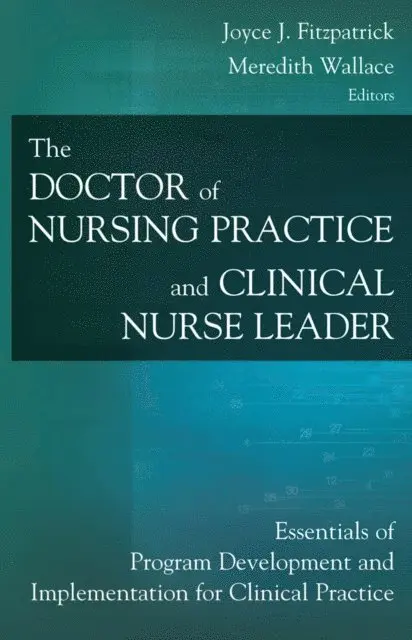
"The construction of the doctor of nursing practice (DNP) and the clinical nurse leader (CNL) set in motion a sea change in graduate nursing education. In this book, Fitzpatrick and Wallace document the history, the driving forces, and the expectations for these new roles while providing a starting point for capacity building for the development of DNP and CNL educational programs."
--Nursing Education PerspectivesThe Research Journal of the National League for Nursing
"This [book] is essential reading for graduate nursing students who are considering pursuing an advanced degree in nursing." Score: 100, 5 stars
- -Doody''s
This is the first book to document and analyze the development and integration of the Clinical Nurse Leader (CNL) and Doctorate of Nursing Practice (DNP) programs in graduate nursing institutions. Editors Fitzpatrick and Wallace, established authorities in nursing education, present this text as an introduction to these exciting new degrees.
The contributors, ranging from architects of the programs to graduates from the programs, offer valuable information on the objectives, curricula, and expected outcomes of these two educational tracks. Ultimately, the book explores how the development of these new degrees has influenced health care delivery at large. Highlights of this book:
Delineates core program requirements and outlines what is expected of students in both clinical and academic arenas Provides guidance to students making the transition from masters level nursing programs to doctoral level programs Includes two chapters written by the AACN Taskforce on the new degrees, with essential information on how to gain and sustain accreditation Identifies critical issues underpinning future DNP and CNL program development, and discusses the impact of the new degrees on nursing education, patient outcome, and health careOffering comprehensive coverage of the DNP and CNL development, this book is required reading for students considering doctorates in nursing, as well as nurse educators and administrators working within the programs.