Alfred L. Gardner – författare
Visar alla böcker från författaren . Handla med fri frakt och snabb leverans.
2 produkter
2 produkter
Inbunden, Engelska, 2008
971 kr
Skickas inom 5-8 vardagar
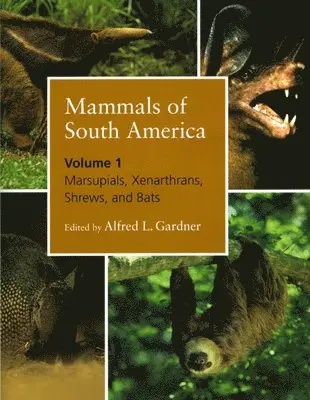
The vast terrain between Panama and Tierra del Fuego contains some of the world's richest mammalian fauna, but until now it has lacked a comprehensive systematic reference to the identification, distribution, and taxonomy of its mammals. The first such book of its kind and the inaugural volume in a three-part series, "Mammals of South America" both summarizes existing information and encourages further research of the mammals indigenous to the region. Containing identification keys and brief descriptions of each order, family, and genus, the first volume of "Mammals of South America" covers marsupials, shrews, armadillos, sloths, anteaters, and bats. Species accounts include taxonomic descriptions, synonymies, keys to identification, distributions with maps and a gazetteer of marginal localities, lists of recognized subspecies, brief summaries of natural history information, and discussions of issues related to taxonomic interpretations. Highly anticipated and much needed, this book will be a landmark contribution to mammalogy, zoology, tropical biology, and conservation biology.
E-bok
PDF, Engelska, 20082 165 kr
Läs direkt efter köp
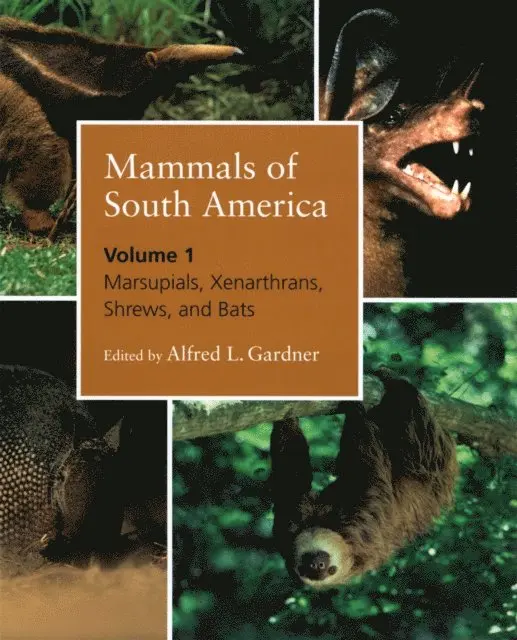
The vast terrain between Panama and Tierra del Fuego contains some of the world’s richest mammalian fauna, but until now it has lacked a comprehensive systematic reference to the identification, distribution, and taxonomy of its mammals. The first such book of its kind and the inaugural volume in a three-part series, Mammals of South America both summarizes existing information and encourages further research of the mammals indigenous to the region. Containing identification keys and brief descriptions of each order, family, and genus, the first volume of Mammals of South America covers marsupials, shrews, armadillos, sloths, anteaters, and bats. Species accounts include taxonomic descriptions, synonymies, keys to identification, distributions with maps and a gazetteer of marginal localities, lists of recognized subspecies, brief summaries of natural history information, and discussions of issues related to taxonomic interpretations.Highly anticipated and much needed, this book will be a landmark contribution to mammalogy, zoology, tropical biology, and conservation biology.