Alice T. Friedman – författare
Visar alla böcker från författaren Alice T. Friedman. Handla med fri frakt och snabb leverans.
2 produkter
2 produkter
Inbunden, Engelska, 2025
428 kr
Skickas inom 5-8 vardagar
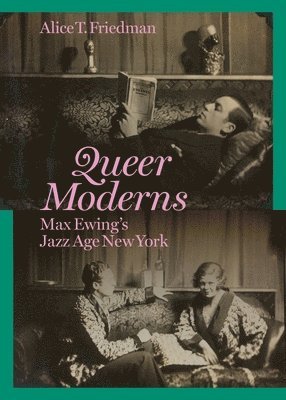
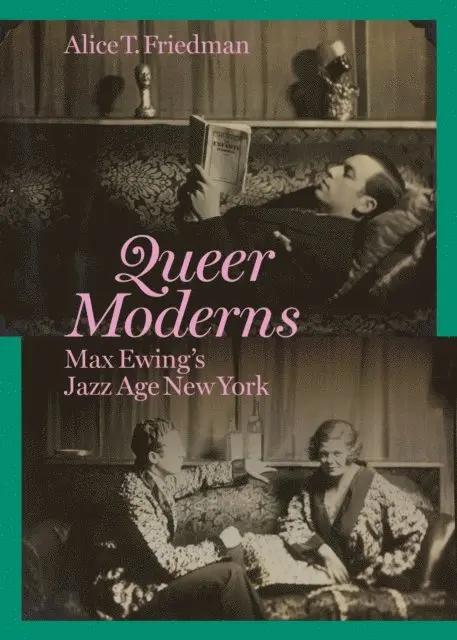
A richly illustrated history of the glittering world of queer artistic life in the 1920s and ’30sIn Queer Moderns, Alice Friedman tells the fascinating story of the queer avant-garde of the 1920s and ’30s in New York, Paris, and Venice, as seen through the eyes of Max Ewing (1903–1934), a young musician, photographer, and man-about-town who, although virtually unknown today, moved in extraordinary circles. In his photographs and letters, we meet the rising stars of modern art, music, dance, and literature and enter a world of interracial friendship, “queer space,” and experimentation that shone brightly before being swept away by the Depression. It is a remarkable story that reveals that the history of modernism is more queer and more Black than previously recognized.In the 1920s, Ewing became part of an international coterie of artists led by Carl Van Vechten and Muriel Draper. In Europe, he was entertained by Gertrude Stein, met Stravinsky, and took a road trip with Romaine Brooks and Natalie Barney. In 1928, in a closet in his apartment, Ewing created the Gallery of Extraordinary Portraits, an installation of photos of his favorite celebrities—Black and white, clothed and nude. For his Carnival of Venice, he took portraits of more than a hundred friends—including Paul Robeson, Berenice Abbott, Isamu Noguchi, Agnes de Mille, and E. E. Cummings—posed in front of a backdrop of Saint Mark’s Square.Like a character from a story by F. Scott Fitzgerald, Ewing joined the party and then died tragically, unable to accept the end of his era or the lost dream of a new way of living. His story sheds new light on modernism and an artistic milieu that was ahead of its time.
Inbunden, Engelska, 2010
799 kr
Tillfälligt slut
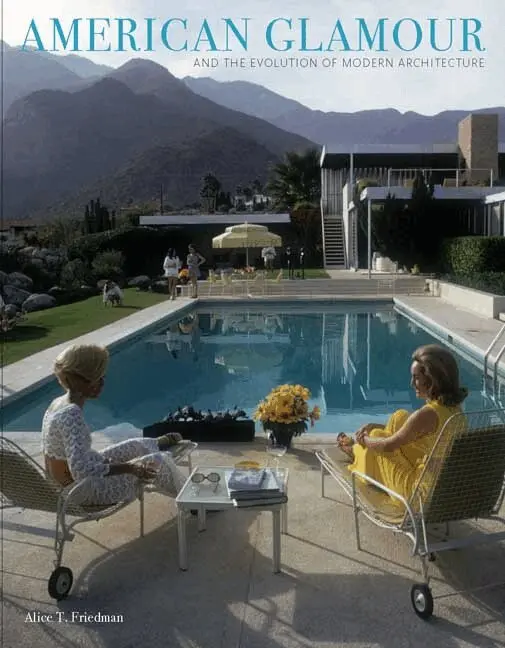
The rise of luxury and sophistication in mid-century modern architecture and designThe sleek lines and gleaming facades of the architecture of the late 1940s and 1950s reflect a culture fascinated by the promise of the Jet Age. Buildings like Eero Saarinen’s TWA Terminal at JFK Airport and Philip Johnson’s Four Seasons Restaurant retain a thrilling allure, seeming to transform the ordinary into the extraordinary. In this work, distinguished architectural historian Alice Friedman draws on a vast range of sources to argue that the aesthetics of mid-century modern architecture reflect an increasing fascination with “glamour,” a term widely used in those years to characterize objects, people, and experiences as luxurious, expressive, and even magical.Featuring assessments of architectural examples ranging from Mies van der Rohe’s monolithic Seagram Building to Elvis Presley’s sprawling Graceland estate, as well as vintage photographs, advertisements, and posters, this book argues that new audiences and client groups with tastes rooted in popular entertainment made their presence felt in the cultural marketplace during the postwar period. The author suggests that American and European architecture and design increasingly reflected the values of a burgeoning consumer society, including a fundamental confidence in the power of material objects to transform the identity and status of those who owned them.