Allen Barra – författare
Visar alla böcker från författaren Allen Barra. Handla med fri frakt och snabb leverans.
6 produkter
6 produkter
Häftad, Engelska, 2014
235 kr
Skickas inom 5-8 vardagar
Häftad, Engelska, 2003
287 kr
Skickas inom 3-6 vardagar
Inbunden, Engelska, 2010
505 kr
Skickas inom 5-8 vardagar
Those fortunate fans who attended Opening Day on August 18, 1910 could not have had the slightest inkling that their brand new stadium would one day be the oldest active professional ballpark in America. Nor could they have possibly imagined how dramatically baseball would transform itself over the course of a century. Back then there were no high-powered agents, no steroids dominating the sports headlines, no gleaming, billion-dollar stadiums with corporate sky boxes that lit up the neon sky. There was only the wood and the raw hide, the mitt and the cap, and the game as it was played a few miles from downtown Birmingham, Alabama.Allen Barra has journeyed to his native Alabama to capture the glories of a century of baseball lore. In chronicling Rickwood Field’s history, he also tells of segregated baseball and the legendary Negro Leagues while summoning the ghosts of the players themselves —Ty Cobb, Honus Wagner, Babe Ruth, Satchel Paige, Josh Gibson, Ted Willians, and Willie Mays — who still haunt baseball’s oldest Cathedral. But Rickwood Field, a place where the Ku Klux Klan once held rallies, has now become a symbol of hope and triumph, a stadium that reflects the evolution of a city where baseball was, for decades, virtually the sole connecting point between blacks and whites.While other fabled stadiums have yielded to the wrecker’s ball, baseball’s Garden of Eden seems increasingly invulnerable to the ravages of time. Indeed, the manually operated scoreboard still uses numbers painted on metal sheets, and on the right field wall, the Burma Shave sign hangs just as it did when the legendary Black Barons called the stadium their own. Not surprisingly, there is no slick or artificial turf here, only grass – and it’s been trodden by the cleats of greats from Shoeless Joe Jackson to Reggie Jackson. Drawing on extensive interviews, best-selling author Barra evokes a southern city once rife with racial tension where a tattered ballpark was, and resplendently still is, a rare beacon of hope. Both a relic of America’s past and a guidepost for baseball’s future, Rickwood Field follows the evolution of a nation and its pastime through our country’s oldest active ballpark.
Häftad, Engelska, 2006
431 kr
Skickas inom 5-8 vardagar
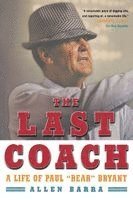
When Paul William "Bear" Bryant died on January 26, 1983, it was the lead story on the all three networks' evening news. New York City newspapers reported his death on their front pages. ("Crimson Tears," read the headline in the New York Post, "Nation weeps over death of legendary Bear Bryant, 69.") Three days later, America watched in awe as an estimated quarter of a million mourners lined the fifty-five mile stretch from Tuscaloosa to a Birmingham cemetery to pay their respects as his three-mile long funeral cortege drove by.President Reagan and the three former American presidents sent flowers, as did people as diverse as Bob Hope, ABC's Roone Arledge, advice columnist Ann Landers and the Reverend Billy Graham. Scores of Bryant's former players, including Joe Namath, Lee Roy Jordan, Ken Stabler and Ozzie Newsome, were in attendance. So were Bryant's most distinguished colleagues, the greatest living football coaches, including Southern Cal's John McKay, who said, "It was like a presidential funeral procession. No coach in America could have gotten that. No coach but him. But then, he wasn't just a coach. He was the coach."Bryant's passing was noted with the kind of reverence our country reserved for statesmen or military leaders, though Paul "Bear" Bryant had insisted for much of his life that he was "just a football coach." For millions he was much more, he was the greatest coach the game ever saw, the heir to the tradition established by Knute Rockne. He took his Alabama Crimson Tide teams to an unmatched six national championships. But to the players, journalists and fans whose lives he touched in his more than half a century as a player and coach, he was the last symbol of values that transcended football—courage, discipline, loyalty, and hard work.To his critics, Bryant represented the dark side of big-time college football—brutality, fanaticism and blind adherence to authority. The real Bear Bryant was far more complex than either his admirers or detractors knew. While maintaining a public friendship with Alabama governor George Wallace, he continually sought ways to undermine the governor's segregationist policies, finally forcing a legendary football game in Birmingham with the University of Southern California that opened the floodgates to the integration of football at the University of Alabama, including its coaching staff. Old fashioned in his politics, he was nonetheless an admirer of Robert Kennedy, whom he planning to vote for in 1968.Allen Barra's The Last Coach traces Paul Bryant's rise from a family of truck farmers to recognition as the most successful and influential coach in the game's history. The eleventh of thirteen children, Bryant was born in tiny Moro Bottom, Arkansas in 1913 and grew up in nearby Fordyce—where his legend was born when he wrestled a live bear on the stage of a local theater. Paul was raised by his mother, who barely managed to keep him out of trouble and on the Fordyce High School Redbugs long enough to get a football scholarship at Alabama, where he would meet and marry the love of his life, campus beauty queen Mary Harmon Black.At the height of the Depression, football took Bryant to the Rose Bowl with Alabama's 1934 national champions and on to a career as an assistant and, finally, a head football coach, where he matched wit and grit with the greatest coaches of two generations, men like Tennessee's General Robert Neyland, Oklahoma's Bud Wilkinson, Notre Dame's Ara Parseghian, Ohio State's Woody Hayes, and Penn State's Joe Paterno. Along the way, he stirred controversy with his infamous "Junction Boys" training camp in 1954, during which almost two-thirds of the Texas A&M football team quit; his legal battle with The Saturday Evening Post over the accusation that he had conspired to fix a college football game, a trial which rocked the sports world; and his pursuit of Amos Alonzo Stagg's all-time record for college coaching victories.Through it all, Bryant's influence has not only endured but prevailed as his former players and assistants continue to define the best in not only college but professional football. A USA Today and Washington Post Best Sports Book.
Häftad, Engelska, 2009
250 kr
Skickas inom 10-15 vardagar
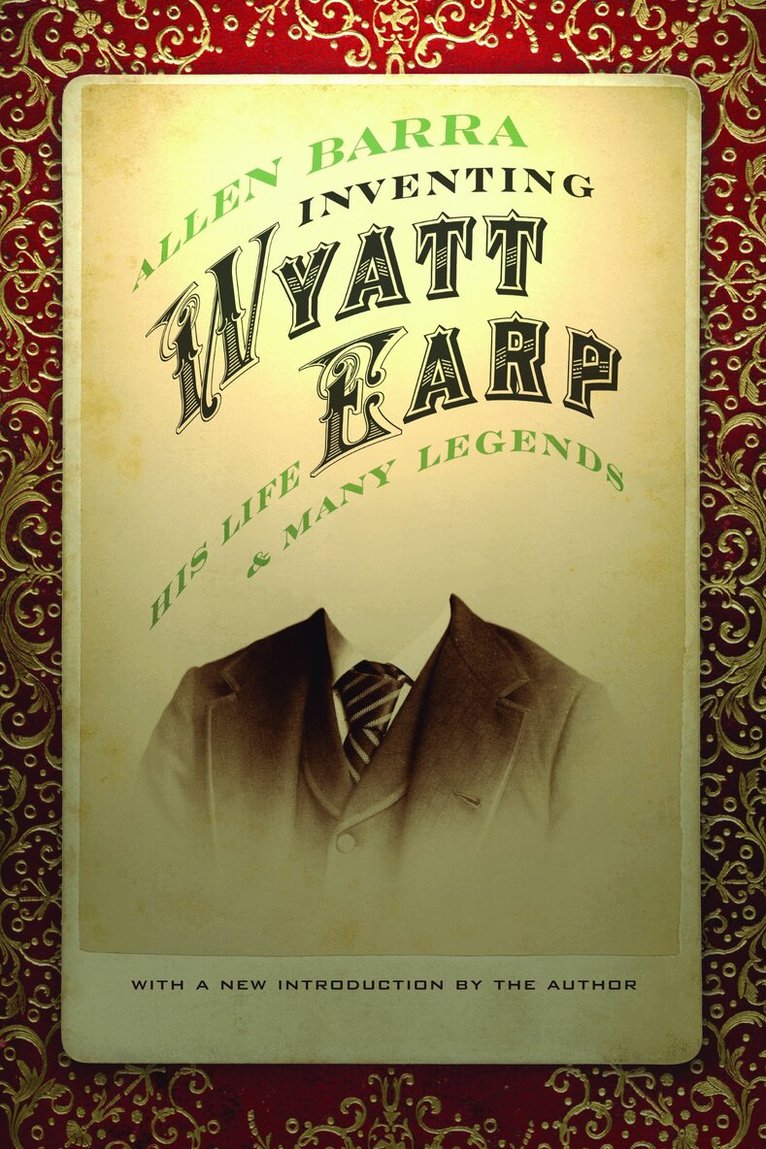
On October 26, 1881, Wyatt Earp, his two brothers, and Doc Holliday shot it out with a gang of cattle rustlers near the O.K. Corral in Tombstone, Arizona. It was over in half a minute, but those thirty violent seconds turned the thirty-three-year-old Wyatt Earp into the stuff of legend.In truth, however, the gunfight at the O.K. Corral neither launched nor climaxed a career that in the course of eighty-two colorful years took Wyatt Earp from an Iowa farm to the movie studios of Hollywood, where he worked as an advisor on Western films. Along the way he saw real-life action as a buffalo hunter, bodyguard, detective, bounty hunter, gambler, boxing referee, prospector, saloon keeper, and, on occasion, a superb lawman. This authoritative biography tells Wyatt Earp's story in all its amazing variety—a story the celebrated lawman shares with the likes of Bat Masterson, Earp's colleague on the Dodge City police force; the tubercular, gun-toting southern gentleman Doc Holliday; and Josephine Sarah Marcus, a beautiful Jewish girl from New York City who lived and traveled with Earp throughout the last forty-seven years of his life. Biographer Allen Barra also examines the more fantastic versions of Earp's exploits told during his own lifetime, as well as his incarnations in the myths that have flourished in our national imagination throughout the seventy years since his death.
Häftad, Engelska, 2005
206 kr
Skickas inom 5-8 vardagar
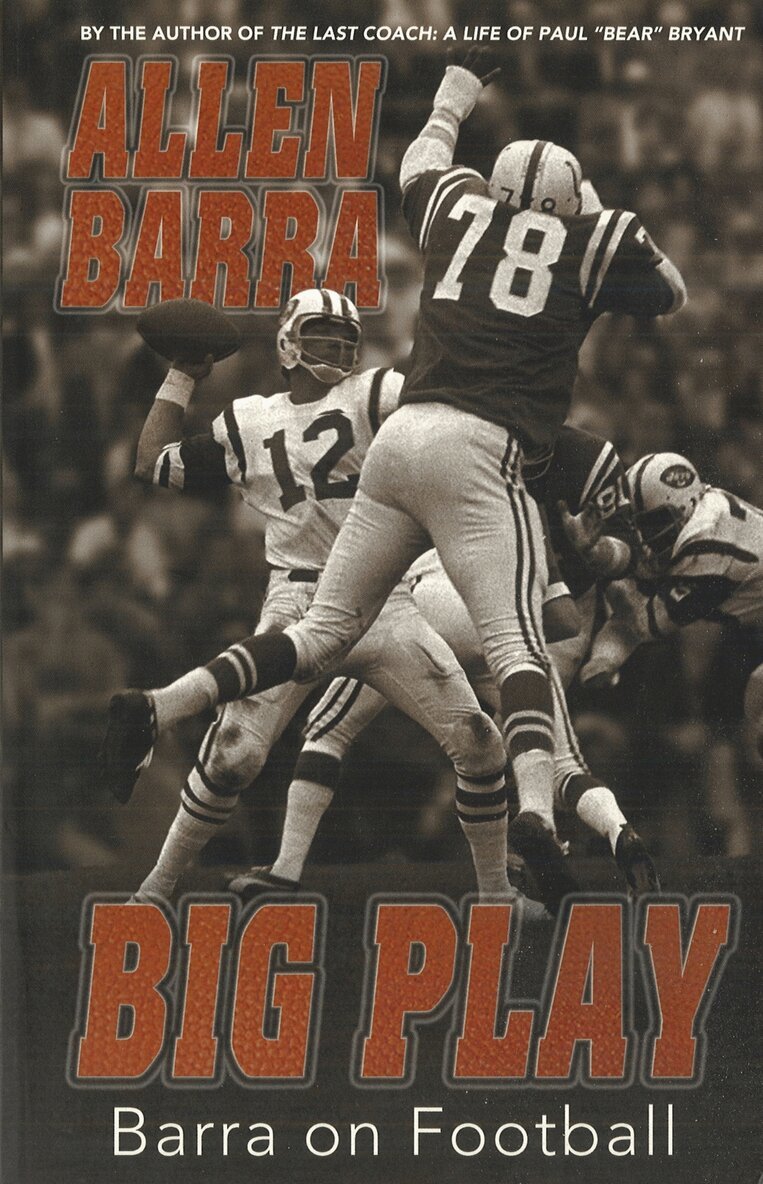
In a follow-up to his Clearing the Bases—Sports Illustrated's book of the year for 2002—syndicated columnist Allen Barra turns his eye from America's pastime to America's passion. In this collection of essays, Barra delves into the gridiron's all-time greats, some of the sport's enduring controversies, and suggests new ways to think about the game that holds our attention from August through January, every year.Barra turns his aggressively intelligent writing to the Heisman Trophy and its controversies and demonstrates why the Bowl Championship Series has not and cannot work. He explains how the infamous tie game between Notre Dame and Michigan State in 1966 changed football forever. He compares the careers of Bear Bryant and Vince Lombardi, George Allen and Don Shula, Bart Starr and Johnny Unitas, and Joe Montana and Steve Young, probing beyond the myths that surround each man and creating a new context to understand their achievements. He explains how Notre Dame embraced a destiny in pads, beyond the Gipper mystique and Rockne speeches. No other writer challenges a sport's myths, untrue truisms, and legends the way Barra does in these essays.The achievement of a writer who manages a balance between establishment insider and outspoken iconoclast, Big Play explores issues and controversies that fire up pigskin fans. Blending statistical commentary with insight and biting commentary with genuine fandom, Barra provides readers with another dose of his passionate, opinionated, and unique analysis of football.