Amatzia Baram – författare
Visar alla böcker från författaren Amatzia Baram. Handla med fri frakt och snabb leverans.
3 produkter
3 produkter
Inbunden, Engelska, 1991
1 114 kr
Skickas inom 10-15 vardagar
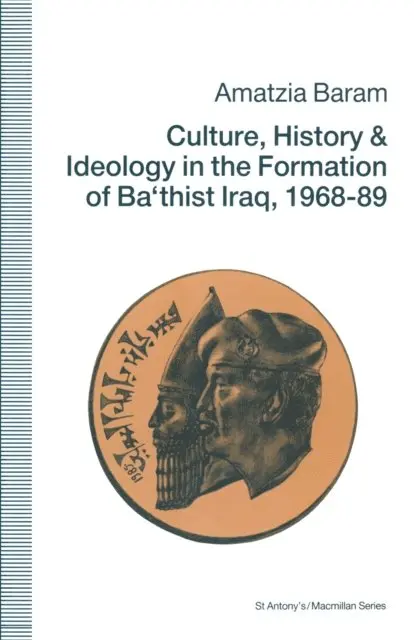
This book is about the metamorphosis of national ideology in Ba'thist Iraq. By "ideology" the reference is to a very broad sense of the term, closer to a "collection of political proposals...somewhat intellectualistic" than to a comprehensive world view or an interpretation of history fully, systematically and rigorously thought out, presented and elaborated. Speeches by leading politicans, historiography and the writings of intellectuals in regard to Iraq's political community, are considered here as ideology, even if these ideas do not constitute a complete "politico-social programme".;This book is an attempt to follow and analyze the change in the Ba'th party's perception and representation of Iraq as a political community. By resurrecting and imbuing with great national significance elements previously rejected, ignored or downplayed in Ba'th ideology such as territory, race and local pre-Islamic and pre-Arab historical epochs, the Ba'th regime of Iraq has sought to re-shape the collective identification of its countrymen. In several cases, this reshaping took the form of re-enforcing and fully legitimizing an already existing identification that hitherto the party had looked
E-bok
PDF, Engelska, 19911 408 kr
Läs direkt efter köp
In this book, an innovative approach to the study of ideology in the Arab world explores how, through culture and the re-interpretation of history, a powerful totalitarian regime has endeavoured to cement internal unity among Iraq''s diverse ethnic and religious communities. The book analyzes the ways in which, to imbue its citizens with a common destiny of Arab leadership, this regime has set out to convince the Iraqi people to see themselves as the heirs of all the great civilizations of Mesopotamia.
Inbunden, Engelska, 2015
587 kr
Tillfälligt slut
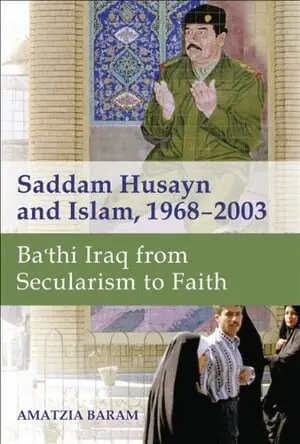
Saddam Hussein and Islam, 1968-2003, offers an intellectual history of the Ba thi Party from the 1940s through 2003. Amatzia Baram focuses on the transition from its early insistence on "unity, freedom, and socialism" to its Islamization by the time it was toppled by U.S. forces in 2003, a change largely impelled by the need to rally Iraqis against Iran during their war of 1980-88. Baram reveals signs that Saddam Hussein himself became some sort of born-again Muslim, though these signs are inconclusive. Sources include open source material but also internal secret files and highly classified audiotapes of Saddam Hussein that were made available to researchers at the Conflict Records Research Center at National Defense University and some documents at the Hoover Institution.