Amber Royer – författare
149 kr
Skickas inom 5-8 vardagar
43 kr
Läs direkt efter köp
123 kr
Skickas
71 kr
Läs direkt efter köp
461 kr
Skickas inom 5-8 vardagar
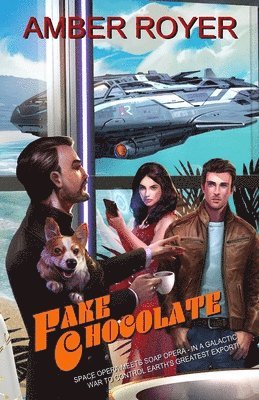
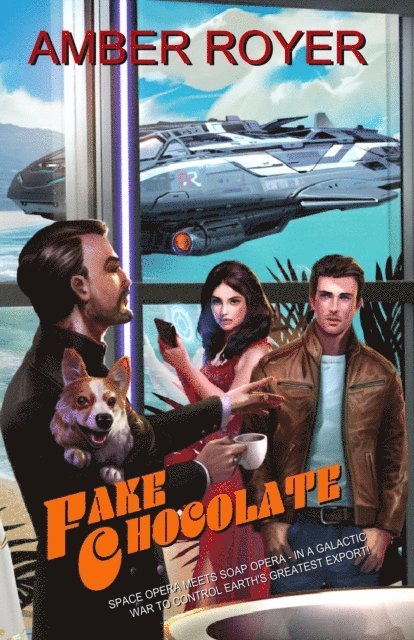
Fake Chocolate
The Chocoverse Book III
244 kr
Skickas inom 5-8 vardagar
183 kr
Läs direkt efter köp
Bo''s Coming Home!
In a galaxy where chocolate is tied to dark secrets and past wrongs, one celebrity chef has to put things right, in the delectable conclusion to the Chocoverse Trilogy that started with Free Chocolate
When disease ravages Earth''s cacao plantations, Bo Benitez returns home to help with the media spin to hide that chocolate is in danger of being lost forever. HGB has come up with a new product - one which doesn''t appease the cocoa-addicted murderous, shark-toothed aliens threatening to invade the planet. Someone has to smooth things out. Just when Bo starts to make headway, someone tries to kidnap her. While trying to avoid more would-be-kidnappers, Bo finds out that HGB is developing a cure for withdrawal from the Invincible Heart. Will she let her need to be physically whole again tie her to HGB and its enigmatic CEO? When she gets a key piece of evidence that would unravel secrets from three different planets, she has tough choices to make about the future of her world and its place in the galaxy.
Space Opera Meets Soap Opera in a Galactic War to Control Earth''s Greatest Export!
File Under: Science Fiction [ Who''s Got Chocolate | Mercy is a Gift | Think We''re a Clone Now | No Place Like Home ]
583 kr
Skickas inom 5-8 vardagar
326 kr
Läs direkt efter köp
Want to write novels that feel real enough to the reader to have been ripped from the headlines, whatever your genre? Think like a journalist. Looking at the questions journalists ask can help you think of the characters and events in your story as real people, whose lives you are recording, just like you were writing memoir or a news article.
Approach planning your novel the way a journalist plans out writing a news piece. They figure out what they will need to research for the piece, and decide how they will structure that research into a narrative. They decide on a format for the story''s lede (opening designed to draw the reader in) and structure the story to follow up on the questions presented in that lede. They document everything, so that they can verify the accuracy of everything they present. You can do the same for your fiction.
This workbook serves as a full self-paced writing course, presenting theory on each aspect of the world/characters you are trying to create - and then offering step-by-step worksheets that allow you to apply what you just learned. The instructional material is designed to give you a basic foundation in creative writing craft so that you understand how to build an effective story using the information you add into the worksheets.
Working through the entire collected workbook will give you a comprehensive Story Bible detailing aspects of your plot and characters to give you a reference source for your world - and the expertise on how to use it.
The Master Collection gives you access to all five Story Like a Journalist volumes, for a total of over 100 worksheets. Get ready to take a deep dive into your story, its characters and its world. The journalistic planning strategies in the book take you from determining the best protagonist for your story to imbuing your work with meaning.
The book walks you through each of these processes:
Who? = Character - WHO are these people who''ve showed up demanding a place in your novel, anyway? You know they have a story to tell, and for some specific reason, you are the writer in the best position to tell it.Approach uncovering character the same way a journalist approaches a profile piece.
What? = Premise -- WHAT is this story about? Premise define the heart of your story. You need a keystone to hold onto, so you don''t get lost in all the things your story COULD be. Premise is your keystone, and it works like the legend for a road map. Approach refining premise the same way a journalist approaches a news story.
When? and Where? = Setting - WHEN and WHERE the heck are your characters? They have to be somewhere, waiting for the story to start. And that place shouldn''t be random. Setting makes the story specific, and allows readers to feel like your characters are real people, living real lives in a certain time and place.Approach exploring aspects of your setting the same way a journalist approaches making a documentary.
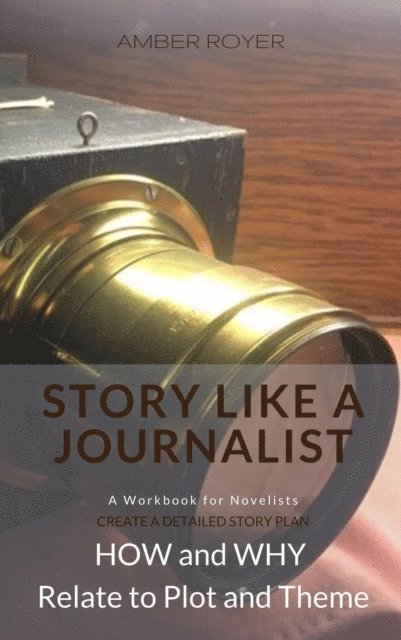
How? and Why? = Plot and Theme - A plot that doesn''t build to a theme is hollow, no matter how much excitement you build into the on-page action, there''s no substance so the story won''t be memorable. A character contemplating a theme without the framework of a plot is drifting, no matter how much she has to say, there''s nothing concrete to prove her points or to challenge them. Her ideas just slip away. But when you get HOW and WHY working together, you can build a pattern of events and meaning that will touch our emotions and maybe even change the way we think.
145 kr
Skickas inom 5-8 vardagar
98 kr
Läs direkt efter köp
Want to write novels that feel real enough to the reader to have been ripped from the headlines, whatever your genre? Think like a journalist. Journalists consult sources and reference materials to find realistic detail for their stories. But if you''re a novelist - you have to build the reference source for your story world from scratch. Which is why you need to start setting rules and parameters with a STORY BIBLE OVERVIEW.
Get ready to get organized and plan your novel. WHO are your characters going to be and WHAT will they be doing in the story? WHERE are they when the story starts? WHEN did all this happen? HOW will they uncover the bad guy, win someone''s heart, get what they want? WHY bother writing this story in the first place? /p>
In this textbook/workbook you will learn how to apply lessons from the journalism world to fiction writing. You will apply the 5-Ws and H to the building blocks of the novel, in order to create a Story Bible.
This workbook serves as a full self-paced writing course, presenting theory on lessons writers learn in journalism classes - and then offering step-by-step worksheets that allow you to apply what you just learned to your fiction. The instructional material is designed to give you a basic foundation in creative writing theory regarding shaping a story so that you understand how to sift through facts and possibilities to create fiction with meaning using the information you add into the worksheets.
Working through the entire Story Bible Overviewb workbook will give you a bird''s-eye view of your project, and let you document the basic shape of it to pull from while writing. In short, you get a reference source for your world - and the expertise on how to use it.
Approach uncovering character the same way a journalist approaches an assignment.
Delve into the world of the journalist, and consider how to write clear, vivid prose that respects your characters, even while challenging them or forcing them to make difficult choices using worksheets to consider everything from which characters will have the most agency to how different characters'' language will be structured.
• Generate ideas. Determine the best way to approach the story with worksheets on ledes, angle, language use, point of view, and the basic rules of your world. Decide which promises to the reader you will make in your opening chapters. Create master lists to start keeping track of named characters and other named places/items in your story world. Log your real-world research.
NOTE: The e-book version of this workbook links to printable versions of the worksheets. The page count is therefore different than the print book.
Hemmingway worked as a newspaper journalist before he became a fiction writer. E.B. White did a stint at the New Yorker. L.M. Montgomery was a reporter in Halifax before tackling Anne of Green Gables. Margaret Mitchell got her start as a reporter for the Atlanta Journal Sunday Magazine. What these writers have in common: an excellent sense of character, and the ability to write clean prose that clearly puts forwards the characters'' goals and motivations. This ability may well come from having mastered the journalistic art, which emphasizes creating a sound story that balances logic, research and emotional authenticity.
Even if you''re working in a purely creative world, you can still use those principles, and learn to organize and research like a journalist, and to ask the questions a journalist asks either before or after you write your story.
154 kr
Skickas inom 5-8 vardagar
98 kr
Läs direkt efter köp
Want to write novels that feel real enough to the reader to have been ripped from the headlines, whatever your genre? Think like a journalist. When you look at the classic questions journalists ask, the first one is generally WHO? In noveling terms WHO relates to character.
Get ready to take a deep dive into the concept of character. WHO are these people who''ve showed up demanding a place in your novel, anyway? You know they have a story to tell, and for some specific reason, you are the writer in the best position to tell it.
In this textbook/workbook you will learn how to build a distinct cast of characters with qualities that can be specifically attacked by your plot. There is instructional material that focuses on understanding the psychological aspects of character building, as well as the importance of physicality. All of this works in tandem with the worksheets.
This workbook serves as a full self-paced writing course, presenting theory on each aspect of character construction - and then offering step-by-step worksheets that allow you to apply what you just learned. The instructional material is designed to give you a basic foundation in creative writing theory regarding character development so that you understand how to build an effective character arc using the information you add into the worksheets.
Working through the entire WHO Relates to Character workbook will give you a comprehensive view of your characters inner life and a dossier to pull from while writing. In short, you get a reference source for your world - and the expertise on how to use it.
______Approach uncovering character the same way a journalist approaches a profile piece.
Delve into understanding who your characters are and what drives them to act with a series of worksheets that will help you determine everything from psychological traits and archetypes to character skills and backstory.
• Define your characters'' strengths and flaws, assign them a skill set. then get to know them through interviews and exercises, such as putting them into hypothetical situations through dilemma worksheets and uncovering parts of their backstories with involuntary autobiographical memory worksheets.
NOTE: The e-book version of this workbook links to printable versions of the worksheets. The page count is therefore different than the print book.
______Hemmingway worked as a newspaper journalist before he became a fiction writer. E.B. White did a stint at the New Yorker. L.M. Montgomery was a reporter in Halifax before tackling Anne of Green Gables. Margaret Mitchell got her start as a reporter for the Atlanta Journal Sunday Magazine. What these writers have in common: an excellent sense of character, and the ability to write clean prose that clearly puts forwards the characters'' goals and motivations. This ability may well come from having mastered the journalistic art, which emphasizes creating a sound story that balances logic, research and emotional authenticity.
Even if you''re working in a purely creative world, you can still use those principles, and learn to organize and research like a journalist, and to ask the questions a journalist asks either before or after you write your story.
145 kr
Skickas inom 5-8 vardagar
93 kr
Läs direkt efter köp
Want to write novels that feel real enough to the reader to have been ripped from the headlines, whatever your genre? Think like a journalist. Just like a journalist, as a fiction writer, you will need to define WHAT your story is about. For the novelist WHAT relates to premise.
Get ready to explore the concept of premise. Those people in your head, desperate to be part of a story? They need something to do. It''s the all-important WHAT that your story is about. To stay on track, you need a keystone to hold onto, so you don''t get lost in all the things your story COULD be. Premise is your keystone, and it works like the legend for a road map.
In this textbook/workbook you will look at what you plan to write about from different angles and will use the information you uncover to create a story premise that has an active protagonist in an intriguing story, fighting for high stakes. (These can include both external stakes and emotional stakes).
This workbook serves as a full self-paced writing course, presenting theory on writing an effective premise - and then offering step-by-step worksheets that allow you to apply what you just learned to your own story. The instructional material is designed to give you a basic foundation in creative writing theory regarding clearly defining your story''s concept, conflicts and plot question to create fiction with meaning using the information you add into the worksheets.
Working through the entire WHAT Relates to Premiseb workbook will give you a sound thesis statement for the concepts and themes your novel will explore, and define other parameters you can pull from while writing. In short, you get a reference source for your world - and the expertise on how to use it.
Approach refining premise the same way a journalist approaches a news story.
Delve into understanding how to build a powerful premise and how to make sure your story is sound and will add up to something in which your specific characters overcome one specific problem or person in order to become a better or worse person. Instructional material focuses on building genuine conflict into your story, understanding clear goals and motivations for character action, and making sure that your stakes are high enough. All of this works in tandem with the worksheets.
Write out your premise to define the heart of what your story is about, and what is at stake in it. Determine what you want to write about, and consider why. Boil that down into a concept. Uncover literary devices that you could use to support your premise.
NOTE: The e-book version of this workbook links to printable versions of the worksheets. The page count is therefore different than the print book.
Hemmingway worked as a newspaper journalist before he became a fiction writer. E.B. White did a stint at the New Yorker. L.M. Montgomery was a reporter in Halifax before tackling Anne of Green Gables. Margaret Mitchell got her start as a reporter for the Atlanta Journal Sunday Magazine. What these writers have in common: an excellent sense of character, and the ability to write clean prose that clearly puts forwards the characters'' goals and motivations. This ability may well come from having mastered the journalistic art, which emphasizes creating a sound story that balances logic, research and emotional authenticity.
Even if you''re working in a purely creative world, you can still use those principles, and learn to organize and research like a journalist, and to ask the questions a journalist asks either before or after you write your story.
145 kr
Skickas inom 5-8 vardagar
93 kr
Läs direkt efter köp
Want to write novels that feel real enough to the reader to have been ripped from the headlines, whatever your genre? Think like a journalist. You want to evoke a feeling of WHEN and WHERE that will make readers feel like they have just taken a walk through your story world. Take a few cues from how journalists do this. For novelists WHEN and WHERE relate to setting.
Get ready to dig into the concept of setting. WHEN and WHERE the heck are your characters? They have to be somewhere, waiting for the story to start. And that place shouldn''t feel random.
In this textbook/workbook you will look at the nuts and bolts of worldbuilding, whether you are writing contemporary fiction, or something set across the galaxy. The worksheets will assist you in everything from deciding what era to set your story in to creating a workable fictional society. There are additional worksheets for worldbuilding speculative fiction.
This workbook serves as a full self-paced writing course, presenting theory on writing vivid, consistent worldbuilding - and then offering step-by-step worksheets that allow you to apply what you just learned to your own story. The instructional material is designed to give you a basic foundation in creative writing theory regarding setting, culture and history to create fiction with meaning using the information you add into the worksheets.
Working through the entire WHEN and WHERE Relate to Settingb workbook will give you a an extensive worldbuilding document, including maps, historical overviews, societal structure, and a plan for incorporating these element into the story that you can pull from while writing. In short, you get a reference source for your world - and the expertise on how to use it.
______
Approach worldbuilding the same way a journalist approaches making a documentary.
Delve into understanding how to balance your use of worldbuilding and setting details to avoid either confusing or overwhelming the reader. Instructional material focuses on incorporating your setting into the story, how to use setting to create a mood or as an addition character on creating and using maps and lists of details to keep everything consistent. All of this works in tandem with the worksheets.
• Determine the basic when and where your story takes place. Then fill in the details using an extensive worldbuilding worksheet that includes maps, history, economy, and culture. There are also resources for working with real-world contemporary and historical settings.
NOTE: The e-book version of this workbook links to printable versions of the worksheets. The page count is therefore different than the print book.
______
Hemmingway worked as a newspaper journalist before he became a fiction writer. E.B. White did a stint at the New Yorker. L.M. Montgomery was a reporter in Halifax before tackling Anne of Green Gables. Margaret Mitchell got her start as a reporter for the Atlanta Journal Sunday Magazine. What these writers have in common: an excellent sense of character, and the ability to write clean prose that clearly puts forwards the characters'' goals and motivations. This ability may well come from having mastered the journalistic art, which emphasizes creating a sound story that balances logic, research and emotional authenticity.
Even if you''re working in a purely creative world, you can still use those principles, and learn to organize and research like a journalist, and to ask the questions a journalist asks either before or after you write your story.
145 kr
Skickas inom 5-8 vardagar
93 kr
Läs direkt efter köp
Want to write novels that feel real enough to the reader to have been ripped from the headlines, whatever your genre? Think like a journalist. Journalists carefully consider HOW happened to figure out WHY it happened. Fiction writers need to do the same thing. For novelists HOW and WHY refer to plot and theme.
Get ready to delve into the concepts of plot and theme. Whatever your characters are doing throughout the course of your story - whatever goals they''re working towards - will change them. You want the impact of that change to be huge, right?
In this workbook you will look at how to build a plot that reveals theme. You will graph your plot to refine a story that resonates. Instructional material covers scene level plotting, and how to weave scenes together to create a pattern that will lead to an artistic statement.
This workbook serves as a full self-paced writing course, presenting theory on outlining a satisfying plot and using character arcs to illuminate theme - and then offering step-by-step worksheets that allow you to apply what you just learned to your own story. The instructional material is designed to give you a basic foundation in creative writing theory regarding the use of a variety of plot models, including genre-specific models for mystery, romance and horror. It also touches on try-fail cycles and the Hero''s Journey so that you can create fiction with meaning using the information you add into the worksheets.
Working through the entire HOW and WHY Relate to Plot and Themeb workbook will give you a detailed outline, including a plan for determining the number of scenes you need to write and how you will weave them together that you can pull from while writing. In short, you get a reference source for your world - and the expertise on how to use it.
Approach intertwining plot and theme the same way a journalist approaches a memoir or biography.
Delve into understanding how to pace the events in your story so that they build to a satisfying conclusion, and the reader achieves catharsis. Learn to uncover meaning by finding the universal in the specific structure, and using emotional beats to guide a reader through your story.
Determine the theme you want to explore in your work and then use one of several plot models to design a coherent set of events that will highlight that theme. Use a beat sheet to make sure your plot''s big moments all relate to answering your plot question. Determine how many subplots you need and which characters deserve to star in them.
NOTE: The e-book version of this workbook links to printable versions of the worksheets. The page count is therefore different than the print book.
Hemmingway worked as a newspaper journalist before he became a fiction writer. E.B. White did a stint at the New Yorker. L.M. Montgomery was a reporter in Halifax before tackling Anne of Green Gables. Margaret Mitchell got her start as a reporter for the Atlanta Journal Sunday Magazine. What these writers have in common: an excellent sense of character, and the ability to write clean prose that clearly puts forwards the characters'' goals and motivations. This ability may well come from having mastered the journalistic art, which emphasizes creating a sound story that balances logic, research and emotional authenticity.
Even if you''re working in a purely creative world, you can still use those principles, and learn to organize and research like a journalist, and to ask the questions a journalist asks either before or after you write your story.
217 kr
Skickas inom 5-8 vardagar
33 kr
Läs direkt efter köp
An Idyllic Chocolate Shop. An island with dramatic weather. And a murder.
Welcome to Greetings and Felicitations! It is Felicity Koerber''s bean to bar chocolate factory/shop - and her refuge from the pain in her past. When she returned home to open it, she never imagined she''d be solving a murder - but now she will have to, to save her business''s reputation and avoid being framed as a killer.
Felicity Koerber has had a rough year. She''s moving back to Galveston Island and opening a bean to bar chocolate factory, fulfilling a dream she and her late husband, Kevin, had shared. Craft chocolate means a chance to travel the world, meeting with farmers and bringing back beans she can turn into little blocks of happiness, right close to home and family.
She thinks trouble has walked into her carefully re-built world when puddle-jump pilot Logan Hanlon shows up at her grand opening to order custom chocolates. Then one of her employees drops dead at the party, and Felicity''s one-who-got-away ex-boyfriend - who''s now a cop - thinks Felicity is a suspect. As the murder victim''s life becomes more and more of a mystery, Felicity realizes that if she''s going to clear her name in time to save her business, she might need Logan''s help. Though she''s not sure if she''s ready to let anyone into her life - even if it is to protect her from being the killer''s next victim.
For Felicity, Galveston is all about history, and a love-hate relationship with the ocean, which keeps threatening to deliver another hurricane - right into the middle of her investigation. Can she figure it out before all the clues get washed away?
Cozy mystery with a little sweet romance...and a lot of chocolate.FIRST IN A NEW SERIES
The author of the Chocoverse science fiction series brings you a brand new adventure inspired by real-life chocolate makers.
199 kr
Skickas inom 5-8 vardagar
166 kr
Läs direkt efter köp
Felicity Koerber''s bean to bar chocolate shop on Galveston''s historic Strand is bringing in plenty of customers - in part due to the notoriety of the recent murder of one of her assistants, which she managed to solve. Things seem to be taking a turn for the better. Her new assistant, Mateo, even gets along with Carmen, the shop''s barista turned pastry chef. Felicity thinks she''s learning to cope with change - right up until one of her friends gets engaged. Everyone''s expecting her to ask Logan, her former bodyguard, to be her plus one. But even the thought of asking out someone else still makes her feel disloyal to her late husband''s memory -- so maybe she hasn''t moved on from her husband''s death as much as she thought.
Felicity isn''t planning to contact Logan any time soon. Only, Felicity finds ANOTHER body right outside her shop - making it two murders at Greetings and Felicitations in as many months. That night, Mateo disappears, leaving Felicity to take care of his pet octopus. The police believe that Mateo committed the murder, but Felicity is convinced that, despite the mounting evidence, something more is going on, and Mateo may actually be in trouble.
When Logan assumes that he''s going to help Felicity investigate, she realizes she''s going to have to spend time with him - whether she''s ready to really talk to him or not. Can Felicity find out what happened to Mateo, unmask a killer, and throw an engagement party all at the same time?
199 kr
Skickas inom 5-8 vardagar
182 kr
Läs direkt efter köp
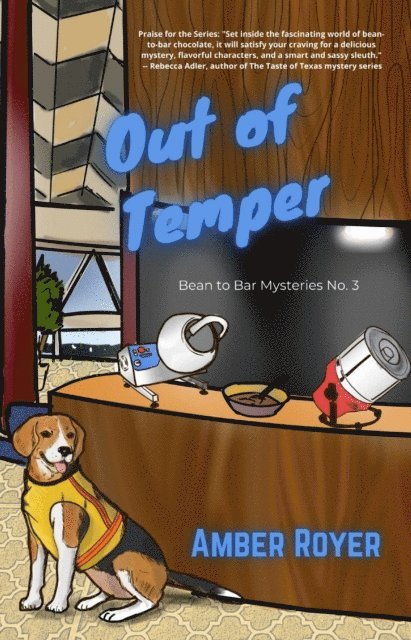
Felicity Koerber''s bean to bar chocolate shop on Galveston''s historic Strand has been the scene of two murders - both of which she has been instrumental in helping solve. So when she gets invited to demo her chocolate skills aboard a cruise ship sailing out of the local port, she''s excited at the chance to get away from the shop long enough to regain her equilibrium. She even brings her best friend along, and makes plans for time at the spa. But when she gets on board, she finds out that she''s been booked for a mystery-themed cruise, and said best friend, Autumn, has to finally deal with the real reasons she quit writing mysteries. Only - if that wasn''t stressful enough - it doesn''t take long before there''s a real murder on the cruise, and someone Felicity knows becomes the prime suspect. When said suspect asks her for help, she can''t exactly say no, can she?
Felicity finds herself surrounded by cruise goers who all had connections to the victim - and finds that both Logan (her business partner, whom she recently kissed) and Arlo (the cop who was once Felicity''s first boyfriend, before she moved away from Galveston) are dealing with the case until more official help can arrive. How will Felicity survive the ensuing awkwardness?
One thing that helps: the retired police dog turned therapy dog she meets on board. Satchmo helps Felicity deal with being back on the water after tragedy in her past - and also helps her uncover a vital clue to the case. Can Felicity unmask the killer and keep a friend from being framed before all the suspects leave the ship?
235 kr
Skickas inom 5-8 vardagar
91 kr
Läs direkt efter köp
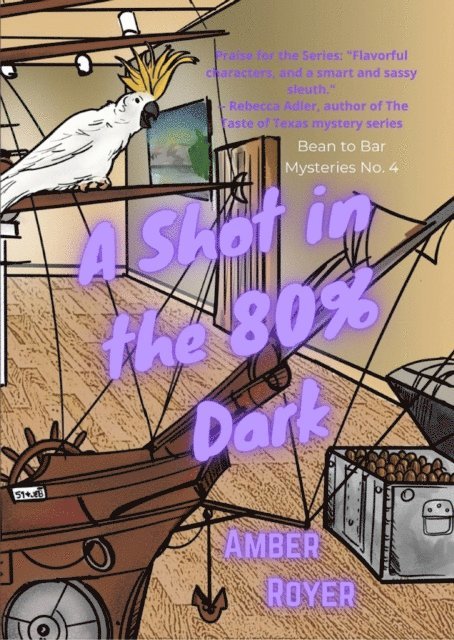
Felicity Koerber''s bean to bar chocolate shop thriving. Despite everything she''s been through with the murders she''s helped solve, Felicity is ready to take on new challenges. So when a local museum offers her a contract to create a chocolate replica of a gigantic sailing ship sculpture for a gala celebrating Galveston''s history, she jumps at the chance to combine chocolate-crafting with art.
The project is fun - right up until there''s not just one but two dead artists on the scene, and Felicity has to change gears back to detective. Logan, Felicity''s business partner and previous bodyguard, and Arlo, Felicity''s ex who is now the cop investigating the case, are split on which victim they think was actually the intended one. Felicity may have to take some chances, both emotionally and in luring out a killer, to determine the truth.
Can she find out how Galveston''s history relates to the murders, unmask a killer, and prepare 2,000 chocolate desserts for the gala all at the same time?
217 kr
Skickas inom 5-8 vardagar
182 kr
Läs direkt efter köp
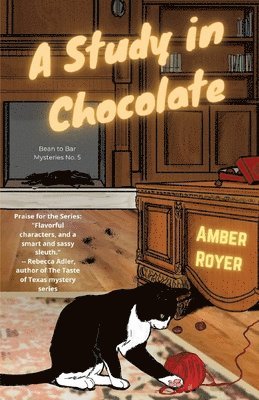
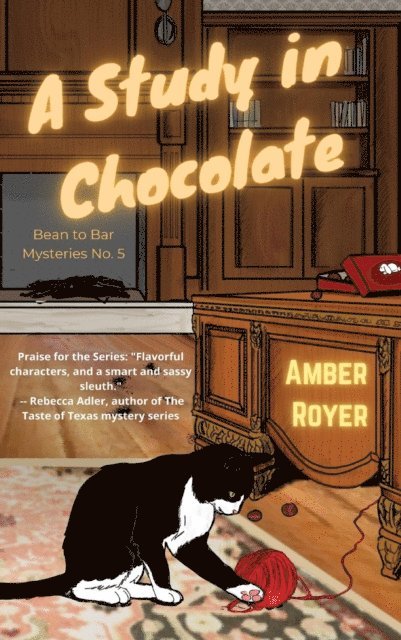
Felicity Koerber''s bean to bar chocolate shop on Galveston''s historic Strand is expanding, as it has become a gathering spot for the community, despite having been the scene of multiple murders. Artists she met while doing a chocolate sculpture are now working out of the shop. So when Felicity is invited to tea by an eccentric art collector, she''s intrigued, especially when she gets asked to pose for a portrait done with chocolate on chocolate. Only, where there is a murder the next day at the same historic house where the tea was held, one of Felicity''s artist friends becomes the main suspect.
When the killer threatens that, unless Felicity unravels the murder, one of her two love interests will be the next victim, she finds herself unwittingly at the center of a puzzle, with a Sherlock Holmes obsessed murderer who wants to be the next Moriarty - and wants to cast Felicity as Sherlock.
Felicity starts finding unexpected connects between her friends and acquaintances, and has to deal with the idea that someone who knows her is a murderer. At the same time, she has to keep her business running, despite construction dust and unruly customers - and an unexpected order for thousands of truffles.
Satchmo the retired police dog turned therapy dog returns to help her sniff out a few clues, and the kidnapping of Ruffles, the quirky artist''s cat, helps lead Felicity into the puzzle. Can Felicity solve it in time to protect the people she cares about from becoming additional victims?
217 kr
Skickas inom 5-8 vardagar