Andrea Lorenzo Capussela – författare
Visar alla böcker från författaren Andrea Lorenzo Capussela. Handla med fri frakt och snabb leverans.
9 produkter
9 produkter
Inbunden, Engelska, 2025
699 kr
Skickas inom 5-8 vardagar
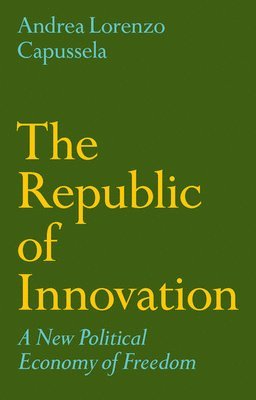
We cling to a distorted idea of freedom. To be free, we commonly think, means to be unconstrained. This widespread belief makes our societies less fair, as it fails to confront that freedom to act can mean freedom to dominate. But, as Andrea Capussela argues in this highly original combination of philosophy and economics, that is not all: it also makes us less prosperous.True freedom, Capussela writes, arises when no one is subject to another’s will, be that the will of an employer, Big Tech, or the so-called elite. A society that strives toward this higher ideal will become more innovative, as increasing numbers of people are granted enough security to flourish, experiment, and take risks. Capussela intertwines political philosophy with cutting-edge theories of economic growth, presenting the synergy between them as the basis for political programmes that can help western democracies rise above the legacy of neoliberalism and overcome their crisis.
Häftad, Engelska, 2025
231 kr
Skickas inom 5-8 vardagar
We cling to a distorted idea of freedom. To be free, we commonly think, means to be unconstrained. This widespread belief makes our societies less fair, as it fails to confront that freedom to act can mean freedom to dominate. But, as Andrea Capussela argues in this highly original combination of philosophy and economics, that is not all: it also makes us less prosperous.True freedom, Capussela writes, arises when no one is subject to another’s will, be that the will of an employer, Big Tech, or the so-called elite. A society that strives toward this higher ideal will become more innovative, as increasing numbers of people are granted enough security to flourish, experiment, and take risks. Capussela intertwines political philosophy with cutting-edge theories of economic growth, presenting the synergy between them as the basis for political programmes that can help western democracies rise above the legacy of neoliberalism and overcome their crisis.
E-bok
PDF, Engelska, 2018430 kr
Läs direkt efter köp
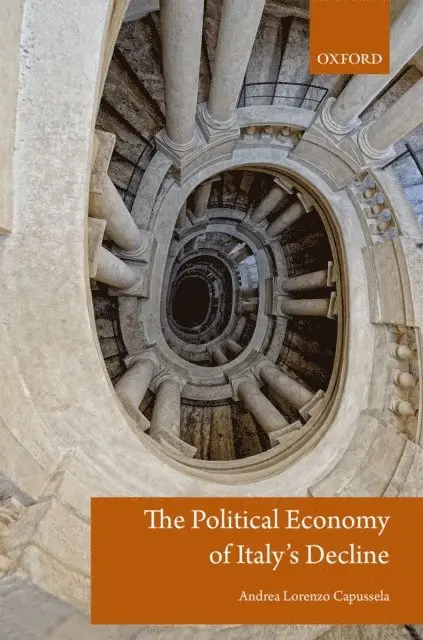
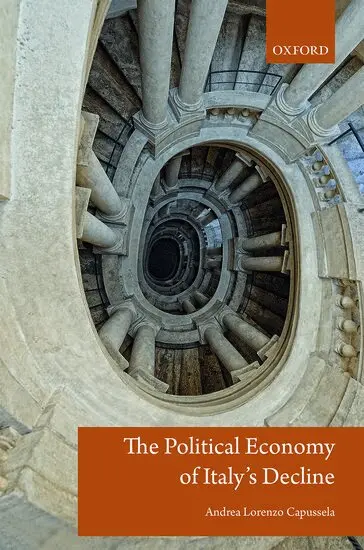
Italy is a country of recent decline and long-standing idiosyncratic traits. A rich society served by an advanced manufacturing economy, where the rule of law is weak and political accountability low, it has long been in downward spiral alimented by corruption and clientelism. From this spiral has emerged an equilibrium as consistent as it is inefficient, that raises serious obstacles to economic and democratic development. The Political Economy of Italy''s Declineexplains the causes of Italy''s downward trajectory, and explains how the country can shift to a fairer and more efficient system.Analysing both political economic literature and the history of Italy from 1861 onwards, The Political Economy of Italy''s Decline argues that the deeper roots of the decline lie in the political economy of growth. It places emphasis on the country''s convergence to the productivity frontier and the evolution of its social order and institutions to illuminate the origins and evolution of the current constraints to growth, using institutional economics and Schumpeterian growth theory tosupport its findings. It analyses two alternative reactions to the insufficient provision of public goods: an opportunistic one – employing tax evasion, corruption, or clientelism as means to appropriate private goods –- and one based on enforcing political accountability. From the perspective of ordinarycitizens and firms such social dilemmas can typically be modelled as coordination games, which have multiple equilibria. Self-interested rationality can thus lead to a spiral, in which several mutually reinforcing vicious circles lead society onto an inefficient equilibrium characterized by low political accountability and weak rule of law. The Political Economy of Italy''s Decline follows the gradual setting in of this spiral as it identifys the deeper causes of Italy''sdecline.
E-bok
Engelska, 2018430 kr
Läs direkt efter köp
Italy is a country of recent decline and long-standing idiosyncratic traits. A rich society served by an advanced manufacturing economy, where the rule of law is weak and political accountability low, it has long been in downward spiral alimented by corruption and clientelism. From this spiral has emerged an equilibrium as consistent as it is inefficient, that raises serious obstacles to economic and democratic development. The Political Economy of Italy''s Declineexplains the causes of Italy''s downward trajectory, and explains how the country can shift to a fairer and more efficient system.Analysing both political economic literature and the history of Italy from 1861 onwards, The Political Economy of Italy''s Decline argues that the deeper roots of the decline lie in the political economy of growth. It places emphasis on the country''s convergence to the productivity frontier and the evolution of its social order and institutions to illuminate the origins and evolution of the current constraints to growth, using institutional economics and Schumpeterian growth theory tosupport its findings. It analyses two alternative reactions to the insufficient provision of public goods: an opportunistic one – employing tax evasion, corruption, or clientelism as means to appropriate private goods –- and one based on enforcing political accountability. From the perspective of ordinarycitizens and firms such social dilemmas can typically be modelled as coordination games, which have multiple equilibria. Self-interested rationality can thus lead to a spiral, in which several mutually reinforcing vicious circles lead society onto an inefficient equilibrium characterized by low political accountability and weak rule of law. The Political Economy of Italy''s Decline follows the gradual setting in of this spiral as it identifys the deeper causes of Italy''sdecline.
Inbunden, Engelska, 2018
1 486 kr
Skickas inom 7-10 vardagar
Italy is a country of recent decline and long-standing idiosyncratic traits. A rich society served by an advanced manufacturing economy, where the rule of law is weak and political accountability low, it has long been in downward spiral alimented by corruption and clientelism. From this spiral has emerged an equilibrium as consistent as it is inefficient, that raises serious obstacles to economic and democratic development. The Political Economy of Italy's Decline explains the causes of Italy's downward trajectory, and explains how the country can shift to a fairer and more efficient system. Analysing both political economic literature and the history of Italy from 1861 onwards, The Political Economy of Italy's Decline argues that the deeper roots of the decline lie in the political economy of growth. It places emphasis on the country's convergence to the productivity frontier and the evolution of its social order and institutions to illuminate the origins and evolution of the current constraints to growth, using institutional economics and Schumpeterian growth theory to support its findings. It analyses two alternative reactions to the insufficient provision of public goods: an opportunistic one – employing tax evasion, corruption, or clientelism as means to appropriate private goods –- and one based on enforcing political accountability. From the perspective of ordinary citizens and firms such social dilemmas can typically be modelled as coordination games, which have multiple equilibria. Self-interested rationality can thus lead to a spiral, in which several mutually reinforcing vicious circles lead society onto an inefficient equilibrium characterized by low political accountability and weak rule of law. The Political Economy of Italy's Decline follows the gradual setting in of this spiral as it identifys the deeper causes of Italy's decline.
E-bok
Engelska, 2015526 kr
Läs direkt efter köp
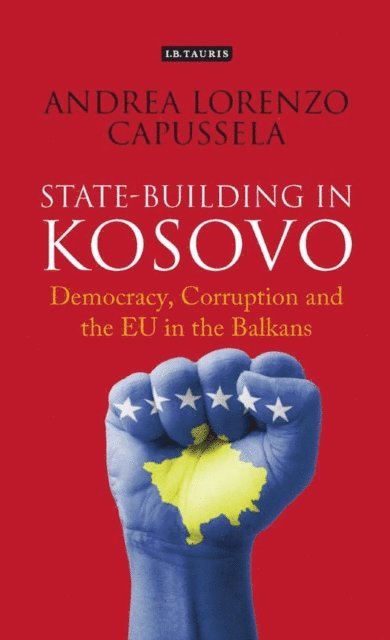
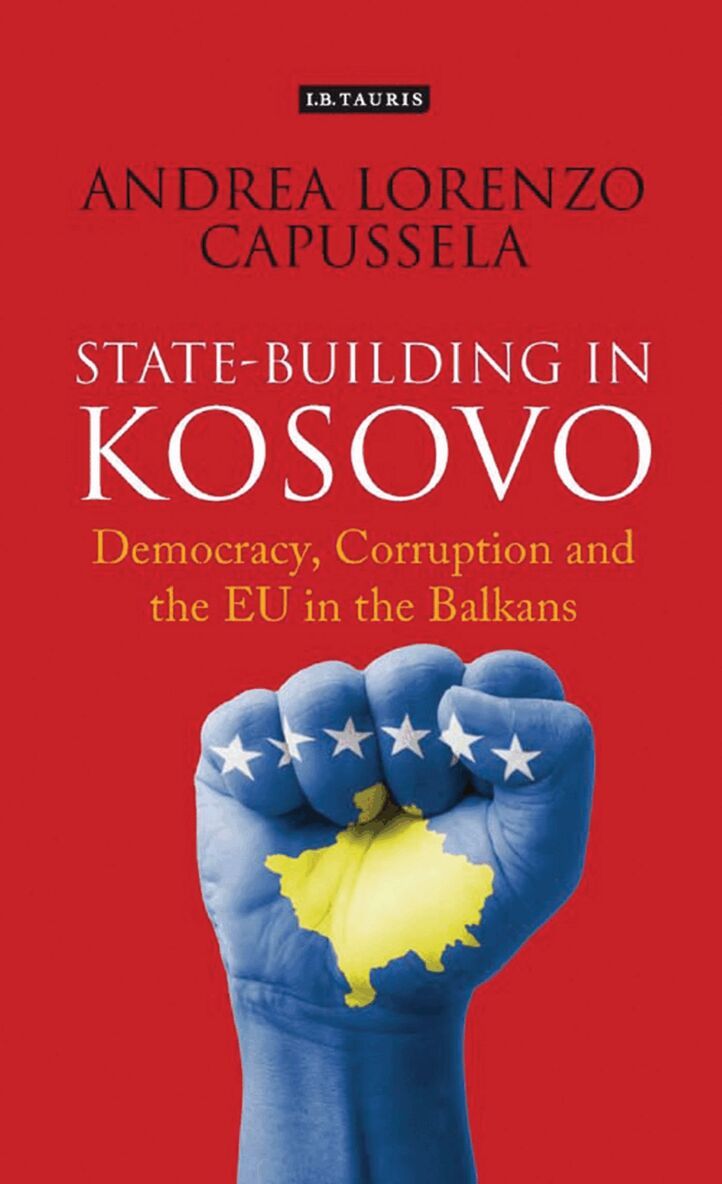
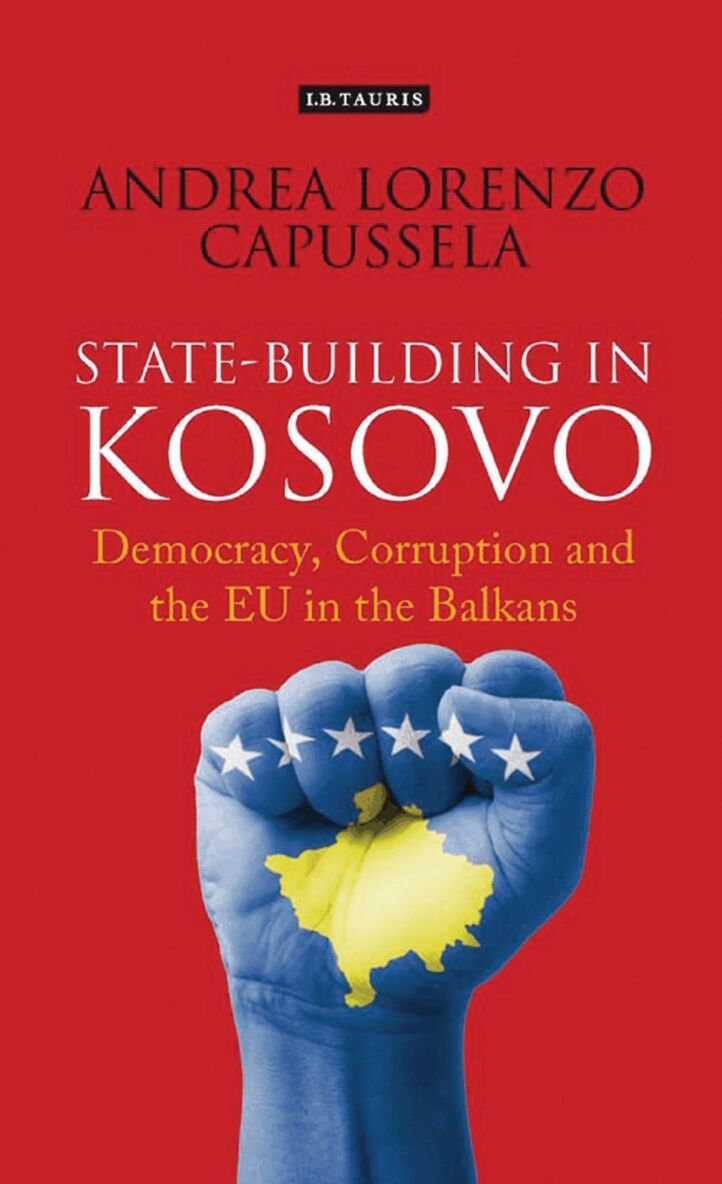
The history of Kosovo is a complicated one which typifies the darker side of modern Balkan history. Milosevic s Serbia withdrew from Kosovo in 1999 and the province was handed over to a special UN body who governed until 2008, when the West allowed Kosovo to become independent. The aim was to erect a stable and well governed democracy, but the outcome was a fragile state, which still threatens the stability of the Balkans and Europe s internal security. How did this happen? Here, Andrea Lorenzo Capussela offers an inside look at the process of building democracy in Kosovo. As head of the economics unit of Kosovo s international supervisor, Capussela has had access to previously unknown sources and information regarding the roles of the EU and the US in the crisis. This will be an essential reading for those studying the Kosovo crisis.
Inbunden, Engelska, 2015
974 kr
Skickas inom 10-15 vardagar
The history of Kosovo is a complicated one which typifies the darker side of modern Balkan history. Milosevic s Serbia withdrew from Kosovo in 1999 and the province was handed over to a special UN body who governed until 2008, when the West allowed Kosovo to become independent. The aim was to erect a stable and well governed democracy, but the outcome was a fragile state, which still threatens the stability of the Balkans and Europe s internal security. How did this happen? Here, Andrea Lorenzo Capussela offers an inside look at the process of building democracy in Kosovo. As head of the economics unit of Kosovo s international supervisor, Capussela has had access to previously unknown sources and information regarding the roles of the EU and the US in the crisis. This will be an essential reading for those studying the Kosovo crisis.
E-bok
PDF, Engelska, 2015511 kr
Läs direkt efter köp
The history of Kosovo is a complicated one which typifies the darker side of modern Balkan history. Milosevic s Serbia withdrew from Kosovo in 1999 and the province was handed over to a special UN body who governed until 2008, when the West allowed Kosovo to become independent. The aim was to erect a stable and well governed democracy, but the outcome was a fragile state, which still threatens the stability of the Balkans and Europe s internal security. How did this happen? Here, Andrea Lorenzo Capussela offers an inside look at the process of building democracy in Kosovo. As head of the economics unit of Kosovo s international supervisor, Capussela has had access to previously unknown sources and information regarding the roles of the EU and the US in the crisis. This will be an essential reading for those studying the Kosovo crisis.
Häftad, Engelska, 2019
506 kr
Skickas inom 10-15 vardagar
The history of Kosovo is a complicated one which typifies the darker side of modern Balkan history. Milosevic s Serbia withdrew from Kosovo in 1999 and the province was handed over to a special UN body who governed until 2008, when the West allowed Kosovo to become independent. The aim was to erect a stable and well governed democracy, but the outcome was a fragile state, which still threatens the stability of the Balkans and Europe s internal security. How did this happen? Here, Andrea Lorenzo Capussela offers an inside look at the process of building democracy in Kosovo. As head of the economics unit of Kosovo s international supervisor, Capussela has had access to previously unknown sources and information regarding the roles of the EU and the US in the crisis. This will be an essential reading for those studying the Kosovo crisis.