Andrew M. Kamarck – författare
Visar alla böcker från författaren Andrew M. Kamarck. Handla med fri frakt och snabb leverans.
8 produkter
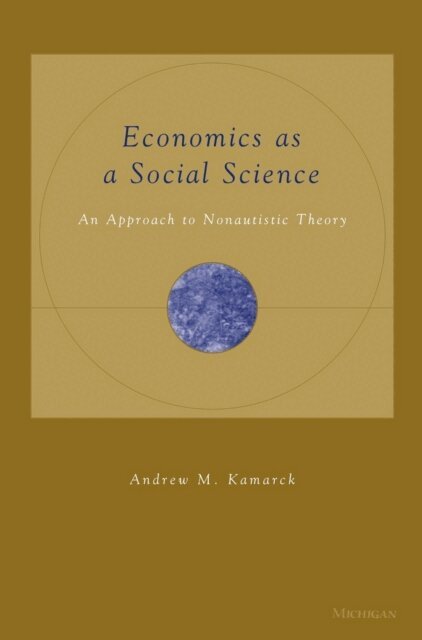
Economics as a Social Science
An Approach to Nonautistic Theory
E-bok, 2009
1325 kr
Lägg i varukorg
Economics as a Social Science is a highly readable critique of economic theory, based on a wide range of research, that endeavors to restore economics to its proper role as a social science. Contrary to conventional economic theory, which assumes that people have no free will, this book instead …
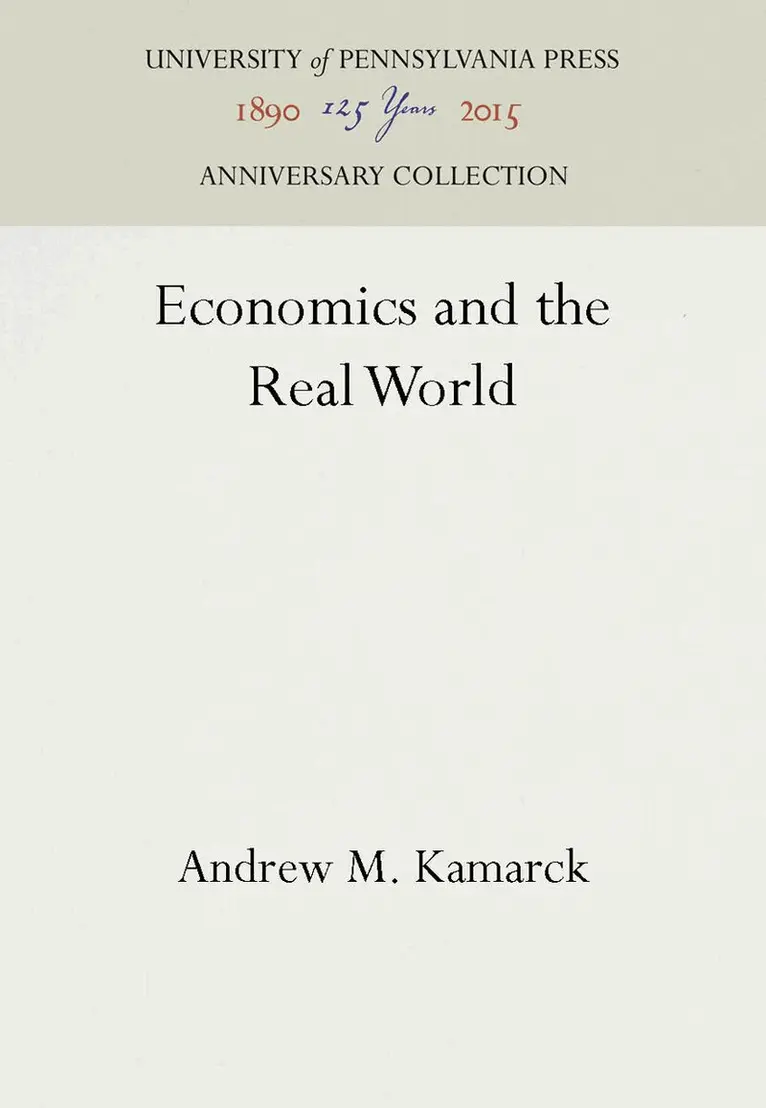
Economics and the Real World
Inbunden, 1983
1115 kr
Lägg i varukorg
Drawing on a lifetime of distinguished work in economic research and policymaking, Andrew Kamarck details how his profession can more usefully analyze and solve economic problems by changing its basic approach to research.Kamarck contends that most economists today strive for a mathematical …
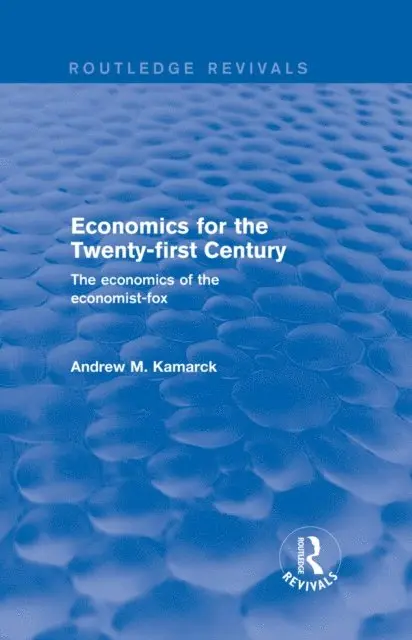
Economics for the Twenty-first Century: The Economics of the Economist-fox
The Economics of the Economist-fox
Häftad, 2019
561 kr
Lägg i varukorg
This title was first published in 2001. To be effective, economics must take into consideration the complex nature of human beings and the contextual, institutional, social and historical factors at play. This text is designed to help economists to be economic foxes by increasing the range of …
Economics for the Twenty-first Century: The Economics of the Economist-fox
The Economics of the Economist-fox
Inbunden, 2017
2136 kr
Lägg i varukorg
This title was first published in 2001. To be effective, economics must take into consideration the complex nature of human beings and the contextual, institutional, social and historical factors at play. This text is designed to help economists to be economic foxes by increasing the range of …
Economics for the Twenty-first Century: The Economics of the Economist-fox
The Economics of the Economist-fox
E-bok, 2017
663 kr
Lägg i varukorg
This title was first published in 2001. To be effective, economics must take into consideration the complex nature of human beings and the contextual, institutional, social and historical factors at play. This text is designed to help economists to be economic foxes by increasing the range of …
Economics for the Twenty-first Century: The Economics of the Economist-fox
The Economics of the Economist-fox
E-bok, 2017
678 kr
Lägg i varukorg
This title was first published in 2001. To be effective, economics must take into consideration the complex nature of human beings and the contextual, institutional, social and historical factors at play. This text is designed to help economists to be economic foxes by increasing the range of …
Economics and the Real World
E-bok, 2016
1347 kr
Lägg i varukorg
Drawing on a lifetime of distinguished work in economic research and policymaking, Andrew Kamarck details how his profession can more usefully analyze and solve economic problems by changing its basic approach to research. Kamarck contends that most economists today strive for a mathematical …
Economics as a Social Science
An Approach to Nonautistic Theory
Inbunden, 2002
1266 kr
Tillfälligt slut
Economics as a Social Science is a highly readable critique of economic theory, based on a wide range of research, that endeavors to restore economics to its proper role as a social science. Contrary to conventional economic theory, which assumes that people have no free will, this book instead …