Angela Zhang – författare
Visar alla böcker från författaren . Handla med fri frakt och snabb leverans.
3 produkter
3 produkter
E-bok
PDF, Engelska, 2021490 kr
Läs direkt efter köp
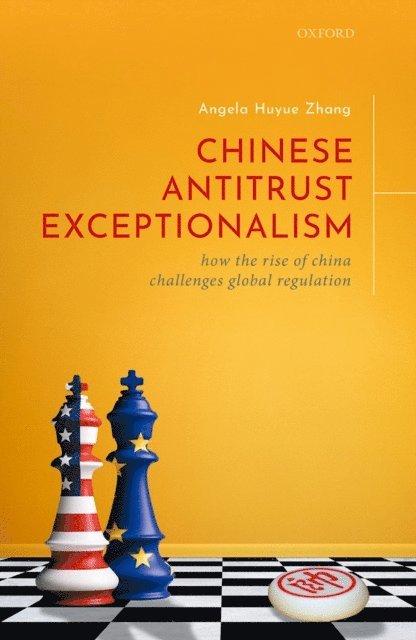
China''s rise as an economic superpower has caused growing anxieties in the West. Europe is now applying stricter scrutiny over takeovers by Chinese state-owned giants, while the United States is imposing aggressive sanctions on leading Chinese technology firms such as Huawei, TikTok, and WeChat. Given the escalating geopolitical tensions between China and the West, are there any hopeful prospects for economic globalization?In her compelling new book Chinese Antitrust Exceptionalism, Angela Zhang examines the most important and least understood tactic that China can deploy to counter western sanctions: antitrust law. Zhang reveals how China has transformed antitrust law into a powerful economic weapon, supplying theory and case studies to explain its strategic application over the course of the Sino-US tech war. Zhang also exposes the vast administrative discretion possessed by the Chinese government,showing how agencies can leverage the media to push forward aggressive enforcement. She further dives into the bureaucratic politics that spurred China''s antitrust regulation, providing an incisive analysis of how divergent missions, cultures, and structures of agencies have shaped regulatory outcomes.More than a legal analysis, Zhang offers a political and economic study of our contemporary moment. She demonstrates that Chinese exceptionalism-as manifested in the way China regulates and is regulated, is reshaping global regulation and that future cooperation relies on the West comprehending Chinese idiosyncrasies and China achieving greater transparency through integration with its Western rivals.
E-bok
Engelska, 2021490 kr
Läs direkt efter köp
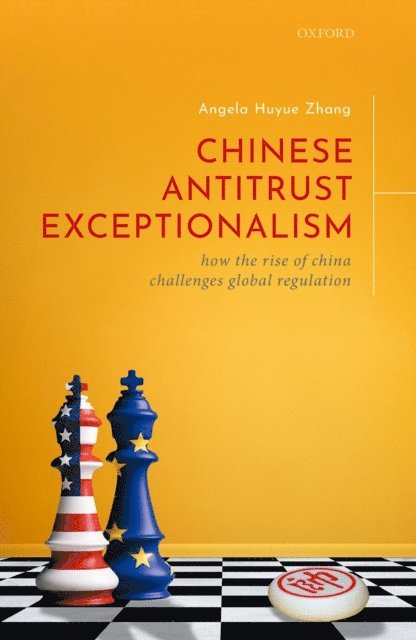
China''s rise as an economic superpower has caused growing anxieties in the West. Europe is now applying stricter scrutiny over takeovers by Chinese state-owned giants, while the United States is imposing aggressive sanctions on leading Chinese technology firms such as Huawei, TikTok, and WeChat. Given the escalating geopolitical tensions between China and the West, are there any hopeful prospects for economic globalization?In her compelling new book Chinese Antitrust Exceptionalism, Angela Zhang examines the most important and least understood tactic that China can deploy to counter western sanctions: antitrust law. Zhang reveals how China has transformed antitrust law into a powerful economic weapon, supplying theory and case studies to explain its strategic application over the course of the Sino-US tech war. Zhang also exposes the vast administrative discretion possessed by the Chinese government, showing how agencies can leverage the media to push forward aggressive enforcement. She further dives into the bureaucratic politics that spurred China''s antitrust regulation, providing an incisive analysis of how divergent missions, cultures, and structures of agencies have shaped regulatory outcomes. More than a legal analysis, Zhang offers a political and economic study of our contemporary moment. She demonstrates that Chinese exceptionalism-as manifested in the way China regulates and is regulated, is reshaping global regulation and that future cooperation relies on the West comprehending Chinese idiosyncrasies and China achieving greater transparency through integration with its Western rivals.
Inbunden, Engelska, 2026
1 302 kr
Kommande
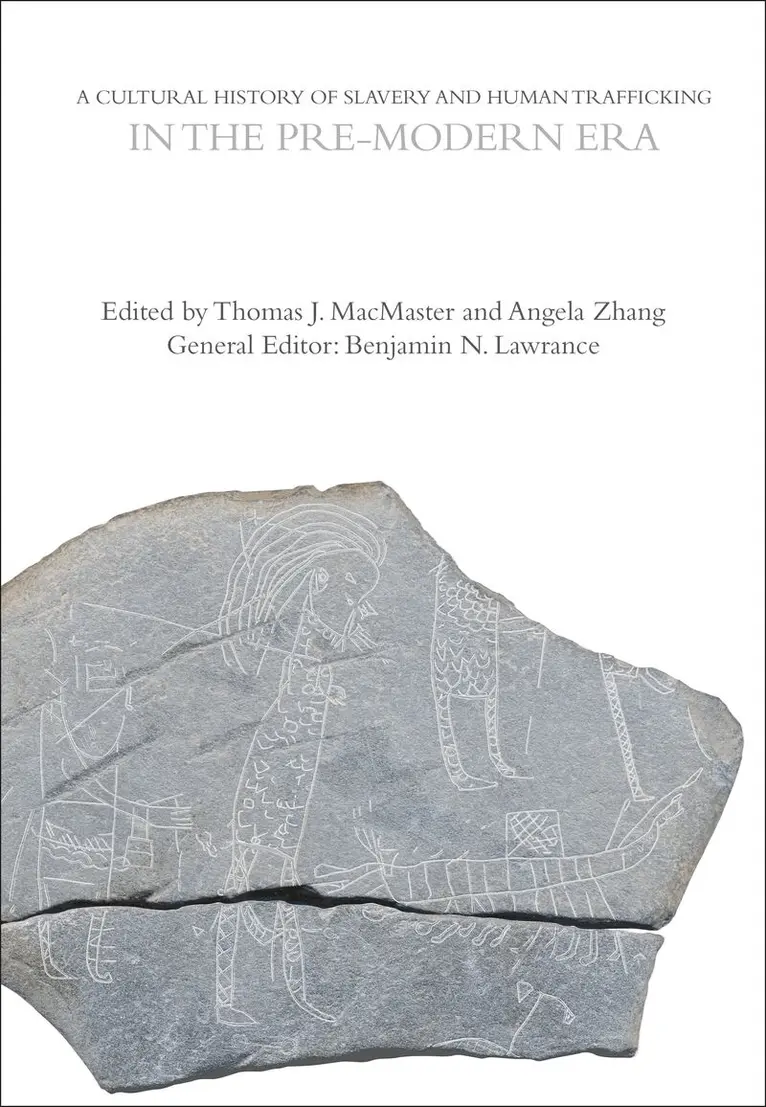
Slavery was a continuous presence in the Pre-Modern Era, roughly 500 ce to 1450 ce, when changes in geopolitical forces, demography, and cultural background contributed to the nature of enslavement. Coercion as a way of life differed across sociocultural and economic realities, ranging from chattel slaves and war captives, to sexual and domestic slaves. This volume destabilizes the deep-seated idea that during the so-called “Middle Ages,” social and cultural relationships remained stagnant. Drawing upon a wealth of textual, visual, and archaeological sources, the authors explore slavery and human trafficking through gender, race and identity, political thought, cultural norms, and religious practice, with a focus on the emergence of systems of bondage, serfdom, dependency, and subordination in distinct domestic, regional, or national settings.Contributors explore a variety of time periods and polities in detail, from Bantu-speaking Africa, via Europe and the Middle East, to China, to demonstrate a changing and interconnected world. This includes the early pre-Modern era, where the decline of expansive empires, a shift toward smaller kingdoms, and changes in regional markets, land use, and tenure created new dependencies that reshaped concepts of ownership, authority, and dependency. The later Pre-Modern Era was witness to the intensification of coercive identities from birth and inheritance. Local slave systems, discrete serf economies, and long-distance trade, coupled with limited trans-regional slave markets, are key to understanding the great variation in labor coercion modalities.A Cultural History of Slavery and Human Trafficking is part of The Cultural Histories Series. Titles are available as hardcover sets for libraries needing just one subject or preferring a tangible reference for their shelves or as part of a fully-searchable digital library. The digital product is available to institutions via www.bloomsburyculturalhistory.com . Individual volumes for academics and researchers are also available in print or digitally via www.bloomsburycollections.com.