Anna C. Nobre – författare
Visar alla böcker från författaren Anna C. Nobre. Handla med fri frakt och snabb leverans.
3 produkter
3 produkter
E-bok
PDF, Engelska, 2014801 kr
Läs direkt efter köp
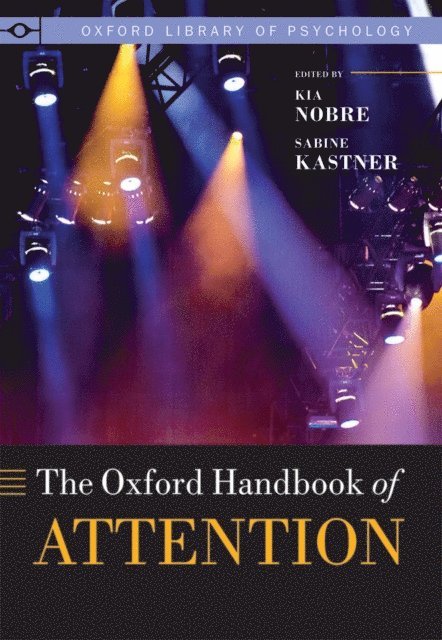
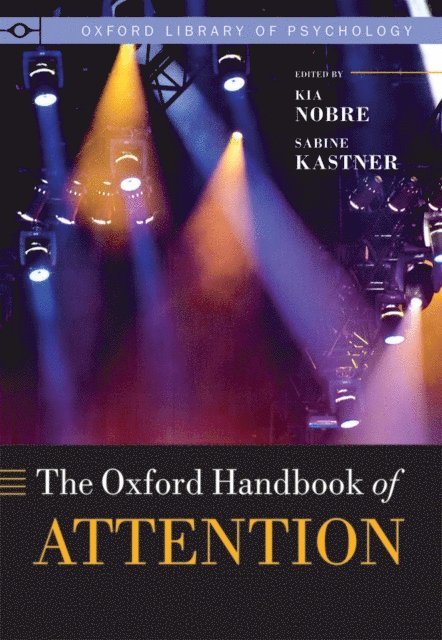
During the last three decades, there have been enormous advances in our understanding of the neural mechanisms of selective attention at the network as well as the cellular level. The Oxford Handbook of Attention brings together the different research areas that constitute contemporary attention research into one comprehensive and authoritative volume. In 40 chapters, it covers the most important aspects of attention research from the areas of cognitive psychology, neuropsychology, human and animal neuroscience, computational modelling, and philosophy.The book is divided into 4 main sections. Following an introduction from Michael Posner, the books starts by looking at theoretical models of attention. The next two sections are dedicated to spatial attention and non-spatial attention respectively. Within section 4, the authors consider the interactions between attention and other psychological domains. The last two sections focus on attention-related disorders, and finally, on computational models of attention. Aimed at both scholars and students, the Oxford Handbook of Attention provides a concise and state-of-the-art review of the current literature in this field.
E-bok
Engelska, 2014801 kr
Läs direkt efter köp
During the last three decades, there have been enormous advances in our understanding of the neural mechanisms of selective attention at the network as well as the cellular level. The Oxford Handbook of Attention brings together the different research areas that constitute contemporary attention research into one comprehensive and authoritative volume. In 40 chapters, it covers the most important aspects of attention research from the areas of cognitive psychology, neuropsychology, human and animal neuroscience, computational modelling, and philosophy.The book is divided into 4 main sections. Following an introduction from Michael Posner, the books starts by looking at theoretical models of attention. The next two sections are dedicated to spatial attention and non-spatial attention respectively. Within section 4, the authors consider the interactions between attention and other psychological domains. The last two sections focus on attention-related disorders, and finally, on computational models of attention. Aimed at both scholars and students, the Oxford Handbook of Attention provides a concise and state-of-the-art review of the current literature in this field.
Inbunden, Engelska, 2010
1 599 kr
Skickas inom 7-10 vardagar
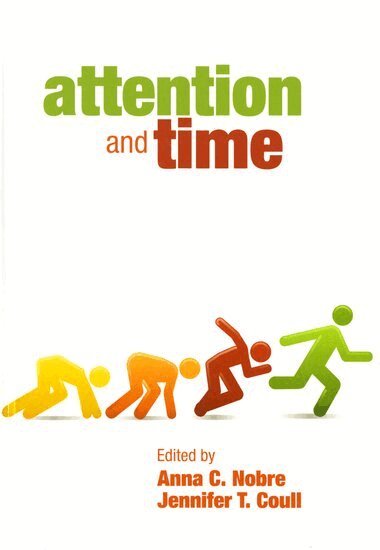
Our ability to attend selectively to our surroundings - taking notice of the things that matter, and ignoring those that don't - is crucial if we are to negotiate the world around us in an efficient manner. Several aspects of the temporal dimension turn out to be critical in determining how we can put together and select the events that are important to us as they themselves unfold over time. For example, we often miss events that happen while we are occupied perceiving or responding to another stimulus. On the other hand, temporal regularity between events can also greatly improve our perception. In addition, our perception of the passage of time itself can also be distorted as while we are performing actions or paying attention to different aspects of the environment. Surprisingly, this fascinating and fundamental interplay between ' attention' and 'time' has been relatively neglected in the psychology and neuroscience literatures until very recently.Attention & Time is the first book to address this foundational topic, bringing together several intriguing and hitherto fragmented findings into a compelling and cohesive field of enquiry. The book contains thirty-one critical-review chapters from internationally recognised experts in the field, carefully organised into three stand-alone, yet extensively cross-referenced, themed sections. Each section focuses on distinct ways in which attention and time influence one another. These sections, each encompassing a range of methodologies from classical cognitive psychology to single-cell neurophysiology, provide functionally unifying frameworks to help guide the reader through the many various experimental and theoretical approaches adopted. Section 1 considers variations of attention across time, and explores how attentional allocation is limited by very short or very long intervals of time. Section 2 describes several types of temporal illusion, illustrating how attention can modulate the perception of the passage of time itself. "A watched pot never boils" and, conversely, "time flies when you're having fun" nicely capture the experimental observation that the degree of attention allocated to stimulus timing contributes to its subjective duration. Finally, Section 3 examines how attention can be directed in time, to predictable or expected moments in time, so as to optimise behaviour.Bringing conceptually discrete, yet functionally related, fields of temporal attention research together within a single volume, this book provides a comprehensive overview that will be of value to the interested novice in cognitive neuroscience, whilst also inspiring experts in the field to make, perhaps previously overlooked, links with their own field of research.