Arie L. Molendijk – författare
Visar alla böcker från författaren Arie L. Molendijk. Handla med fri frakt och snabb leverans.
8 produkter
8 produkter
E-bok
PDF, Engelska, 20161 196 kr
Läs direkt efter köp
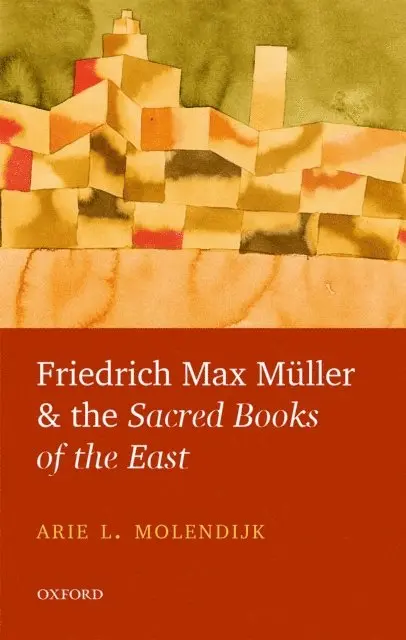
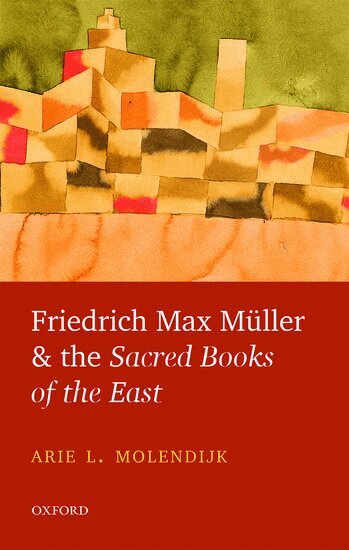
This volume offers a critical analysis of one the most ambitious editorial projects of late Victorian Britain: the edition of the fifty substantial volumes of the Sacred Books of the East (1879-1910). The series was edited and conceptualized by Friedrich Max Müller (1823-1900), a world-famous German-born philologist, orientalist, and religious scholar. Müller and his influential Oxford colleagues secured financial support from the India Office ofthe British Empire and from Oxford University Press. Arie L. Molendijk documents how the series has become a landmark in the development of the humanities-especially the study of religion and language-in the second half of the nineteenth century. The edition also contributed significantly to the Western perception ofthe ''religious'' or even ''mystic'' East, which was textually represented in English translations. The series was a token of the rise of ''big science'' and textualized the East, by selecting their ''sacred books'' and bringing them under the power of western scholarship.
E-bok
Engelska, 20161 185 kr
Läs direkt efter köp
This volume offers a critical analysis of one the most ambitious editorial projects of late Victorian Britain: the edition of the fifty substantial volumes of the Sacred Books of the East (1879-1910). The series was edited and conceptualized by Friedrich Max Müller (1823-1900), a world-famous German-born philologist, orientalist, and religious scholar. Müller and his influential Oxford colleagues secured financial support from the India Office ofthe British Empire and from Oxford University Press. Arie L. Molendijk documents how the series has become a landmark in the development of the humanities-especially the study of religion and language-in the second half of the nineteenth century. The edition also contributed significantly to the Western perception ofthe ''religious'' or even ''mystic'' East, which was textually represented in English translations. The series was a token of the rise of ''big science'' and textualized the East, by selecting their ''sacred books'' and bringing them under the power of western scholarship.
E-bok
PDF, Engelska, 20211 048 kr
Läs direkt efter köp
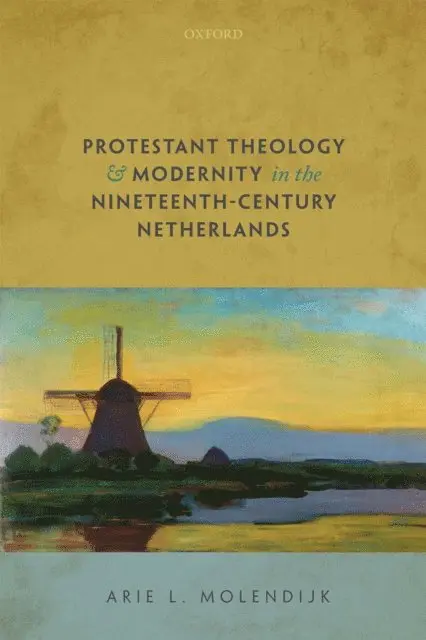
Protestant Theology and Modernity in the Nineteenth Century Netherlands examines how Dutch Protestant thinkers and theologicans met the challenges of the rapidly modernizing world around them. It shows that the nineteenth-century saw theology fundamentally transformed and reinvented in a variety of ways. Enlightenment values were fiercely attacked by orthodox Pietists but embraced by ''modern'' theologians. Positions were not fixed and theologians had to work hard to maintain their intellectual integrity. Jewish Isaac da Costa converted to Christianity and fulminated against the Zeitgeist. Allard Pierson, who in his youth had been under the spell of Da Costa, resigned from his ministry and adopted an ''agnostic'' stance. Abraham Kuyper modernized theology and politics, by laying the foundations of ''pillarization'' (the segmented social structures based on differences in religion and worldview) of Dutch society. Abraham Kuenen revolutionized the study of the Old Testament, and Protestant theologians made ground-breaking contributions to the emerging science of religion. This book used in-depth studies of a small number of significant and influential Protestant thinkers to analyse how they addressed specific modern transformation processes such as political modernization, the pluralization of world views, and the emergence of critical historical scholarship. It also considers the significant Dutch contribution to the historical-critical study of the Bible, and the emergence of the modern comparative study of religion.
E-bok
Engelska, 20211 048 kr
Läs direkt efter köp
Protestant Theology and Modernity in the Nineteenth Century Netherlands examines how Dutch Protestant thinkers and theologicans met the challenges of the rapidly modernizing world around them. It shows that the nineteenth-century saw theology fundamentally transformed and reinvented in a variety of ways. Enlightenment values were fiercely attacked by orthodox Pietists but embraced by ''modern'' theologians. Positions were not fixed and theologians had to work hard to maintain their intellectual integrity. Jewish Isaac da Costa converted to Christianity and fulminated against the Zeitgeist. Allard Pierson, who in his youth had been under the spell of Da Costa, resigned from his ministry and adopted an ''agnostic'' stance. Abraham Kuyper modernized theology and politics, by laying the foundations of ''pillarization'' (the segmented social structures based on differences in religion and worldview) of Dutch society. Abraham Kuenen revolutionized the study of the Old Testament, and Protestant theologians made ground-breaking contributions to the emerging science of religion. This book used in-depth studies of a small number of significant and influential Protestant thinkers to analyse how they addressed specific modern transformation processes such as political modernization, the pluralization of world views, and the emergence of critical historical scholarship. It also considers the significant Dutch contribution to the historical-critical study of the Bible, and the emergence of the modern comparative study of religion.
Inbunden, Engelska, 2021
1 249 kr
Skickas inom 5-8 vardagar
Protestant Theology and Modernity in the Nineteenth Century Netherlands examines how Dutch Protestant thinkers and theologicans met the challenges of the rapidly modernizing world around them. It shows that the nineteenth-century saw theology fundamentally transformed and reinvented in a variety of ways. Enlightenment values were fiercely attacked by orthodox Pietists but embraced by 'modern' theologians. Positions were not fixed and theologians had to work hard to maintain their intellectual integrity. Jewish Isaac da Costa converted to Christianity and fulminated against the Zeitgeist. Allard Pierson, who in his youth had been under the spell of Da Costa, resigned from his ministry and adopted an 'agnostic' stance. Abraham Kuyper modernized theology and politics, by laying the foundations of 'pillarization' (the segmented social structures based on differences in religion and worldview) of Dutch society. Abraham Kuenen revolutionized the study of the Old Testament, and Protestant theologians made ground-breaking contributions to the emerging science of religion. This book used in-depth studies of a small number of significant and influential Protestant thinkers to analyse how they addressed specific modern transformation processes such as political modernization, the pluralization of world views, and the emergence of critical historical scholarship. It also considers the significant Dutch contribution to the historical-critical study of the Bible, and the emergence of the modern comparative study of religion.
Inbunden, Engelska, 2016
1 577 kr
Skickas inom 7-10 vardagar
This volume offers a critical analysis of one the most ambitious editorial projects of late Victorian Britain: the edition of the fifty substantial volumes of the Sacred Books of the East (1879-1910). The series was edited and conceptualized by Friedrich Max Müller (1823-1900), a world-famous German-born philologist, orientalist, and religious scholar. Müller and his influential Oxford colleagues secured financial support from the India Office of the British Empire and from Oxford University Press. Arie L. Molendijk documents how the series has become a landmark in the development of the humanities-especially the study of religion and language-in the second half of the nineteenth century. The edition also contributed significantly to the Western perception of the 'religious' or even 'mystic' East, which was textually represented in English translations. The series was a token of the rise of 'big science' and textualized the East, by selecting their 'sacred books' and bringing them under the power of western scholarship.
E-bok
PDF, Engelska, 20183 246 kr
Läs direkt efter köp
This volume explores the ways in which religion became the object of scientific research in the nineteenth and early twentieth centuries. Most obvious is the development of an increasingly autonomous science of religion (with founding fathers like Max Muller and C.P. Tiele). However, within anthropology (Tylor, Frazer), sociology (Durkheim, Max Weber), and psychology (William James), religion also came to be seen as a separate entity to be studied comparatively. To capture this wide field this book focuses on the emergence of the discourse on religion in a broad academic context, among different disciplines. The emphasis is on general socio-historical developments, rather than on individual biographies.Part I deals with the institutionalization of science of religion in France, Britain, and the Netherlands. Part II focuses on boundary disputes between the emerging "e;sciences of religion"e;. Part III examines new conceptualizations of religion underlying the new endeavour ("e;ritual"e;, "e;magic"e;, "e;survival"e;).
E-bok
PDF, Tyska, 20241 991 kr
Läs direkt efter köp