Arthur C. Upton – Författare
Visar alla böcker från författaren Arthur C. Upton. Handla med fri frakt och snabb leverans.
4 produkter
4 produkter
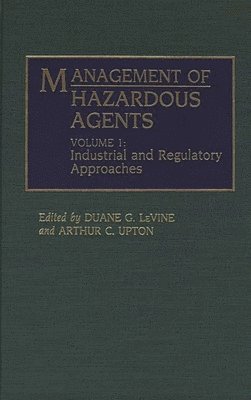
Management of Hazardous Agents
Volume 1: Industrial and Regulatory Approaches
Inbunden, Engelska, 1992
1 009 kr
Skickas inom 10-15 vardagar
This book, along with its companion volume, discusses the research needs, institutional modifications, and legislative changes that must be addressed to deal more effectively with the risks of hazardous materials. Prominent among the research needs is the necessity to assess the health effects of low-level exposure to toxicants. For none of these agents (lead, mercury, radiation, PCDDs, dioxins, PCBs, pesticides) is the existing toxicological data sufficient to define unambiguously the dose-effect relationship in the low-dose domain. Another uncertainty is our ignorance of how individuals within the human population may vary in susceptibility to the agents because of differences in genetic background, age, sex, diet, health status, and exposure to extraneous environmental influences. Also identified among the research needs are methods for improving the technology of waste disposal, waste reduction, and waste recycling.Institutional changes necessary are the commitment to long-term, pro-active, prevention-oriented objectives; institutional mechanisms to achieve better consistency and coordination among different agencies; improvement in the reliability, credibility, and effectiveness with which institutions communicate risk-assessments and risk-management policies; and provision for more adequate education and training of all who must be involved. Finally, the need for certain legislative changes is considered, including better use of incentives, such as taxation and price support mechanisms; better use of enforcement provisions; statutes that address cross-media patterns of human exposure; and greater federal-state-local coordination in risk-assessment and risk-management activities.
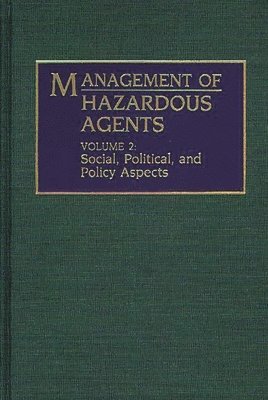
Management of Hazardous Agents
Volume 2: Social, Political, and Policy Aspects
Inbunden, Engelska, 1992
809 kr
Skickas inom 10-15 vardagar
This book, along with its companion volume, discusses the research needs, institutional modifications, and legislative changes that must be addressed to deal more effectively with the risks of hazardous materials. Prominent among the research needs is the necessity to assess the health effects of low-level exposure to toxicants. For none of these agents (lead, mercury, radiation, PCDDs, dioxins, PCBs, pesticides) is the existing toxicological data sufficient to define unambiguously the dose-effect relationship in the low-dose domain. Another uncertainty is our ignorance of how individuals within the human population may vary in susceptibility to the agents because of differences in genetic background, age, sex, diet, health status and exposure to extraneous environmental influences. Also identified among the research needs are methods for improving the technology of waste disposal, waste reduction, and waste recycling.Institutional changes necessary are the commitment to long-term, pro-active, prevention-oriented objectives; institutional mechanisms to achieve better consistency and coordination among different agencies; improvement in the reliability, credibility, and effectiveness with which institutions communicate risk-assessments and risk-management policies; and provision for more adequate education and training of all who must be involved. Finally, the need for certain legislative changes is considered, including better use of incentives, such as taxation and price support mechanisms; better use of enforcement provisions; statutes that address cross-media patterns of human exposure; and greater federal-state-local coordination in risk-assessment and risk-management activities.
1 009 kr
Skickas inom 10-15 vardagar
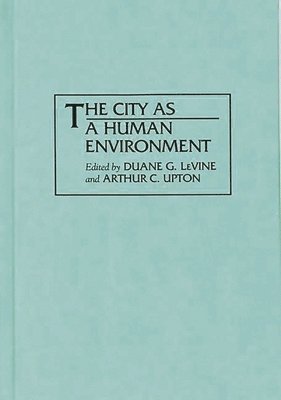
This is a response to the need for up-to-date information about three major challenges posed by urbanization: buildings, transportation, and land use. Planning the built environment involves integrating all aspects of human life so that an esthetic, economic, and sustainable system is established. There are challenges which arise from this, but the primary goal is to provide adequate, safe, efficient, and affordable housing for the populations. The goal is to convert chaos to order, to make cities workable, to bar bad development, to encourage the building of necessary facilities, and to improve land use.
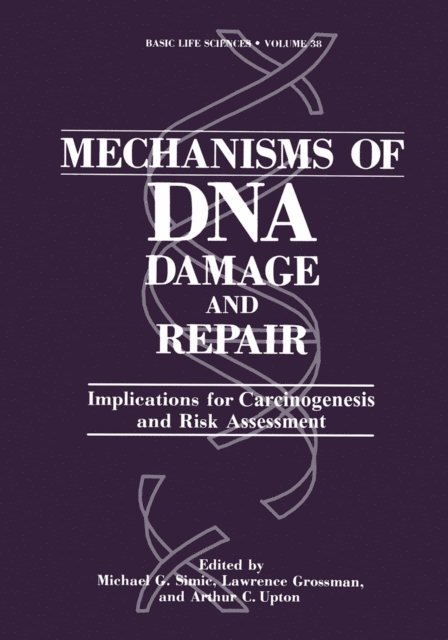
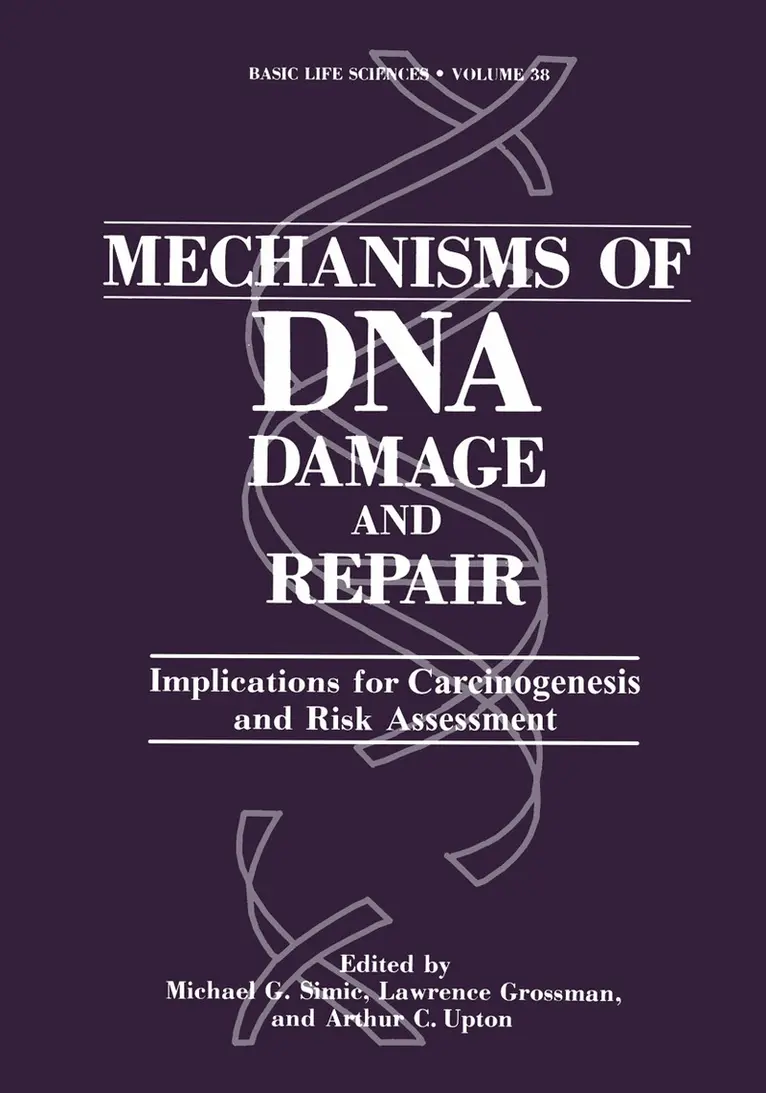
Mechanisms of DNA Damage and Repair
Implications for Carcinogenesis and Risk Assessment
Häftad, Engelska, 2012
1 062 kr
Skickas inom 10-15 vardagar
This book is based on the papers presented at the conference on "Mecha nisms of DNA Damage and Repair: Implications for Carcinogenesis and Risk Assessment," held at the National Bureau of Standards on June 2-7, 1985, This volume deals with mechanisms of DNA damage and repair at the molecular level; consequences of unrepaired or misrepaired damage, with major emphasis on carcinogenesis; drugs which bind selectively to altered and potentially damaging DNA sequences; and potential utilization of DNA damage as an endpoint for assessing risks of UV light, ionizing radiations, chemicals, drugs, and hazardous agents in foods. Because the induction of mutations by radiation and genotoxic chemicals has been observed to follow one-hit kinetics in some instances, it is generally assumed that any level of exposure to a DNA-damaging agent may increase the risk of genetic disease or cancer in an exposed population. At the same time, however, there is evidence that although the DNA of living cells is continually damaged by natural background radiation, free radicals, and other naturally occurring processes, most of the damage is normally repaired.