Augustus Veenendaal – författare
Visar alla böcker från författaren . Handla med fri frakt och snabb leverans.
2 produkter
2 produkter
Inbunden, Engelska, 1999
447 kr
Skickas inom 10-15 vardagar
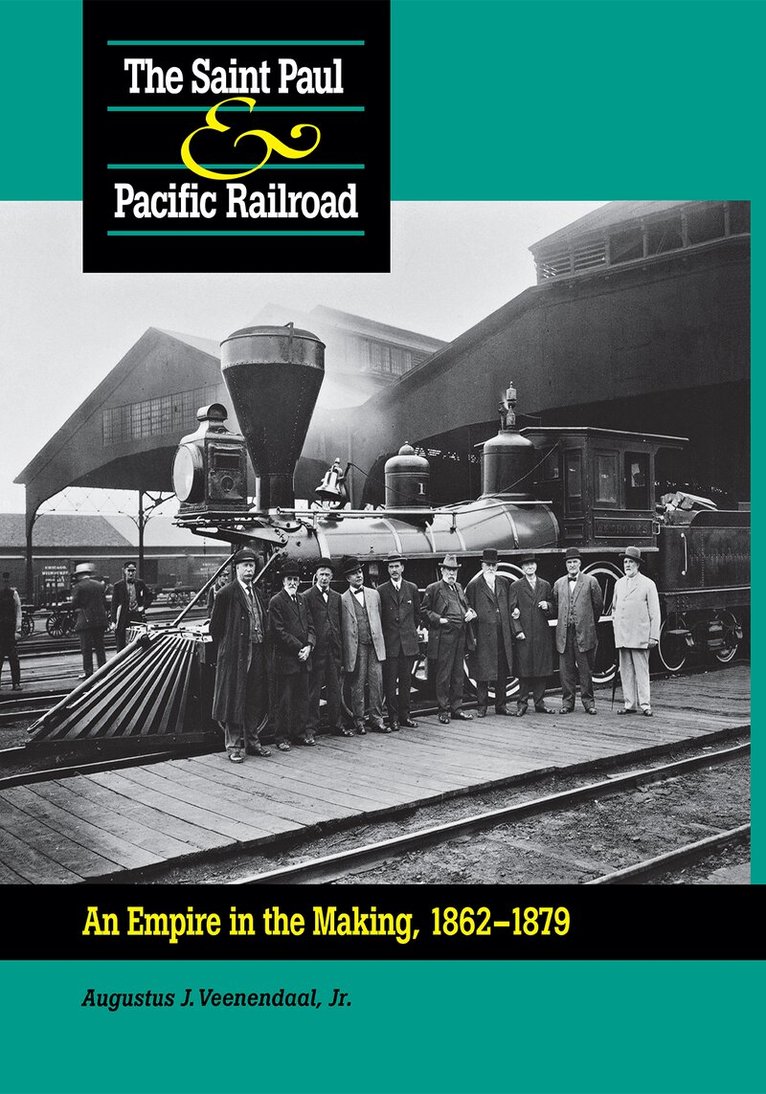
Beginning in 1862 as a small carrier connecting St. Paul and Minneapolis with outlying towns, the Saint Paul & Pacific Railroad became the foundation of the vast rail system that would open the entire Northwest. As a pioneering line in virgin territory, it played a vital role in the early development of Minnesota's economy. When railroad tycoon James J. Hill took over the troubled company in 1879, its tracks were extended into westward lines that eventually, as the Great Northern Railway, reached the Pacific Ocean. Written by leading railroad historian Augustus J. Veenendaal Jr. this finely researched book examines the growth of the fledgling Saint Paul & Pacific as it struggled to lay track, meet the schedule, and make the payroll. The railway's leaders and workers took risks of injury and ruin during these years on the frontier, when everything except hardship was in short supply. Veenendaal devotes an entire chapter to the accidents and disasters that befell the new enterprise, including deadly collisions and derailments. He also chronicles triumphs, such as the use of the Miller coupler and the refurbishment of the famed Wm. Crooks, a 4-4-0 woodburning engine that was the first locomotive in Minnesota. Veenendaal reveals the strategic importance of foreign investment in American railroads-in particular, Dutch investment. The Saint Paul & Pacific was one of the first railroads to attract the attention of Dutch bankers, who would eventually become the second largest group of foreign investors in American railroads. After James J. Hill bought out the Dutch interest in the railroad, he reorganized it as the St. Paul, Minneapolis & Manitoba Railroad. Today, after the megamergers of recent years, the Burlington Northern Santa Fe system owns the ghost of the old Saint Paul & Pacific Railroad Company.
Inbunden, Engelska, 2017
440 kr
Skickas inom 3-6 vardagar
“The North can make a steam engine, locomotive, or railway car [...] You are rushing into war with one of the most powerful, ingeniously mechanical, and determined people on Earth — right at your doors.”~ William Tecumseh Sherman, 1860The military use of railways derives from their ability to move troops or materiel rapidly and, less commonly, on their use as a platform for military systems (like armoured trains and heavy artillery). Until recently, the mobility of large armies generally depended on control of railways to move reinforcements, ammunition and food, as the locomotive and railway cars proved far superior to animal-drawn equipment.In Rails to the Front, historians Augustus J. Veenendaal and H. Roger Grant capture the critical impact of railways in an abundance of conflicts worldwide, from the German revolutions in the 1840s to the Gulf War in the 1990s. This lavishly illustrated, careful study is the first of its kind in English.