Barak Mendelsohn - Böcker
Visar alla böcker från författaren Barak Mendelsohn. Handla med fri frakt och snabb leverans.
6 produkter
6 produkter
1 670 kr
Skickas inom 5-8 vardagar
The al-Qaeda Franchise asks why al-Qaeda adopted a branching-out strategy, introducing seven franchises spread over the Middle East, Africa, and South Asia. After all, transnational terrorist organizations can expand through other organizational strategies. Forming franchises was not an inevitable outgrowth of al-Qaeda's ideology or its U.S.-focused strategy. The efforts to create local franchises have also undermined one of al-Qaeda's primary achievements: the creation of a transnational entity based on religious, not national, affiliation. The book argues that al-Qaeda's branching out strategy was not a sign of strength, but instead a response to its decline in the aftermath of the 9/11 attacks. Franchising reflected an escalation of al-Qaeda's commitments in response to earlier strategic mistakes, leaders' hubris, and its diminished capabilities. Although the introduction of new branches helped al-Qaeda create a frightening image far beyond its actual capabilities, ultimately this strategy neither increased the al-Qaeda threat, nor enhanced the organization's political objectives. In fact, the rise of ISIS from an al-Qaeda branch to the dominant actor in the jihadi camp demonstrates how expansion actually incurred heavy costs for al-Qaeda. The al-Qaeda Franchise goes beyond explaining the adoption of a branching out strategy, also exploring particular expansion choices. Through nine case studies, it analyzes why al-Qaeda formed branches in some arenas but not others, and why its expansion in some locations, such as Yemen, took the form of in-house franchising (with branches run by al-Qaeda's own fighters), while other locations, such as Iraq and Somalia, involved merging with groups already operating in the target arena. It ends with an assessment of al-Qaeda's future in light of the turmoil in the Middle East, the ascendance of ISIS, and US foreign policy.
459 kr
Skickas inom 5-8 vardagar
The al-Qaeda Franchise asks why al-Qaeda adopted a branching-out strategy, introducing seven franchises spread over the Middle East, Africa, and South Asia. After all, transnational terrorist organizations can expand through other organizational strategies. Forming franchises was not an inevitable outgrowth of al-Qaeda's ideology or its U.S.-focused strategy. The efforts to create local franchises have also undermined one of al-Qaeda's primary achievements: the creation of a transnational entity based on religious, not national, affiliation. The book argues that al-Qaeda's branching out strategy was not a sign of strength, but instead a response to its decline in the aftermath of the 9/11 attacks. Franchising reflected an escalation of al-Qaeda's commitments in response to earlier strategic mistakes, leaders' hubris, and its diminished capabilities. Although the introduction of new branches helped al-Qaeda create a frightening image far beyond its actual capabilities, ultimately this strategy neither increased the al-Qaeda threat, nor enhanced the organization's political objectives. In fact, the rise of ISIS from an al-Qaeda branch to the dominant actor in the jihadi camp demonstrates how expansion actually incurred heavy costs for al-Qaeda. The al-Qaeda Franchise goes beyond explaining the adoption of a branching out strategy, also exploring particular expansion choices. Through nine case studies, it analyzes why al-Qaeda formed branches in some arenas but not others, and why its expansion in some locations, such as Yemen, took the form of in-house franchising (with branches run by al-Qaeda's own fighters), while other locations, such as Iraq and Somalia, involved merging with groups already operating in the target arena. It ends with an assessment of al-Qaeda's future in light of the turmoil in the Middle East, the ascendance of ISIS, and US foreign policy.
Combating Jihadism
American Hegemony and Interstate Cooperation in the War on Terrorism
Inbunden, Engelska, 2009
574 kr
Tillfälligt slut
Although terrorism is an age-old phenomenon, jihadist ideology is distinctive in its ambition to overthrow the modern state system, abandon the principle of state sovereignty, and destroy the foundations of world order. Barak Mendelsohn argues that a crucial element in responding to such a threat and winning the war against terror in the twenty-first century is the hegemon - a powerful state that takes the lead and generates cooperation among states to fight jihad. While most analyses of hegemony have focused on power, Mendelsohn firmly grounds the phenomenon in a web of shared norms and rules that both enable and constrain the hegemon's freedom of action. He examines how the presence of a hegemonic state affects international cooperation, security, and international relations - revealing, for example, why the United States has found greater cooperation for the war in Afghanistan than for the war in Iraq. Tracing and explaining the varying levels of cooperation that exist for suppressing terrorism financing, for preventing non-state actors from obtaining weapons of mass destruction, and for offering military support to U.S. hegemony, "Combating Jihadism" provides a nuanced understanding of the interaction between norms and power.
Combating Jihadism
American Hegemony and Interstate Cooperation in the War on Terrorism
Häftad, Engelska, 2012
276 kr
Skickas inom 7-10 vardagar
Although terrorism is an age-old phenomenon, jihad ideology is distinctive in its ambition to abandon the principle of state sovereignty, overthrow the modern state system, and replace it with an extremely radical interpretation of an Islamic world order. These characteristics reflect a radical break from traditional objectives promoted by terrorist groups. In "Combating Jihadism" Barak Mendelsohn argues that the distinctiveness of the al Qaeda threat led the international community to change its approach to counterterrorism. Contrary to common yet erroneous conceptions, the United States, in its role as a hegemon, was critical for the formulation of a multilateral response. While most analyses of hegemony have focused on power, Mendelsohn firmly grounds the phenomenon in a web of shared norms and rules relating to the hegemon's freedom of action. Consequently, he explains why US leadership in counterterrorism efforts was in some spheres successful, when in others it failed or did not even seek to establish multilateral collaborative frameworks.Tracing the ways in which international cooperation has stopped terrorist efforts, "Combating Jihadism" provides a nuanced, innovative, and timely reinterpretation of the war on terrorism and the role of the United States in leading the fight against al Qaeda and its affiliates.
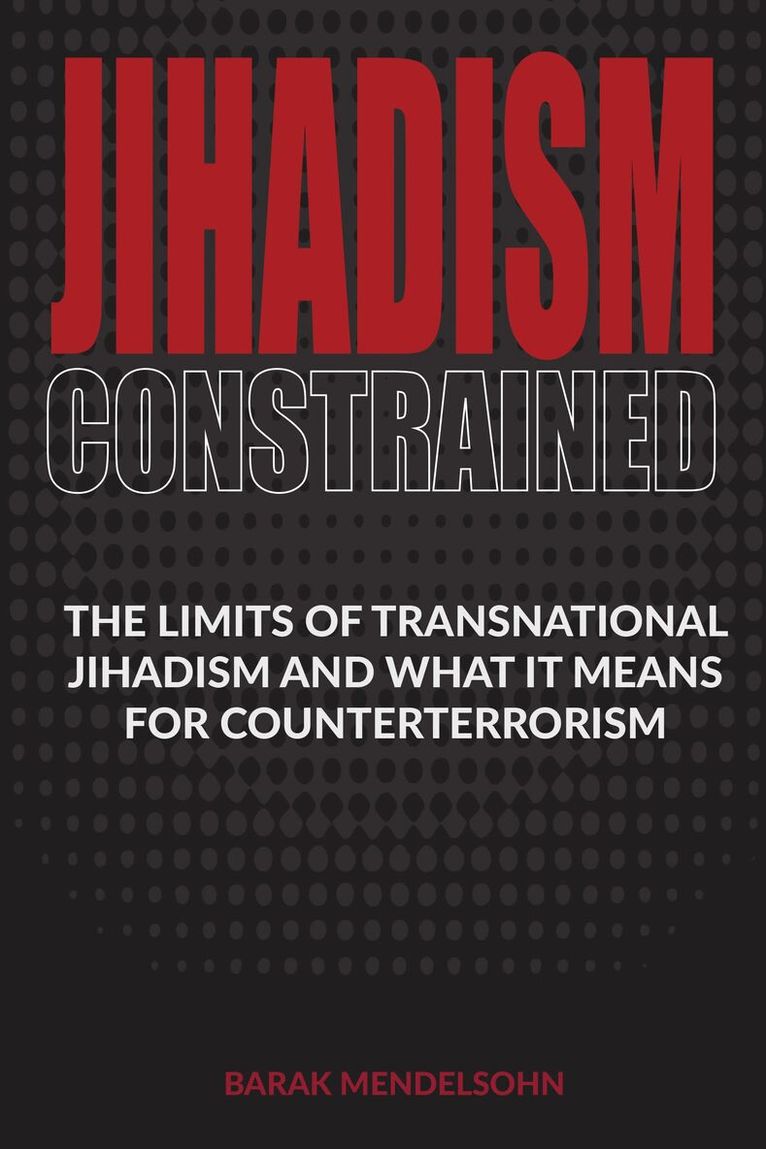
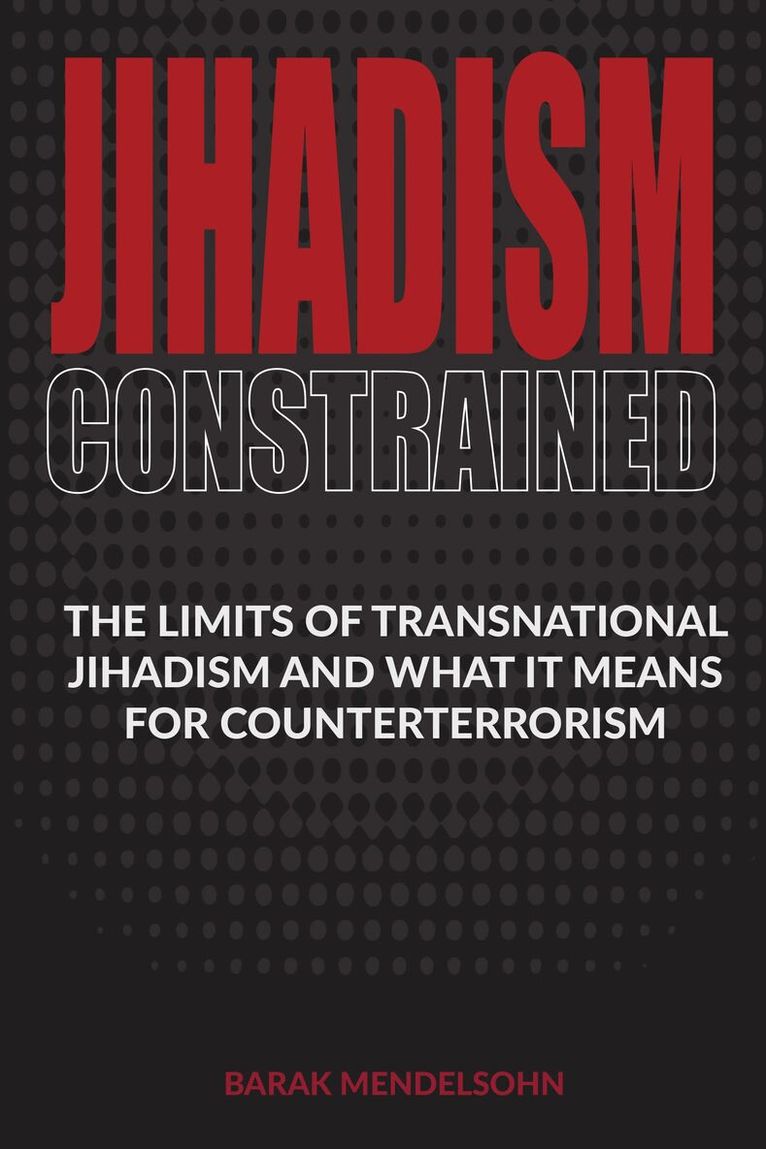
Jihadism Constrained
The Limits of Transnational Jihadism and What It Means for Counterterrorism
Inbunden, Engelska, 2018
1 080 kr
Skickas inom 10-15 vardagar
How threatening are al-Qaeda and the Islamic State? In Jihadism Constrained,Barak Mendelsohn suggests that although jihadi terrorism is a serious challenge, it must not be exaggerated. Transnational terrorist organizations and jihadi transnational groups in particular face three central challenges: How to create a polity that is based on religious affiliation when most people identify with national and sub-national identities? How to generate political effects across borders? And how to produce unity among all components of the transnational movement? The book argues that transnational jihadism has been struggling on all three fronts. Success of armed nonstate actors hinges on their ability to mobilize the masses, but transnational jihadis persuaded only a tiny fraction of the world’s Muslims to abandon their other identity markers and support a faith-based global polity that promotes an extreme interpretation of Islam. As military pressure endangers cross-border activities, jihadi groups introduced local branches only to find that such localization undermines their transnational agenda. Jihadi groups also lack a viable plan to turn armed success in separate states into cross-border political effects. Finally, jihadis regularly fall into internal conflicts. These conflicts are exacerbated by the use of Islamic discourse that renders compromise and reconciliation particularly difficult.
Jihadism Constrained
The Limits of Transnational Jihadism and What It Means for Counterterrorism
Häftad, Engelska, 2018
490 kr
Skickas inom 10-15 vardagar
How threatening are al-Qaeda and the Islamic State? In Jihadism Constrained,Barak Mendelsohn suggests that although jihadi terrorism is a serious challenge, it must not be exaggerated. Transnational terrorist organizations and jihadi transnational groups in particular face three central challenges: How to create a polity that is based on religious affiliation when most people identify with national and sub-national identities? How to generate political effects across borders? And how to produce unity among all components of the transnational movement? The book argues that transnational jihadism has been struggling on all three fronts. Success of armed nonstate actors hinges on their ability to mobilize the masses, but transnational jihadis persuaded only a tiny fraction of the world’s Muslims to abandon their other identity markers and support a faith-based global polity that promotes an extreme interpretation of Islam. As military pressure endangers cross-border activities, jihadi groups introduced local branches only to find that such localization undermines their transnational agenda. Jihadi groups also lack a viable plan to turn armed success in separate states into cross-border political effects. Finally, jihadis regularly fall into internal conflicts. These conflicts are exacerbated by the use of Islamic discourse that renders compromise and reconciliation particularly difficult.