Barbara Schave – författare
Visar alla böcker från författaren Barbara Schave. Handla med fri frakt och snabb leverans.
2 produkter
2 produkter
Inbunden, Engelska, 1993
888 kr
Skickas inom 10-15 vardagar
During psychoanalysis as a young adult, the author was treated by an analyst who distorted, misunderstood, and misinterpreted painful childhood events. In a successful second analysis, Dr. Schave was able to uncover forgotten memories of sexual abuse, buried from her conscious awareness for over 35 years. The author's emotional contact with the realities of her traumatic past led to a healing process, and as Dr. Schave understood and overcame her childhood experiences, she was better able to treat other survivors of sexual abuse.Schave's story is vitally important to other survivors because it is a first person account that details the recovery process. In a compelling manner, she relates what she can remember of her abuse and more importantly, how she came to realize she was not a damaged person. Incest is taboo in our culture, making it a difficult subject to discuss. For this and other reasons, not much is known about how to treat survivors. With her hard-won personal and professional insights, Dr. Schave explores various treatment options, focusing on the crucial importance of sensitivity, honesty, and equal partnership between therapist and patient. She leads survivors of sexual abuse through phases of therapy that include the toleration of feelings, reduction of stress, uncovering forgotten memories, confrontation, and integrating the trauma. This is a unique and hopeful book. abuse is important for its first-person account
E-bok
PDF, Engelska, 1989993 kr
Läs direkt efter köp
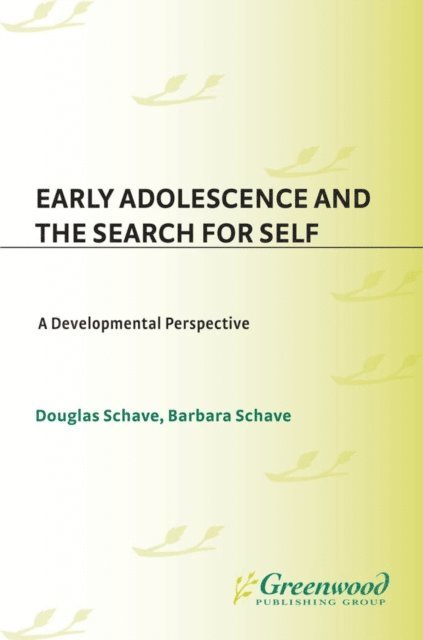
This study achieves a new perspective to this very creative and volatile time of life. The Schaves offer a better and more positive understanding of the developmental tasks of early adolescence and fully describes the states of mind, the struggles of self-differentiation and the coping styles used by this age group to protect against shame. In addition, they provide a systematic approach to treatment strategies, techniques and problem solving with adolescents and their families. This book is a trail-blazer on many grounds. . . . It makes a contribution to the literature on adolescence by offering an entirely new--and clinically highly relevant--explanation to a period of life when rapid changes in psychic organization can turn the tide either toward a wholesome development or toward serious derailments and psychopathology. Anna OrnsteinThe first book to focus specifically on early adolescence, this study achieves a new perspective to this very creative and volatile time of life. Drawing from their professional experience and their private practices, the authors provide a stimulating integration of self psychology, Piaget's cognitive developmental theory, and affect theory. They also elaborate on several important ideas presented in the revolutionary book, The Interpersonal World of the Infant by Daniel N. Stern. This book offers a better and more positive understanding of the developmental tasks of early adolescence. The authors consider the adolescent's search for self identity and self esteem, a function of cognitive growth as well as affect attunement and self-differentiation. The cognitive and emotional search for selfhood further results in the development of defense mechanisms. This book provides a completely different perspective for mental health professionals. It fully describes the volatile states of mind, the struggles of self-differentiation and the coping styles used by this age group to protect against shame. In addition, it provides a systematic approach to treatment strategies, techniques and problem solving with adolescents and their families. Mental health professionals as well as parents of early adolescents will find Early Adolescence and the Search for Self a thought provoking study.The reader is introduced to four main themes developed throughout this book: The primary of affects and affect attunement from infancy through early adolescence; the continued importance of parents in the development of self; The distinct states of mind experienced by early adolescents, and finally; Adolescence as the period of consolidation of cognitive thinking.