Barry Scott Wimpfheimer - Böcker
Visar alla böcker från författaren Barry Scott Wimpfheimer. Handla med fri frakt och snabb leverans.
3 produkter
3 produkter
290 kr
Skickas inom 7-10 vardagar
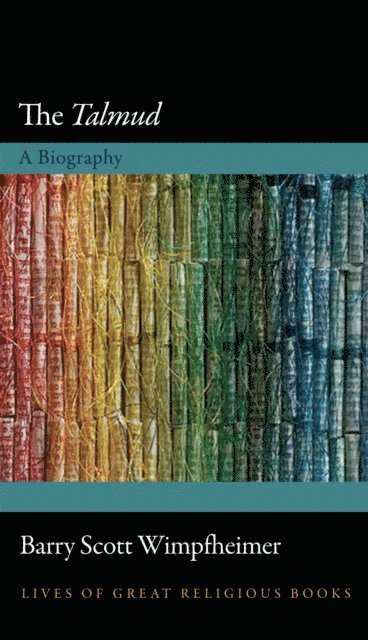
The life and times of an enduring work of Jewish spiritualityThe Babylonian Talmud, a postbiblical Jewish text that is part scripture and part commentary, is an unlikely bestseller. Written in a hybrid of Hebrew and Aramaic, it is often ambiguous to the point of incomprehension, and its subject matter reflects a narrow scholasticism that should hardly have broad appeal. Yet the Talmud has remained in print for centuries and is more popular today than ever. Barry Scott Wimpfheimer tells the remarkable story of this ancient Jewish book and explains why it has endured for almost two millennia.Providing a concise biography of this quintessential work of rabbinic Judaism, Wimpfheimer takes readers from the Talmud's prehistory in biblical and second-temple Judaism to its present-day use as a source of religious ideology, a model of different modes of rationality, and a totem of cultural identity. He describes the book's origins and structure, its centrality to Jewish law, its mixed reception history, and its golden renaissance in modernity. He explains why reading the Talmud can feel like being swept up in a river or lost in a maze, and why the Talmud has come to be venerated--but also excoriated and maligned—in the centuries since it first appeared.An incomparable introduction to a work of literature that has lived a full and varied life, this accessible book shows why the Talmud is at once a received source of traditional teachings, a touchstone of cultural authority, and a powerful symbol of Jewishness for both supporters and critics.
148 kr
Skickas inom 7-10 vardagar
The life and times of an enduring work of Jewish spiritualityThe Babylonian Talmud, a postbiblical Jewish text that is part scripture and part commentary, is an unlikely bestseller. Written in a hybrid of Hebrew and Aramaic, it is often ambiguous to the point of incomprehension, and its subject matter reflects a narrow scholasticism that should hardly have broad appeal. Yet the Talmud has remained in print for centuries and is more popular today than ever. Barry Scott Wimpfheimer tells the remarkable story of this ancient Jewish book, explaining why the Talmud is at once a received source of traditional teachings, a touchstone of cultural authority, and a powerful symbol of Jewishness for supporters and critics alike.
754 kr
Skickas inom 10-15 vardagar
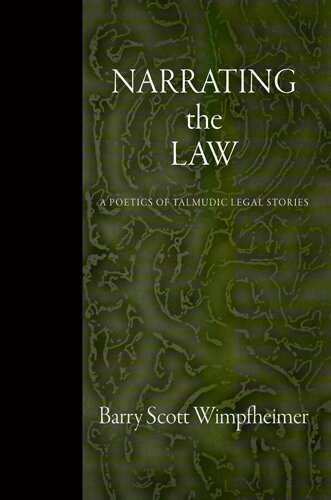
In Narrating the Law Barry Scott Wimpfheimer creates a new theoretical framework for considering the relationship between law and narrative and models a new method for studying talmudic law in particular.Works of law, including the Talmud, are animated by a desire to create clear usable precedent. This animating impulse toward clarity is generally absent in narratives, the form of which is better able to capture the subtleties of lived life. Wimpfheimer proposes to make these different forms compatible by constructing a narrative-based law that considers law as one of several "languages," along with politics, ethics, psychology, and others that together compose culture. A narrative-based law is capable of recognizing the limitations of theoretical statutes and the degree to which other cultural languages interact with legal discourse, complicating any attempts to actualize a hypothetical set of rules. This way of considering law strongly resists the divide in traditional Jewish learning between legal literature (Halakhah) and nonlegal literature (Aggadah) by suggesting the possibility of a discourse broad enough to capture both. Narrating the Law activates this mode of reading by looking at the Talmud's legal stories, a set of texts that sits uncomfortably on the divide between Halakhah and Aggadah. After noticing that such stories invite an expansive definition of law that includes other cultural voices, Narrating the Law also mines the stories for the rich descriptions of rabbinic culture that they encapsulate.