Bernice Glatzer Rosenthal – författare
Visar alla böcker från författaren . Handla med fri frakt och snabb leverans.
8 produkter
8 produkter
Häftad, Engelska, 2002
506 kr
Skickas inom 5-8 vardagar
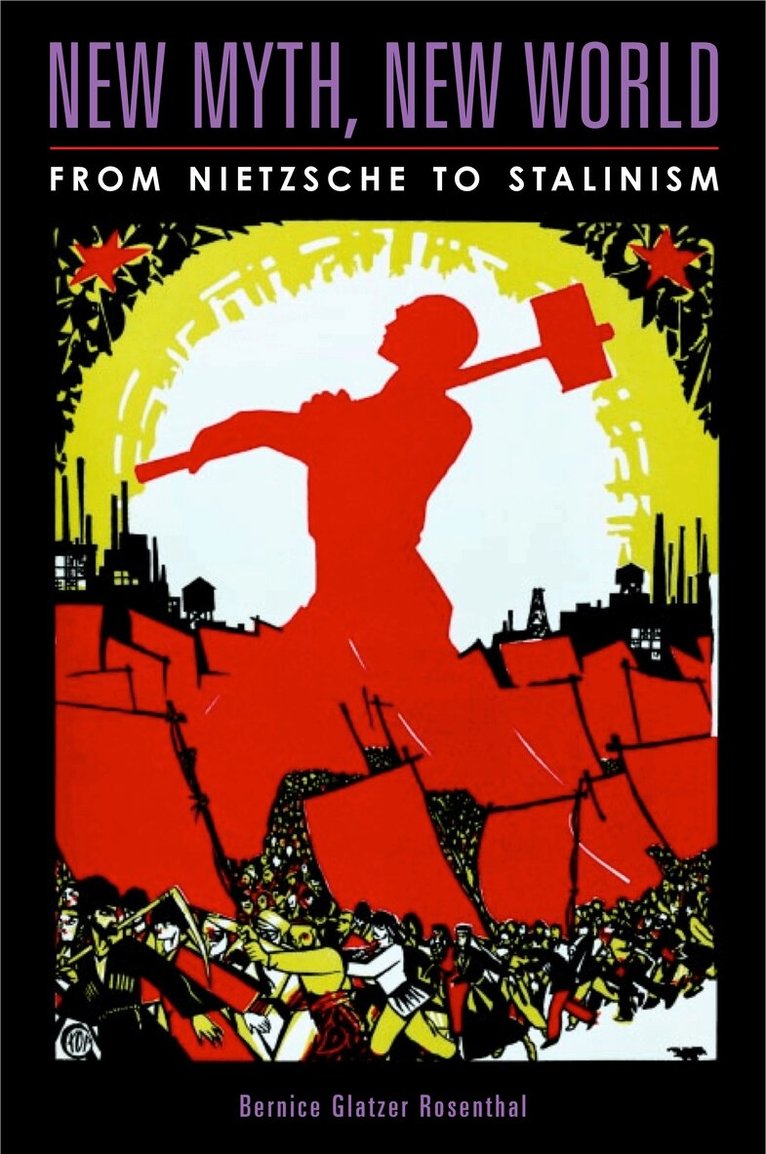
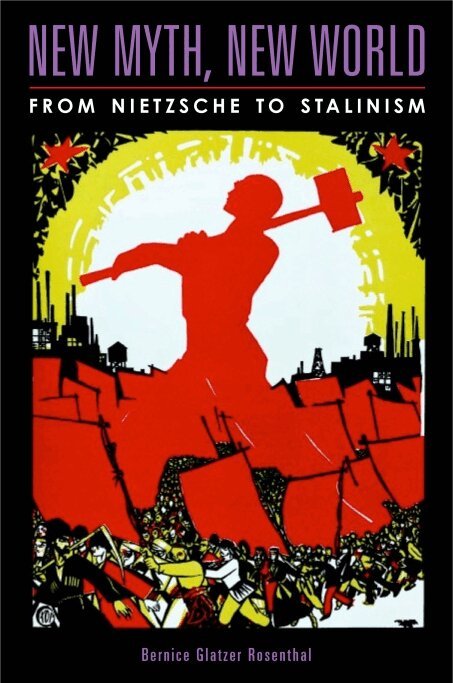
The Nazis' use and misuse of Nietzsche is well known. The Superman, the "will to power," Nietzsche's equation of bourgeois democracy and decadence, and his denigration of reason were staples of Nazi propaganda. Communists also used and misused Nietzsche, but that fact is largely unknown because Soviet propagandists invoked reason and labeled Nietzsche the "philosopher of fascism," even while covertly appropriating his ideas. In this pioneering book, Bernice Glatzer Rosenthal excavates the trail of long-obscured Nietzschean ideas that took root in late Imperial Russia, intertwining with other elements in the culture to become a vital ingredient of Bolshevism and Stalinism. Nietzsche made a difference. He furnished intellectual ammunition for a prolonged conflict about culture, society, and politics that began around the turn of the century. His first Russian admirers were poets, philosophers, and political activists. They responded to the changes transforming their society by espousing new values and seeking a new faith by which to live and work. This response resulted in new aesthetic and political amalgams, such as Symbolism, Futurism, Nietzschean Christianity, and Nietzschean Marxism. The ensuing debates between and among their partisans reverberated throughout the wider culture and therefore also into Bolshevism, becoming the subject of an uninterrupted polemic between Bolsheviks and non-Bolsheviks, and among Bolsheviks, that continued into the 1930s. In Stalin's time, unacknowledged Nietzschean ideas were used to mobilize the masses for the great tasks of the first Five-Year Plan and the Cultural Revolution, which was intended to eradicate "bourgeois" values and attitudes from Soviet life and to construct a distinctly Socialist culture. Nietzsche's belief that people need illusions to shield them from reality underlay Socialist Realism, the official Soviet aesthetic from 1934 on. In the aftermath of de-Stalinization, the government cast Nietzsche as the personification of "bourgeois" nihilism and "bourgeois" individualism. Soviet intellectuals wishing to reappropriate their lost cultural heritage discovered the Nietzsche-influenced intellectuals of late Imperial Russia and reopened discussion on the issues they had posed. More than an exercise in historical rediscovery, New Myth, New World offers a new interpretation of modern Russian history. By uncovering the buried influence of Nietzschean ideas on Soviet culture and politics, Rosenthal opens new avenues for understanding Soviet ideology and its influence on the twentieth century.
Häftad, Engelska, 2010
545 kr
Skickas inom 7-10 vardagar
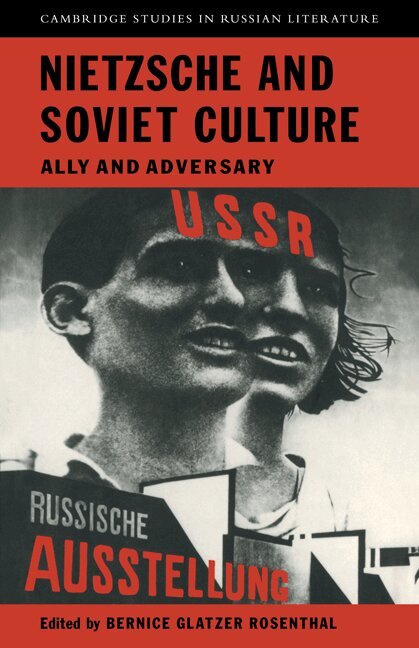
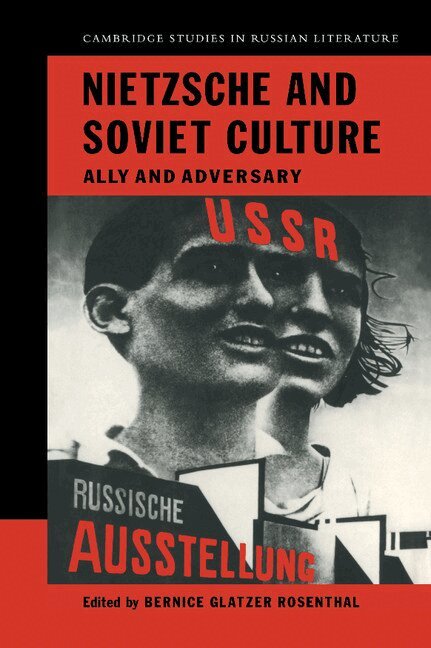
This pioneering 1994 study documents the extent and diversity of the impact of Nietzschean ideas on Soviet literature and culture. It shows how these ideas, unacknowledged and reworked, entered and shaped that culture and stimulated the imagination of both supporters and detractors of the regime addresses key peculiarities of the Soviet reception of Nietzsche - the role of the prerevolutionary interest in the occult, the way revolution figured as an allegorical subject, the intertwining of art and ideology in the obsession with creating a new culture, the continuing Russian interest in Nietzsche as a religious thinker, and the manner in which censorship affected the dynamic of reception and influence. The book looks at the origins, formative years, and subsequent development of Soviet literature and culture, and raises issues for research and discussion.
Inbunden, Engelska, 1994
1 782 kr
Skickas inom 7-10 vardagar
This pioneering 1994 study documents the extent and diversity of the impact of Nietzschean ideas on Soviet literature and culture. It shows how these ideas, unacknowledged and reworked, entered and shaped that culture and stimulated the imagination of both supporters and detractors of the regime addresses key peculiarities of the Soviet reception of Nietzsche - the role of the prerevolutionary interest in the occult, the way revolution figured as an allegorical subject, the intertwining of art and ideology in the obsession with creating a new culture, the continuing Russian interest in Nietzsche as a religious thinker, and the manner in which censorship affected the dynamic of reception and influence. The book looks at the origins, formative years, and subsequent development of Soviet literature and culture, and raises issues for research and discussion.
Inbunden, Engelska, 1997
1 614 kr
Skickas inom 10-15 vardagar
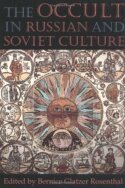
A pioneering, richly interdisciplinary volume, this is the first work in any language on a subject that has long attracted interest in the West and is now of consuming interest in Russia itself. The cultural ferment unleashed by the collapse of the Soviet Union reawakened interest in the study of Russian religion and spirituality. This book provides a comprehensive account of the influence of occult beliefs and doctrines on intellectual and cultural life in twentieth-century Russia. Bernice Glatzer Rosenthal's introduction delineates the characteristics of occult cosmology which distinguish it from mysticism and theology, and situates Russian occultism in historical and pan-European contexts. Contributors explore the varieties of occult thinking characteristic of prerevolutionary Russia, including Kabbala, theosophy, anthroposophy, and the fascination with Satanism. Other contributors document occultism in the cultural life of the early Soviet period, examine the surprising traces of the occult in the culture of the high Stalin era, and describe the occult revival in contemporary Russia. The volume includes bibliographical essays on Russian occult materials available outside Russia.
Häftad, Engelska, 1997
506 kr
Skickas inom 10-15 vardagar
A pioneering, richly interdisciplinary volume, this is the first work in any language on a subject that has long attracted interest in the West and is now of consuming interest in Russia itself. The cultural ferment unleashed by the collapse of the Soviet Union reawakened interest in the study of Russian religion and spirituality. This book provides a comprehensive account of the influence of occult beliefs and doctrines on intellectual and cultural life in twentieth-century Russia. Bernice Glatzer Rosenthal's introduction delineates the characteristics of occult cosmology which distinguish it from mysticism and theology, and situates Russian occultism in historical and pan-European contexts. Contributors explore the varieties of occult thinking characteristic of prerevolutionary Russia, including Kabbala, theosophy, anthroposophy, and the fascination with Satanism. Other contributors document occultism in the cultural life of the early Soviet period, examine the surprising traces of the occult in the culture of the high Stalin era, and describe the occult revival in contemporary Russia. The volume includes bibliographical essays on Russian occult materials available outside Russia.
Häftad, Engelska, 1990
458 kr
Skickas inom 5-8 vardagar
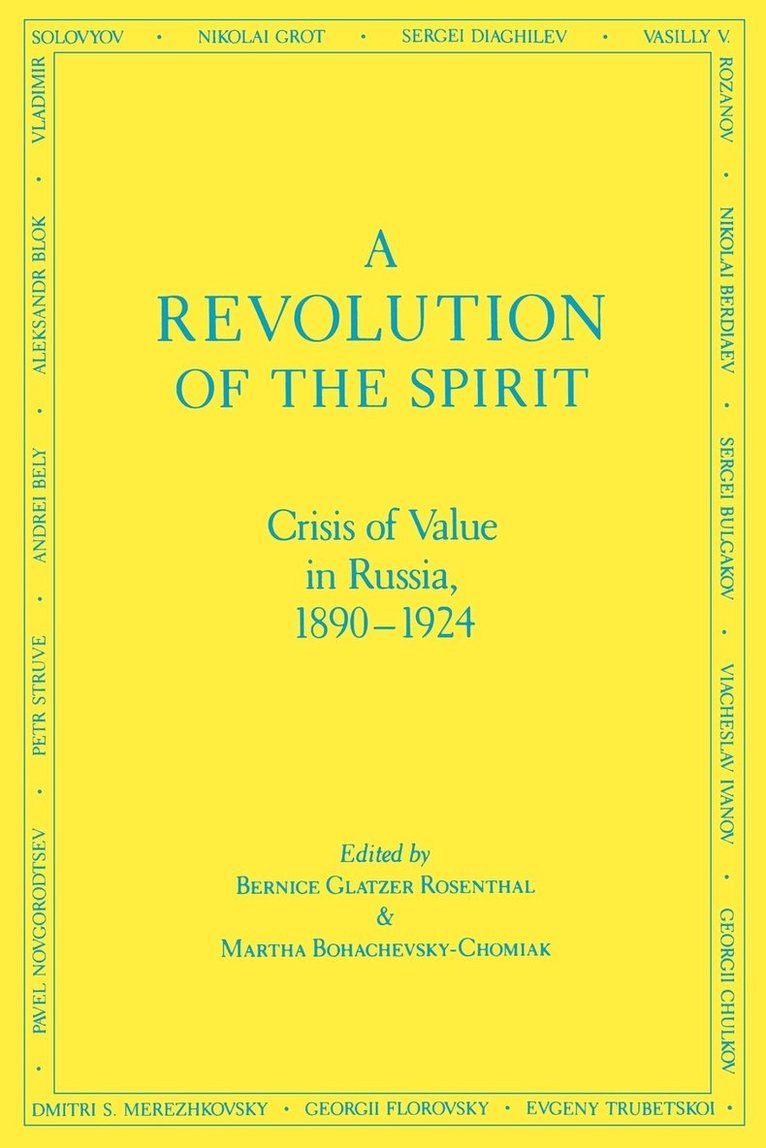
The spiritual revival that is sweeping the Soviet Union today had its genesis in the religious renaissance of the early 20th century. In both cases, it was lay intellectuals, disenchanted with simplistic positivism and materialism, who adapted Russian orthodoxy to modern life. Their ideas reverberated, not only in religion and philosophy, but in art, literature, painting, theater and film. Banned by the Soviet government in 1922, the writings of the religious renaissance were rediscovered in the Brezhnev era by a new generation of Soviet intellectuals disillusioned with Marxism. Circulating from hand to hand in illegal typewritten editions (samizdat), they exerted an evergrowing influence on Soviet society, from the very top down to ordinary people. Under the new policy of glasnost, the government itself is currently reprinting their works. The selections included in this volume reflect the profundity and breadth of their thought and are presented in English for the first time. The recognition of the universal need and significance of spiritual values and ideals united this otherwise heterogeneous group and bears witness to the diversity of their approach to the basic issues of the human condition. The centrality of these lay intellectuals' concerns transcends the specifics of the historical situation in early 20th century Russia and makes their writings relevant to the universal human condition. In order of appearance, the selections are: VLADIMIR SOLOVYOV, The Enemy from the East, The Russian National Ideal; NIKOLAI GROT, On the True Tasks of Philosophy; SERGEI DIAGHILEV, Complex Questions; VASILLY V. ROZANOV, On Sweetest Jesus and the Bitter Fruits of the World; NIKOLAI BERDIAEV, Socialism as Religion; SERGEI BULGAKOV, An Urgent Task; VIACHISLAV IVANOV, Crisis of Individualism, GEORGII CHULKOV, On Mystical Anarchism; DMITRI S. MEREZHKOVSKY, Revolution and Religion, The Jewish Question As a Russian Question; GEORGII FLOROVSKY, In the World of Quests and Wanderings; PAVEL NOVGORODTSEV, The Essence of the Russian Orthodox Consciousness; PETR STRUVE, The Intelligentsia and the National Face; ANDREI BELY, Revolution and Culture; ALEKSANDR BLOK, Catiline; EVGENY TRUBETSKOI, The Bolshevist Utopia and the Religious Movement.
Häftad, Engelska, 1975
561 kr
Skickas inom 10-15 vardagar
As the central event of modern times, the Bolshevik Revolution of 1917 remains a major focus of historical investigation and controversy. Unavoidably, the conception of the historical problems and the evidence presented are shaped by the historian's view on both the desirability and the inevitability of the Bolshevik Revolution. The years 1890-1917 are particularly important as the crucible in which revolutionary forces developed. In the nineties, Finance Minister Sergei Witte laid the groundwork for a modern economy. While he achieved many of his economic goals, the stresses and strains of forced draft industrialization contributed to the revival of the revolutionary movement; political instability was their immediate effect. By the turn of the century the peasants were in open revolt, an alienated and militant urban proletariat was emerging, and a cohesive liberal opposition was beginning to develop. All these groups demanded fundamental reforms including full political rights for all citizens. By 1905 they had gathered sufficient strength to force the government to issue a constitution and a legislature called the Duma. Neither side, however, was satisfied. The Imperial government tried to take back what it had granted under duress and the opposition parties attempted to discredit the system as "sham constitutionalism. " Only a small center was willing to work with the government and the government was not always willing to work with them.
E-bok
PDF, Engelska, 2012734 kr
Läs direkt efter köp
As the central event of modern times, the Bolshevik Revolution of 1917 remains a major focus of historical investigation and controversy. Unavoidably, the conception of the historical problems and the evidence presented are shaped by the historian''s view on both the desirability and the inevitability of the Bolshevik Revolution. The years 1890-1917 are particularly important as the crucible in which revolutionary forces developed. In the nineties, Finance Minister Sergei Witte laid the groundwork for a modern economy. While he achieved many of his economic goals, the stresses and strains of forced draft industrialization contributed to the revival of the revolutionary movement; political instability was their immediate effect. By the turn of the century the peasants were in open revolt, an alienated and militant urban proletariat was emerging, and a cohesive liberal opposition was beginning to develop. All these groups demanded fundamental reforms including full political rights for all citizens. By 1905 they had gathered sufficient strength to force the government to issue a constitution and a legislature called the Duma. Neither side, however, was satisfied. The Imperial government tried to take back what it had granted under duress and the opposition parties attempted to discredit the system as "sham constitutionalism. " Only a small center was willing to work with the government and the government was not always willing to work with them.