Bhabani Shankar Das – författare
Visar alla böcker från författaren Bhabani Shankar Das. Handla med fri frakt och snabb leverans.
3 produkter
3 produkter
Inbunden, Engelska, 2026
2 736 kr
Kommande
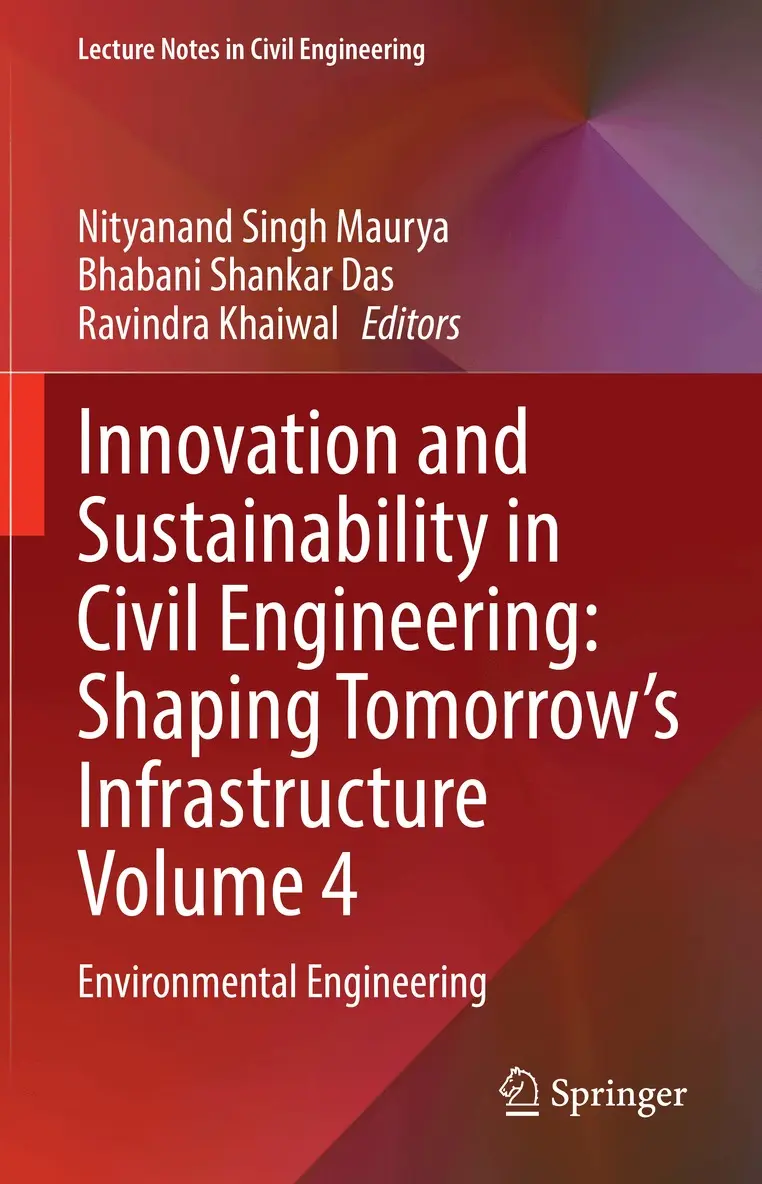
This book explores an expansive range of contemporary topics, including advanced wastewater treatment methods, solid waste management strategies, groundwater contamination modeling, and innovative monitoring of emerging pollutants. The proceedings of the 1st International Conference on Innovation and Sustainability in Civil Engineering: Shaping Tomorrow’s Infrastructure (ISCESTI—2025), held from May 14–16, 2025, at the National Institute of Technology (NIT) Patna, features a compelling volume dedicated to Environmental Engineering. This book brings together a diverse array of cutting-edge research, practical solutions, and visionary perspectives addressing critical environmental challenges through the lens of civil and environmental engineering.Groundbreaking studies presented herein utilize modern tools such as artificial intelligence, remote sensing, electrochemical processes, and bio-based technologies to enhance sustainability and efficiency in environmental systems. Key themes include prediction and risk assessment of groundwater contaminants (e.g., fluoride, arsenic, and nitrates), solid waste valorization and management, GHG emissions from municipal systems, and reuse of treated effluents. Additionally, papers investigate the environmental impact of industrial activities, nutrient recovery, and eco-material development such as biodegradable packaging and bio-toilets. A special emphasis is laid on circular economy frameworks, e-waste governance, and public health implications of pollution and micro-plastics. This book serves as an invaluable reference for researchers, environmental engineers, policy-makers, and practitioners engaged in developing sustainable and resilient environmental systems. This book underscores data-driven approaches, scalable technologies, and policy-relevant insights, aligning with global sustainability goals and the urgent need for environmentally responsible civil infrastructure.
Del 847 - Lecture Notes in Civil Engineering
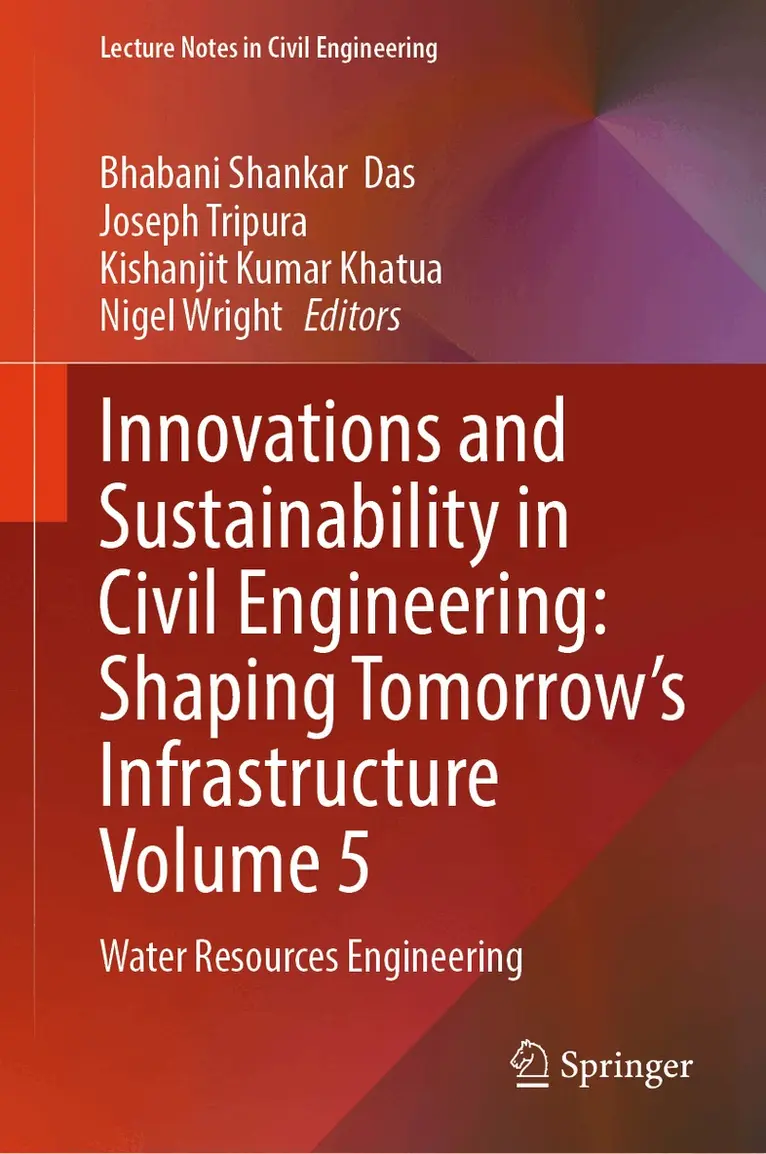
Innovations and Sustainability in Civil Engineering: Shaping Tomorrow’s Infrastructure Volume 5
Water Resources Engineering
Inbunden, Engelska, 2026
2 548 kr
Skickas inom 5-8 vardagar
This book represents a seminal collection of advanced research, novel methodologies, and transformative practices within the domains of water resources engineering, hydraulic engineering, and hydrology, with a strong emphasis on the integration of artificial intelligence and machine learning (AI/ML) in civil engineering.This book embodies the progressive vision and interdisciplinary dialogue of a global academic and professional community committed to revolutionizing water infrastructure and management systems for a resilient and sustainable future. The compendium explores contemporary issues and scientific breakthroughs across a diverse range of topics such as hydrologic modeling, flood forecasting and mitigation, watershed management, groundwater assessment, climate-resilient water infrastructure, and urban storm water systems. It offers comprehensive insights into the design and optimization of hydraulic structures, sediment transport dynamics, erosion control, river engineering, and eco-hydraulics. Special attention is given to sustainable water resource planning, water quality modeling, and integrated water management strategies, reflecting the urgent need for adaptive solutions in the face of climate change and urban expansion.A significant dimension of this volume is the exploration of AI/ML-driven approaches in civil and water resources engineering. Contributions demonstrate how machine learning algorithms, deep learning models, and data-driven techniques are revolutionizing flood prediction, rainfall-runoff modeling, real-time monitoring, water distribution networks, and decision support systems. These innovations enable more accurate forecasting, enhanced system efficiency, and informed policy making. Serving as an essential reference for researchers, academicians, industry professionals, and policymakers, this book offers a deep dive into state-of-the-art technologies and sustainable practices shaping the next generation of water infrastructure. The breadth and depth of its contributions provide actionable knowledge and strategic insights, fostering a sustainable, data-smart approach to water and hydraulic systems in a rapidly evolving environmental and technological landscape.
E-bok
Engelska, 20263 137 kr
Läs direkt efter köp
This book represents a seminal collection of advanced research, novel methodologies, and transformative practices within the domains of water resources engineering, hydraulic engineering, and hydrology, with a strong emphasis on the integration of artificial intelligence and machine learning (AI/ML) in civil engineering.This book embodies the progressive vision and interdisciplinary dialogue of a global academic and professional community committed to revolutionizing water infrastructure and management systems for a resilient and sustainable future. The compendium explores contemporary issues and scientific breakthroughs across a diverse range of topics such as hydrologic modeling, flood forecasting and mitigation, watershed management, groundwater assessment, climate-resilient water infrastructure, and urban storm water systems. It offers comprehensive insights into the design and optimization of hydraulic structures, sediment transport dynamics, erosion control, river engineering, and eco-hydraulics. Special attention is given to sustainable water resource planning, water quality modeling, and integrated water management strategies, reflecting the urgent need for adaptive solutions in the face of climate change and urban expansion.A significant dimension of this volume is the exploration of AI/ML-driven approaches in civil and water resources engineering. Contributions demonstrate how machine learning algorithms, deep learning models, and data-driven techniques are revolutionizing flood prediction, rainfall-runoff modeling, real-time monitoring, water distribution networks, and decision support systems. These innovations enable more accurate forecasting, enhanced system efficiency, and informed policy making. Serving as an essential reference for researchers, academicians, industry professionals, and policymakers, this book offers a deep dive into state-of-the-art technologies and sustainable practices shaping the next generation of water infrastructure. The breadth and depth of its contributions provide actionable knowledge and strategic insights, fostering a sustainable, data-smart approach to water and hydraulic systems in a rapidly evolving environmental and technological landscape.