Burton W. Folsom – författare
Visar alla böcker från författaren . Handla med fri frakt och snabb leverans.
4 produkter
4 produkter
E-bok
Engelska, 2014152 kr
Läs direkt efter köp
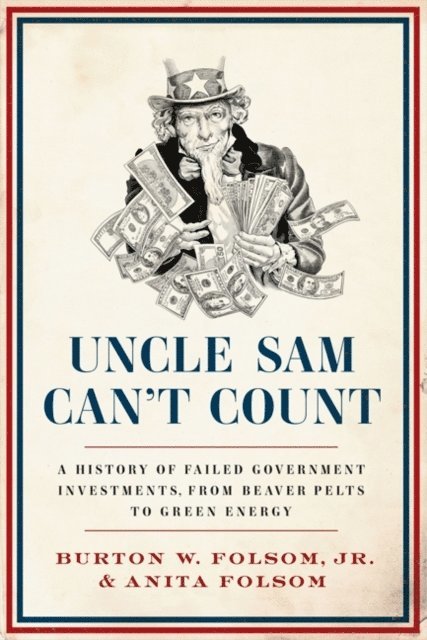
An enlightening overview of America''s misadventures in economic investment from the Revolutionary era to the Obama administration.From the days of George Washington through World War II to today, government subsidies have failed the American people time and again. Draining the Treasury of cash, this doomed attempt to "pick winners" only serves to impede economic growth—and hurt the very companies receiving aid. But why does federal aid seem to have a reverse Midas touch?In Uncle Sam Can''t Count, Burt and Anita Folsom argue that federal officials don''t have the same abilities or incentives as entrepreneurs. In addition, federal control always leads to politicization. And what works for politicians often doesn''t work in the marketplace.Filled with examples of government failures and free market triumphs, from John Jacob Astor to the Wright Brothers, World War II amphibious landing craft to Detroit, Uncle Sam Can''t Count is a hard-hitting critique of government investment that demonstrates why business should be left exclusively to private entrepreneurs.
E-bok
Engelska, 2008102 kr
Läs direkt efter köp
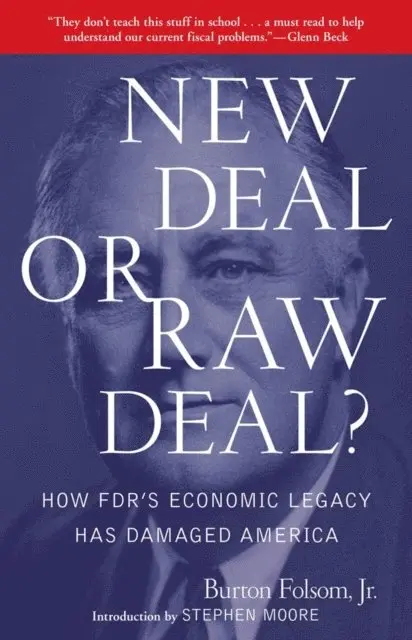
A sharply critical new look at Franklin D. Roosevelt''s presidency reveals government policies that hindered economic recovery from the Great Depression -- and are still hurting America today. In this shocking and groundbreaking new book, economic historian Burton W. Folsom exposes the idyllic legend of Franklin D. Roosevelt as a myth of epic proportions. With questionable moral character and a vendetta against the business elite, Roosevelt created New Deal programs marked by inconsistent planning, wasteful spending, and opportunity for political gain -- ultimately elevating public opinion of his administration but falling flat in achieving the economic revitalization that America so desperately needed from the Great Depression. Folsom takes a critical, revisionist look at Roosevelt''s presidency, his economic policies, and his personal life. Elected in 1932 on a buoyant tide of promises to balance the increasingly uncontrollable national budget and reduce the catastrophic unemployment rate, the charismatic thirty-second president not only neglected to pursue those goals, he made dramatic changes to federal programming that directly contradicted his campaign promises. Price fixing, court packing, regressive taxes, and patronism were all hidden inside the alphabet soup of his popular New Deal, putting a financial strain on the already suffering lower classes and discouraging the upper classes from taking business risks that potentially could have jostled national cash flow from dormancy. Many government programs that are widely used today have their seeds in the New Deal. Farm subsidies, minimum wage, and welfare, among others, all stifle economic growth -- encouraging decreased productivity and exacerbating unemployment. Roosevelt''s imperious approach to the presidency changed American politics forever, and as he manipulated public opinion, American citizens became unwitting accomplices to the stilted economic growth of the 1930s. More than sixty years after FDR died in office, we still struggle with the damaging repercussions of his legacy.
E-bok
Engelska, 2011117 kr
Läs direkt efter köp
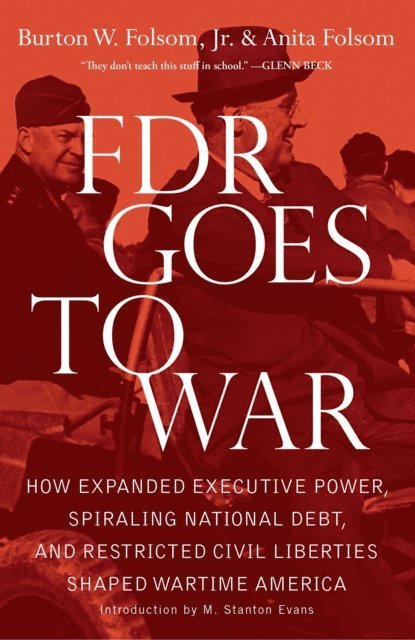
From the acclaimed author of New Deal or Raw Deal?, called “eye-opening” by the National Review, comes a fascinating exposé of Franklin Delano Roosevelt’s destructive wartime legacy—and its adverse impact on America’s economic and foreign policies today. Did World War II really end the Great Depression—or did President Franklin Roosevelt’s poor judgment and confused management leave Congress with a devastating fiscal mess after the final bomb was dropped? In this provocative new book, historians Burton W. Folsom, Jr., and Anita Folsom make a compelling case that FDR’s presidency led to evasive and self-serving wartime policies. At a time when most Americans held isolationist sentiments—a backlash against the stunning carnage of World War I—Roosevelt secretly favored an aggressive interventionist foreign policy. Yet, throughout the 1930s, he spent lavishly on his disastrous New Deal programs and slashed defense spending, leaving America vastly unprepared for Japan’s attack on Pearl Harbor and the challenge of fighting World War II. History books tell us the wartime economy was a boon, thanks to massive government spending. But the skyrocketing national debt, food rations, nonexistent luxuries, crippling taxes, labor strikes, and dangerous work of the time tell a different story—one that is hardly the stuff of recovery. Instead, the war ushered in a new era of imperialism for the executive branch. Roosevelt seized private property, conducted illegal wiretaps, tried to silence domestic opposition, and interned 110,000 Japanese Americans. He set a dangerous precedent for entangling alliances in foreign affairs, including his remarkable courtship of Russian dictator Joseph Stalin, while millions of Americans showed the courage, perseverance, and fortitude to make the weapons and fight the war. Was Roosevelt a great wartime leader, as historians almost unanimously assert? The Folsoms offer a thought-provoking revision of his controversial legacy. FDR Goes to War will make America take a second look at one of its most complicated presidents.
Inbunden, Engelska, 2015
225 kr
Tillfälligt slut
In January 1983 Burt Folsom read a story in Time about Mitch Rutledge, a man on death row with an IQ of 84 who said he was sorry for what he did. "Forget him," the last line of the story read. But Burt wrote Mitch a letter and discovered a man more interesting and intelligent than the article revealed.Burt and his wife, Anita, began a friendship with Mitch and saw him become a leader and role model for others in prison, teaching himself to read and write (starting with copying down the spelling of items he knew from TV commercials) and becoming a national spokesman on prison life.Death on Hold is the amazing story of their friendship, and of grace, reconciliation, and redemption for a man without hope who was given a future.