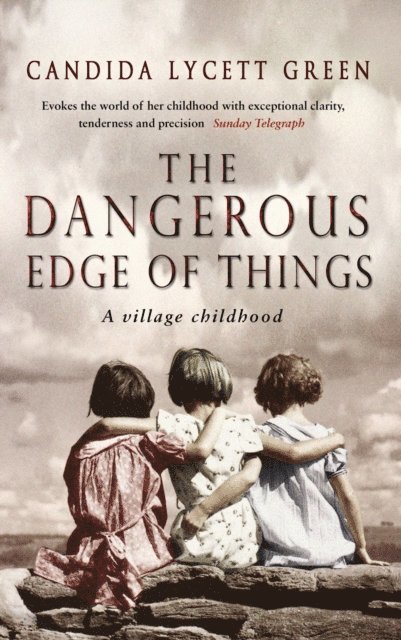
1949: one year in the childhood of Candida Lycett Green in the remote village of Farnborough in Berkshire. Here she lives with her father John Betjeman and her mother Penelope Chetwode, in one of the bleakest and highest spots on the windswept downland.Candida runs wild with the 'gang' of village children. Stimulated by regular excursions to the cinema in Wantage, Candida and her best friend June became fascinated by the idea of love. Their romantic imagination is fuelled by the beautiful Ruby Mason, who cleans the cottage of a reclusive scientist, Dr Fox, employed at the neighbouring Harwell Atomic Research Centre. They stealthily engineer a romance between the two - until it is revealed that none of the children's special adult friends are what they seem, and the real world shockingly intervenes to overturn their innocence.
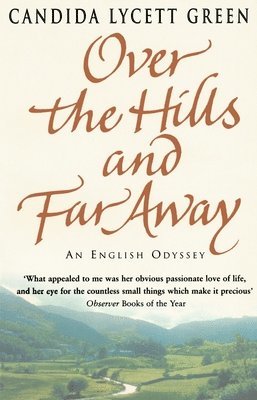
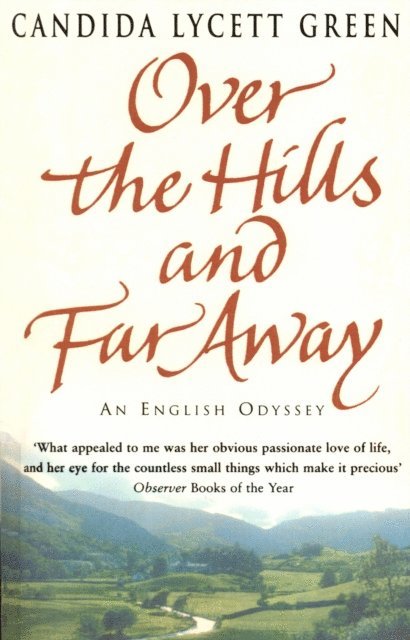
From her early childhood, when her inspirational mother would take her on trips along her beloved Ridgeway in a horse-drawn cart, Candida Lycett Green has retained a love of green lanes and tracks, of moving along at horse's pace and casting an eye on the beauty of England through the back door. Her insatiable appetite for exploring unknown territory has led her to travel all over the country by horse for weeks at a time, and often these journeys have come at important turning points in her life. Lyrical yet down-to-earth, framed by a recent 150-mile journey through Yorkshire and Northumberland with a friend, Over the Hills and Far Away dips back into past journeys by horse that also reflect her idyllic childhood in the bohemian Betjeman household, a charmed youth in the Swinging Sixties, a year-long honeymoon journey overland to India, early days at Private Eye, and the ups and downs of thirty-nine years of marriage and motherhood. Her story is made all the more poignant by her recent fight with breast cancer.
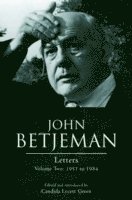
John Betjeman (1906-1984) was not simply one of the best-loved contemporary English poets but was also one of the best-loved Englishmen of the twentieth century. He was never, nor strove to be, the darling of intellectuals or academics, but by pure chance became the darling of the ordinary man in the street. Volume I of Betjeman's selected letters covers his life from university days through to his period on the staff of The Architectural Review and as editor of the Shell Guides in the thirties; his time as Press Attache in Dublin during the War; and his activities as a broadcaster on radio and television and as a public speaker which established him as an authority and enthusiast in a wide range of fields - literary, artistic, architectural. Volume II covers his life from the age of forty-six when his popularity as poet and broadcaster and as campaigner against the destruction of fine buildings was reaching its height. His correspondents ranged from people in the world of literature and the arts - T. S.Eliot, Cyril Connolly, Evelyn Waugh, Auberon Waugh, John Piper, Philip Larkin and Kingsley Amis, to family and cherished friends - Alan Pryce-Jones, Myfanwy Piper, Nancy Mitford, Osbert Lancaster and later Mary Wilson. He wrote eloquently and passionately on poetry, religion, architecture and town planning and letters to his family recorded adventures in America - gloomy, and Australia - jubilant. His letters are at once serious, comforting, sparkling with humour and sometimes as tumultuous as life itself. In these two volumes, Candida Lycett Green has created a loving portrait of her father, and her notes and introductions to the works serve to amplify her own feelings for a kindly, gentle and universally admired man. This publication coincides with a series of events nationwide to celebrate the centenary of Betjeman's birth on 28 August this year. There is huge media buzz for the centenary. John Murray is reissuing Betjeman's poetry.
1949: one year in the childhood of Candida Lycett Green in the remote village of Farnborough in Berkshire. Here she lives with her father John Betjeman and her mother Penelope Chetwode, in one of the bleakest and highest spots on the windswept downland.Candida runs wild with the 'gang' of village children. Stimulated by regular excursions to the cinema in Wantage, Candida and her best friend June became fascinated by the idea of love. Their romantic imagination is fuelled by the beautiful Ruby Mason, who cleans the cottage of a reclusive scientist, Dr Fox, employed at the neighbouring Harwell Atomic Research Centre. They stealthily engineer a romance between the two - until it is revealed that none of the children's special adult friends are what they seem, and the real world shockingly intervenes to overturn their innocence.
From her early childhood, when her inspirational mother would take her on trips along her beloved Ridgeway in a horse-drawn cart, Candida Lycett Green has retained a love of green lanes and tracks, of moving along at horse's pace and casting an eye on the beauty of England through the back door. Her insatiable appetite for exploring unknown territory has led her to travel all over the country by horse for weeks at a time, and often these journeys have come at important turning points in her life. Lyrical yet down-to-earth, framed by a recent 150-mile journey through Yorkshire and Northumberland with a friend, Over the Hills and Far Away dips back into past journeys by horse that also reflect her idyllic childhood in the bohemian Betjeman household, a charmed youth in the Swinging Sixties, a year-long honeymoon journey overland to India, early days at Private Eye, and the ups and downs of thirty-nine years of marriage and motherhood. Her story is made all the more poignant by her recent fight with breast cancer.
John Betjeman (1906-1984) was not simply one of the best-loved contemporary English poets but was also one of the best-loved Englishmen of the twentieth century. He was never, nor strove to be, the darling of intellectuals or academics, but by pure chance became the darling of the ordinary man in the street. Volume I of Betjeman's selected letters covers his life from university days through to his period on the staff of The Architectural Review and as editor of the Shell Guides in the thirties; his time as Press Attache in Dublin during the War; and his activities as a broadcaster on radio and television and as a public speaker which established him as an authority and enthusiast in a wide range of fields - literary, artistic, architectural. Volume II covers his life from the age of forty-six when his popularity as poet and broadcaster and as campaigner against the destruction of fine buildings was reaching its height. His correspondents ranged from people in the world of literature and the arts - T. S.Eliot, Cyril Connolly, Evelyn Waugh, Auberon Waugh, John Piper, Philip Larkin and Kingsley Amis, to family and cherished friends - Alan Pryce-Jones, Myfanwy Piper, Nancy Mitford, Osbert Lancaster and later Mary Wilson. He wrote eloquently and passionately on poetry, religion, architecture and town planning and letters to his family recorded adventures in America - gloomy, and Australia - jubilant. His letters are at once serious, comforting, sparkling with humour and sometimes as tumultuous as life itself. In these two volumes, Candida Lycett Green has created a loving portrait of her father, and her notes and introductions to the works serve to amplify her own feelings for a kindly, gentle and universally admired man. This publication coincides with a series of events nationwide to celebrate the centenary of Betjeman's birth on 28 August this year. There is huge media buzz for the centenary. John Murray is reissuing Betjeman's poetry.