Carolyn Woods Eisenberg – författare
Visar alla böcker från författaren Carolyn Woods Eisenberg. Handla med fri frakt och snabb leverans.
6 produkter
6 produkter
Inbunden, Engelska, 2023
405 kr
Skickas inom 5-8 vardagar
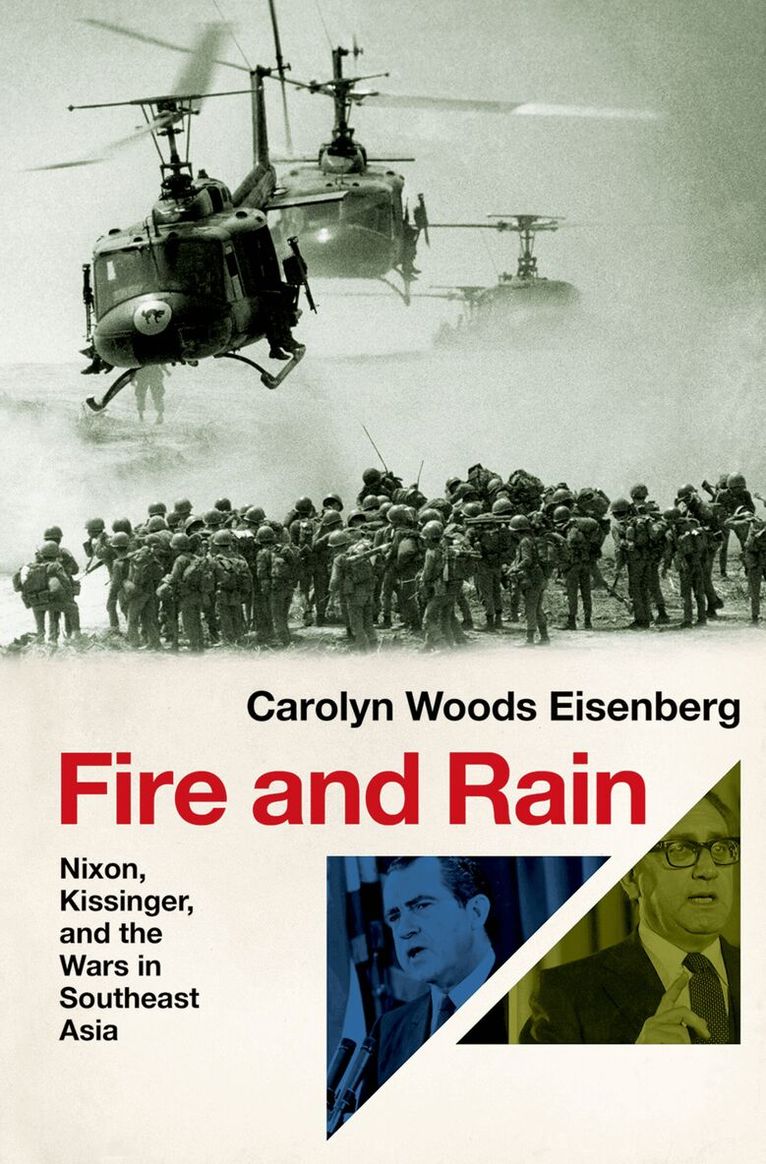
This gripping account interweaves Nixon and Kissinger's pursuit of the war in Southeast Asia and their diplomacy with the Soviet Union and China with on-the-ground military events and US domestic reactions to the war conducted in Vietnam, Laos, and Cambodia.Fire and Rain is a compelling, meticulous narrative of the way national security decisions formed at the highest levels of government affect the lives of individuals at home and abroad. By drawing these connections, Carolyn Woods Eisenberg brings to life policy decisions about Vietnam, Laos, and Cambodia, conveying their significance to a new generation of readers. She breaks fresh ground in contextualizing Richard Nixon and Henry Kissinger's decisions within a wider institutional and societal framework. While recognizing the distinctive personalities and ideas of these two men, this study more broadly conveys the competing roles and impact of the professional military, the Congress, and a mobilized peace movement.Drawing upon a vast collection of declassified documents, Eisenberg presents an important re-interpretation of the Nixon Administration's relations with the Soviet Union and China vis a vis the war in Southeast Asia. She argues that in their desperate effort to overcome, or at least overshadow, their failure in Vietnam, Nixon and Kissinger made major concessions to both nations in the field of arms control, their response to the India-Pakistan war, and the diplomacy surrounding Taiwan--much of this secret. Despite policymakers' claims that the Vietnam War was a "national security" necessity that would demonstrate American strength to the communist superpowers and "credibility" to friendly governments, the historical record suggests a different reality.A half-century after the Paris Peace Conference marking the withdrawal of US troops and advisors from Vietnam and foreign troops from Laos and Cambodia, Fire and Rain is a dramatic account of geopolitical decision making, civil society, and the human toll of the war on the people of Southeast Asia.
E-bok
PDF, Engelska, 2023299 kr
Läs direkt efter köp
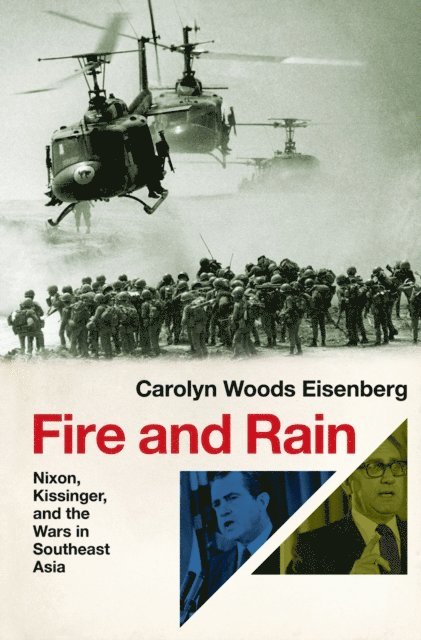
This gripping account interweaves Nixon and Kissinger''s pursuit of the war in Southeast Asia and their diplomacy with the Soviet Union and China with on-the-ground military events and US domestic reactions to the war conducted in Vietnam, Laos, and Cambodia.Fire and Rain is a compelling, meticulous narrative of the way national security decisions formed at the highest levels of government affect the lives of individuals at home and abroad. By drawing these connections, Carolyn Woods Eisenberg brings to life policy decisions about Vietnam, Laos, and Cambodia, conveying their significance to a new generation of readers. She breaks fresh ground in contextualizing Richard Nixon and Henry Kissinger''s decisions within a wider institutional and societal framework. While recognizing the distinctive personalities and ideas of these two men, this study more broadly conveys the competing roles and impact of the professional military, the Congress, and a mobilized peace movement.Drawing upon a vast collection of declassified documents, Eisenberg presents an important re-interpretation of the Nixon Administration''s relations with the Soviet Union and China vis a vis the war in Southeast Asia. She argues that in their desperate effort to overcome, or at least overshadow, their failure in Vietnam, Nixon and Kissinger made major concessions to both nations in the field of arms control, their response to the India-Pakistan war, and the diplomacy surrounding Taiwan--much of this secret. Despite policymakers'' claims that the Vietnam War was a "national security" necessity that would demonstrate American strength to the communist superpowers and "credibility" to friendly governments, the historical record suggests a different reality.A half-century after the Paris Peace Conference marking the withdrawal of US troops and advisors from Vietnam and foreign troops from Laos and Cambodia, Fire and Rain is a dramatic account of geopolitical decision making, civil society, and the human toll of the war on the people of Southeast Asia.
E-bok
Engelska, 2023299 kr
Läs direkt efter köp
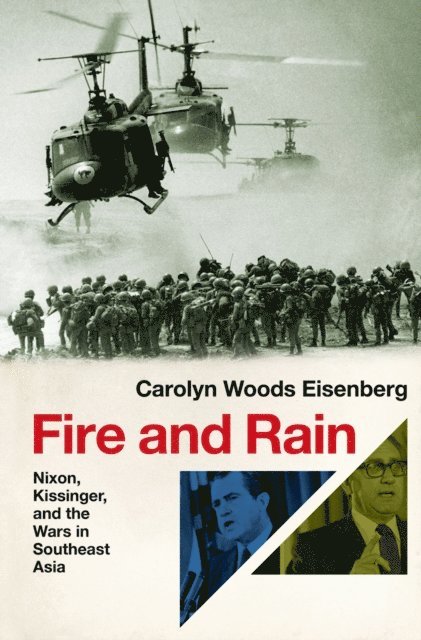
This gripping account interweaves Nixon and Kissinger''s pursuit of the war in Southeast Asia and their diplomacy with the Soviet Union and China with on-the-ground military events and US domestic reactions to the war conducted in Vietnam, Laos, and Cambodia.Fire and Rain is a compelling, meticulous narrative of the way national security decisions formed at the highest levels of government affect the lives of individuals at home and abroad. By drawing these connections, Carolyn Woods Eisenberg brings to life policy decisions about Vietnam, Laos, and Cambodia, conveying their significance to a new generation of readers. She breaks fresh ground in contextualizing Richard Nixon and Henry Kissinger''s decisions within a wider institutional and societal framework. While recognizing the distinctive personalities and ideas of these two men, this study more broadly conveys the competing roles and impact of the professional military, the Congress, and a mobilized peace movement.Drawing upon a vast collection of declassified documents, Eisenberg presents an important re-interpretation of the Nixon Administration''s relations with the Soviet Union and China vis a vis the war in Southeast Asia. She argues that in their desperate effort to overcome, or at least overshadow, their failure in Vietnam, Nixon and Kissinger made major concessions to both nations in the field of arms control, their response to the India-Pakistan war, and the diplomacy surrounding Taiwan--much of this secret. Despite policymakers'' claims that the Vietnam War was a "national security" necessity that would demonstrate American strength to the communist superpowers and "credibility" to friendly governments, the historical record suggests a different reality.A half-century after the Paris Peace Conference marking the withdrawal of US troops and advisors from Vietnam and foreign troops from Laos and Cambodia, Fire and Rain is a dramatic account of geopolitical decision making, civil society, and the human toll of the war on the people of Southeast Asia.
Häftad, Engelska, 2026
246 kr
Kommande
This gripping account interweaves Nixon and Kissinger's pursuit of the war in Southeast Asia and their diplomacy with the Soviet Union and China with on-the-ground military events and US domestic reactions to the war conducted in Vietnam, Laos, and Cambodia.Fire and Rain is a compelling, meticulous narrative of the way national security decisions formed at the highest levels of government affect the lives of individuals at home and abroad. By drawing these connections, Carolyn Woods Eisenberg brings to life policy decisions about Vietnam, Laos, and Cambodia, conveying their significance to a new generation of readers. She breaks fresh ground in contextualizing Richard Nixon and Henry Kissinger's decisions within a wider institutional and societal framework. While recognizing the distinctive personalities and ideas of these two men, this study more broadly conveys the competing roles and impact of the professional military, the Congress, and a mobilized peace movement.Drawing upon a vast collection of declassified documents, Eisenberg presents an important re-interpretation of the Nixon Administration's relations with the Soviet Union and China vis a vis the war in Southeast Asia. She argues that in their desperate effort to overcome, or at least overshadow, their failure in Vietnam, Nixon and Kissinger made major concessions to both nations in the field of arms control, their response to the India-Pakistan war, and the diplomacy surrounding Taiwan--much of this secret. Despite policymakers' claims that the Vietnam War was a "national security" necessity that would demonstrate American strength to the communist superpowers and "credibility" to friendly governments, the historical record suggests a different reality.A half-century after the Paris Peace Conference marking the withdrawal of US troops and advisors from Vietnam and foreign troops from Laos and Cambodia, Fire and Rain is a dramatic account of geopolitical decision making, civil society, and the human toll of the war on the people of Southeast Asia.
Inbunden, Engelska, 1996
1 758 kr
Skickas inom 7-10 vardagar
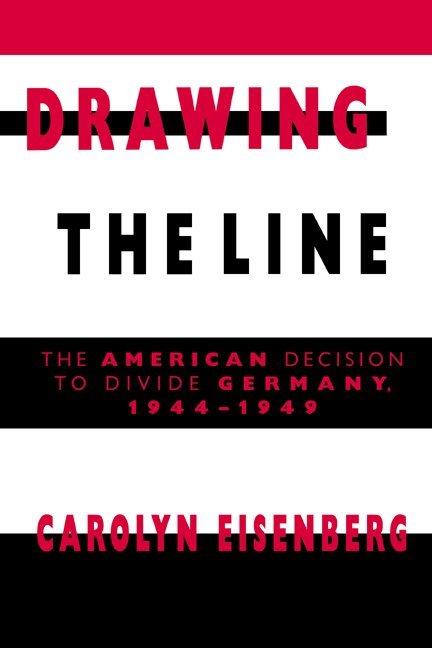
In this fresh and challenging study of the origins of the Cold War, Professor Eisenberg traces the American role in dividing post-war Germany. Drawing upon many original documentary sources, she examines the Allied meeting on the Elbe, follows the Great Powers through their confrontation in Berlin, and culminates with the creation of the West German state in the fall of 1949. In contrast to many works in the field, the book argues that the partition of Germany was fundamentally an American decision. US policy-makers chose partition, mobilized reluctant West Europeans behind that approach, and, by excluding the Soviets from West Germany, contributed to the isolation of East Germany and the emergence of the post-World War II US-Soviet rivalry. The volume casts new light on the Berlin blockade, demonstrating that the United States rejected United Nations mediation and relied on its nuclear monopoly as the means of protecting its German agenda.
Häftad, Engelska, 1998
756 kr
Skickas inom 7-10 vardagar
In this fresh and challenging study of the origins of the Cold War, Professor Eisenberg traces the American role in dividing post-war Germany. Drawing upon many original documentary sources, she examines the Allied meeting on the Elbe, follows the Great Powers through their confrontation in Berlin, and culminates with the creation of the West German state in the fall of 1949. In contrast to many works in the field, the book argues that the partition of Germany was fundamentally an American decision. US policy-makers chose partition, mobilized reluctant West Europeans behind that approach, and, by excluding the Soviets from West Germany, contributed to the isolation of East Germany and the emergence of the post-World War II US-Soviet rivalry. The volume casts new light on the Berlin blockade, demonstrating that the United States rejected United Nations mediation and relied on its nuclear monopoly as the means of protecting its German agenda.