Catriona M.M. MacDonald – författare
Visar alla böcker från författaren . Handla med fri frakt och snabb leverans.
6 produkter
6 produkter
Inbunden, Engelska, 2024
1 199 kr
Skickas
Winner of the 2025 Frank Watson Book PrizeWhy did Scots in the nineteenth and twentieth centuries know so little about their past and even less about those who controlled their history? Is the historical narrative the only legitimate medium through which the past can be made known? Are novelists and historians as far apart as convention has it? In an age when history grounds any claims to national status, these are important questions and they have implications for how Scottish history has evolved, and how Scottish identity has been understood up to the present day.Scottish history is not simply the distillation of Scotland’s past: authors shape what we know and how we judge our forebears. This book investigates who decided which Scottish voices of the past would be heard in history’s pages and which would ultimately be silenced. It sketches a picture of a narrow and privileged cultural elite that responded belatedly to a more democratic age and only slowly embraced women writers and the interests of ‘average’ Scots. Integrating historical fiction and popular histories in its appreciation of the Scottish historical imaginary, it most importantly tells the story of why, despite the interests of politicians and others, a truly British history has never emerged.'A brilliant, scholarly yet highly readable work which enlarges our understanding of what Scottish history is, and reinforces why it really matters' - James Robertson
Inbunden, Engelska, 2026
1 331 kr
Kommande
In 1901 Andrew Carnegie founded an educational trust in Scotland to make its universities more available to the country’s ‘deserving and qualified youth’, to improve their status, and to extend research. The result was the Carnegie Trust for the Universities of Scotland, which transformed university education in Scotland and delivered the democratic intellect that for centuries was merely a Scottish aspiration. Looking back over 125 years, this is its story.It is a record of thousands of lives changed, opportunities seized and horizons widened. The book traces the evolution of the university sector through a period of unprecedented expansion and the challenges that ‘ancient’ institutions faced when meeting modern demands. It is a chronicle of civic society, elite interests and conservative forces, but it is also an account of radical reform, progressive intent and the remaining traces of independence in a sector increasingly directed by the state. Catriona Macdonald offers critical reflections on the legacy left by a rich man who sought to use his wealth for ‘the good of the people’ and the Trust that, through 125 years of dramatic changes, endeavoured to make his vision a reality.
Häftad, Engelska, 2026
405 kr
Skickas
Winner of the 2025 Frank Watson Book PrizeWhy did Scots in the nineteenth and twentieth centuries know so little about their past and even less about those who controlled their history? Is the historical narrative the only legitimate medium through which the past can be made known? Are novelists and historians as far apart as convention has it? In an age when history grounds any claims to national status, these are important questions and they have implications for how Scottish history has evolved, and how Scottish identity has been understood up to the present day.Scottish history is not simply the distillation of Scotland’s past: authors shape what we know and how we judge our forebears. This book investigates who decided which Scottish voices of the past would be heard in history’s pages and which would ultimately be silenced. It sketches a picture of a narrow and privileged cultural elite that responded belatedly to a more democratic age and only slowly embraced women writers and the interests of ‘average’ Scots. Integrating historical fiction and popular histories in its appreciation of the Scottish historical imaginary, it most importantly tells the story of why, despite the interests of politicians and others, a truly British history has never emerged.'A brilliant, scholarly yet highly readable work which enlarges our understanding of what Scottish history is, and reinforces why it really matters' - James Robertson
E-bok
Engelska, 2009459 kr
Läs direkt efter köp
On the cusp of memory and history, the story of Scotland''s twentieth-century is contested territory: international yet parochial; prosperous yet ailing; and, passionate yet temperate. This thematic account of Scotland''s twentieth century examines the economic, social, political and cultural aspects that shaped the country during the period. Catroina MacDonald underlines the tensions inherent in the life of a nation distinguished by stark changes and surprising continuities, a fragmented identity, a shifting and at times uneasy accommodation in the UK nation state, and an ongoing engagement with globalising tendencies. In identifying the choices, ambitions, possibilities and contradictions that Scotland experienced during a century of profound change, she uncovers a country in which one can truly say extremes met.
E-bok
Engelska, 2024295 kr
Läs direkt efter köp
Why did Scots in the nineteenth and twentieth centuries know so little about their past and even less about those who controlled their history? Is the historical narrative the only legitimate medium through which the past can be made known? Are novelists and historians as far apart as convention has it? In an age when history grounds any claims to national status, these are important questions and they have implications for how Scottish history has evolved, and how Scottish identity has been understood up to the present day.Scottish history is not simply the distillation of Scotland''s past: authors shape what we know and how we judge our forebears. This book investigates who decided which Scottish voices of the past would be heard in history''s pages and which would ultimately be silenced. It sketches a picture of a narrow and privileged cultural elite that responded belatedly to a more democratic age and only slowly embraced women writers and the interests of ''average'' Scots. Integrating historical fiction and popular histories in its appreciation of the Scottish historical imaginary, it most importantly tells the story of why, despite the interests of politicians and others, a truly British history has never emerged.''A brilliant, scholarly yet highly readable work which enlarges our understanding of what Scottish history is, and reinforces why it really matters'' - James Robertson
Häftad, Engelska, 2014
272 kr
Tillfälligt slut
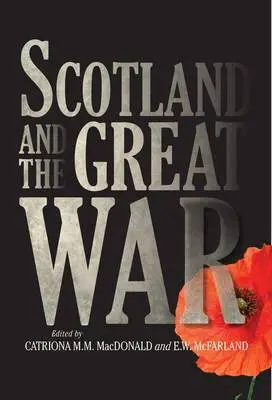
There has been very little previous attention paid to Scottish civilians during the Great War, but, as is revealed here, Scotland had its own unique experience. Of multi-disciplinary interest for academics, and of broad general interest too, this is the only single-volume study of the impact of the Great War on Scotland. Topics include conscientious objection, voluntary recruitment, press coverage, gender and the war, and the Scottish Highlands and the war.