Charles E. Neu – författare
Visar alla böcker från författaren Charles E. Neu. Handla med fri frakt och snabb leverans.
6 produkter
6 produkter
Inbunden, Engelska, 2015
437 kr
Skickas inom 5-8 vardagar
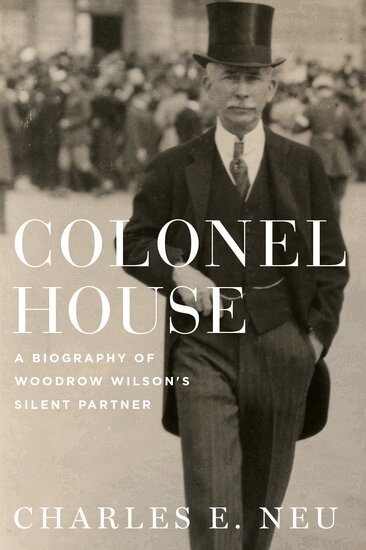
A man who lived his life mostly in the shadows, Edward M. House is little known or remembered today; yet he was one of the most influential figures of the Wilson presidency. Wilson's chief political advisor, House played a key role in international diplomacy, and had a significant hand in crafting the Fourteen Points at the Paris Peace Conference. Though the intimate friendship between the president and his advisor ultimately unraveled in the wake of these negotiations, House's role in the Wilson administration had a lasting impact on 20th century international politics. In this seminal biography, Charles E. Neu details the life of "Colonel" House, a Texas landowner who rose to become one of the century's greatest political operators. Ambitious and persuasive, House worked largely behind the scenes, developing ties of loyalty and using patronage to rally party workers behind his candidates. In 1911 he met Woodrow Wilson, and almost immediately the two formed what would become one of the most famous friendships in American political history.House became a high-level political intermediary in the Wilson administration, proving particularly adept at managing the intangible realm of human relations. After World War I erupted, House, realizing the complexity of the struggle and the dangers and opportunities it posed for the United States, began traveling to and from Europe as the president's personal representative. Eventually he helped Wilson recognize the need to devise a way to end the war that would place the United States at the center of a new world order. In this balanced account, Neu shows that while House was a resourceful and imaginative diplomat, his analysis of wartime politics was erratic. He relied too heavily on personal contacts, often exaggerating his accomplishments and missing the larger historical forces that shaped the policies of the warring powers. Ultimately, as the Paris Peace Conference unfolded, differences appeared between Wilson and his counselor. Their divergent views on the negotiations led to a bitter split, and after the president left France in June of 1919, he would never see House again.Despite this break, Neu refutes the idea that Wilson and House were antagonists. They shared the same beliefs and aspirations and were, Neu shows, part of an unusual partnership. As an organizer, tactician, and confidant, House helped to make possible Wilson's achievements, and this impressive biography restores the enigmatic counselor to his place at the center of that presidency.
E-bok
PDF, Engelska, 2014330 kr
Läs direkt efter köp
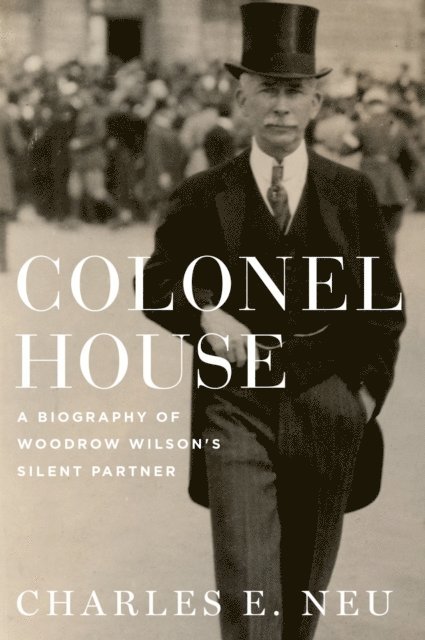
A man who lived his life mostly in the shadows, Edward M. House is little known or remembered today; yet he was one of the most influential figures of the Wilson presidency. Wilson''s chief political advisor, House played a key role in international diplomacy, and had a significant hand in crafting the Fourteen Points at the Paris Peace Conference. Though the intimate friendship between the president and his advisor ultimately unraveled in the wake of these negotiations, House''s role in the Wilson administration had a lasting impact on 20th century international politics. In this seminal biography, Charles E. Neu details the life of "Colonel" House, a Texas landowner who rose to become one of the century''s greatest political operators. Ambitious and persuasive, House worked largely behind the scenes, developing ties of loyalty and using patronage to rally party workers behind his candidates. In 1911 he met Woodrow Wilson, and almost immediately the two formed what would become one of the most famous friendships in American political history.House became a high-level political intermediary in the Wilson administration, proving particularly adept at managing the intangible realm of human relations. After World War I erupted, House, realizing the complexity of the struggle and the dangers and opportunities it posed for the United States, began traveling to and from Europe as the president''s personal representative. Eventually he helped Wilson recognize the need to devise a way to end the war that would place the United States at the center of a new world order. In this balanced account, Neu shows that while House was a resourceful and imaginative diplomat, his analysis of wartime politics was erratic. He relied too heavily on personal contacts, often exaggerating his accomplishments and missing the larger historical forces that shaped the policies of the warring powers. Ultimately, as the Paris Peace Conference unfolded, differences appeared between Wilson and his counselor. Their divergent views on the negotiations led to a bitter split, and after the president left France in June of 1919, he would never see House again.Despite this break, Neu refutes the idea that Wilson and House were antagonists. They shared the same beliefs and aspirations and were, Neu shows, part of an unusual partnership. As an organizer, tactician, and confidant, House helped to make possible Wilson''s achievements, and this impressive biography restores the enigmatic counselor to his place at the center of that presidency.
E-bok
Engelska, 2014330 kr
Läs direkt efter köp
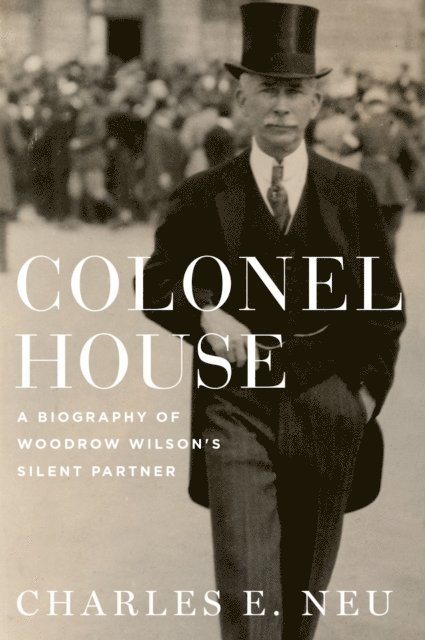
A man who lived his life mostly in the shadows, Edward M. House is little known or remembered today; yet he was one of the most influential figures of the Wilson presidency. Wilson''s chief political advisor, House played a key role in international diplomacy, and had a significant hand in crafting the Fourteen Points at the Paris Peace Conference. Though the intimate friendship between the president and his advisor ultimately unraveled in the wake of these negotiations, House''s role in the Wilson administration had a lasting impact on 20th century international politics. In this seminal biography, Charles E. Neu details the life of "Colonel" House, a Texas landowner who rose to become one of the century''s greatest political operators. Ambitious and persuasive, House worked largely behind the scenes, developing ties of loyalty and using patronage to rally party workers behind his candidates. In 1911 he met Woodrow Wilson, and almost immediately the two formed what would become one of the most famous friendships in American political history.House became a high-level political intermediary in the Wilson administration, proving particularly adept at managing the intangible realm of human relations. After World War I erupted, House, realizing the complexity of the struggle and the dangers and opportunities it posed for the United States, began traveling to and from Europe as the president''s personal representative. Eventually he helped Wilson recognize the need to devise a way to end the war that would place the United States at the center of a new world order. In this balanced account, Neu shows that while House was a resourceful and imaginative diplomat, his analysis of wartime politics was erratic. He relied too heavily on personal contacts, often exaggerating his accomplishments and missing the larger historical forces that shaped the policies of the warring powers. Ultimately, as the Paris Peace Conference unfolded, differences appeared between Wilson and his counselor. Their divergent views on the negotiations led to a bitter split, and after the president left France in June of 1919, he would never see House again.Despite this break, Neu refutes the idea that Wilson and House were antagonists. They shared the same beliefs and aspirations and were, Neu shows, part of an unusual partnership. As an organizer, tactician, and confidant, House helped to make possible Wilson''s achievements, and this impressive biography restores the enigmatic counselor to his place at the center of that presidency.
Häftad, Engelska, 2000
382 kr
Skickas inom 5-8 vardagar
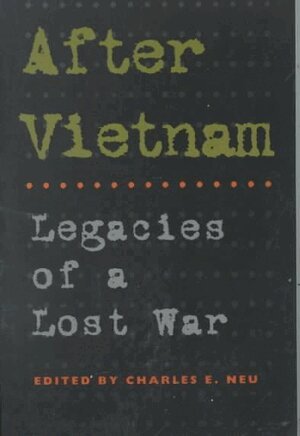
Efforts to understand the impact of the Vietnam War on America began soon after it ended, and they continue to the present day. In After Vietnam four distinguished scholars focus on different elements of the war's legacy, while one of the major architects of the conflict, former defense secretary Robert S. McNamara, contributes a final chapter pondering foreign policy issues of the twenty-first century. In the book's opening chapter, Charles E. Neu explains how the Vietnam War changed Americans' sense of themselves: challenging widely-held national myths, the war brought frustration, disillusionment, and a weakening of Americans' sense of their past and vision for the future. Brian Balogh argues that Vietnam became such a powerful metaphor for turmoil and decline that it obscured other forces that brought about fundamental changes in government and society. George C. Herring examines the postwar American military, which became nearly obsessed with preventing "another Vietnam." Robert K. Brigham explores the effects of the war on the Vietnamese, as aging revolutionary leaders relied on appeals to "revolutionary heroism" to justify the communist party's monopoly on political power.Finally, Robert S. McNamara, aware of the magnitude of his errors and burdened by the war's destructiveness, draws lessons from his experience with the aim of preventing wars in the future.
Inbunden, Engelska, 2022
593 kr
Skickas inom 5-8 vardagar
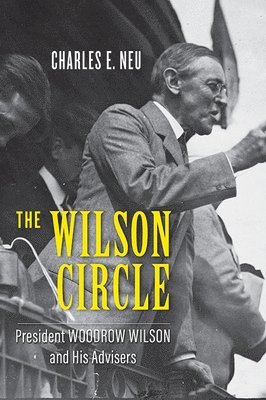
An in-depth look at the key advisers to Woodrow Wilson during the course of his tumultuous presidency.Nearly 100 years after Woodrow Wilson's death, historians continue to be divided over the impact of his presidency and his political leadership. The collapse of Wilson's health in 1919 and his failure to win Senate approval of the Versailles Treaty have tainted his legacy, as have the racism of his administration and its disregard for civil liberties after American entry into World War I. In The Wilson Circle, Charles E. Neu takes a new look at the Wilson presidency through the lens of his inner circle, a group of ten advisers. Some of these advisers, like his wife Ellen, were by his side at the start of his term, while others joined him as the challenges facing Wilson's presidency mounted. All of these advisers believed that, whatever Wilson's flaws as a leader, they had served a great man whose legacy would endure. Struck by his magnetism, his oratorical gifts, and the power and precision of his mind, they each became, to one extent or another, friends of the president. Looking back, they acknowledged that their relationship with Woodrow Wilson had transformed their lives.Challenging the publicly held assumption that Wilson was a remote, harsh president by exploring the intense emotional connection he developed with this tight-knit group, Neu argues that we can partially credit Wilson's remarkable journey in American politics to his ability to bring together such an impressive group of advisers. Wilson realized that, given his limited energy and experience, he had to rely on advisers to help him maintain his physical and emotional equilibrium and to achieve his far-reaching political goals. And as the demands on his presidency changed, changes also occurred in his group of presidential confidants. Informing vivid biographical sketches with a wide range of recent scholarship, The Wilson Circle shines a light on the exceptional people whose advice impacted the course of a presidency.
Häftad, Engelska, 2005
291 kr
Tillfälligt slut