Charles H. Zeanah – författare
Visar alla böcker från författaren Charles H. Zeanah. Handla med fri frakt och snabb leverans.
3 produkter
3 produkter
Inbunden, Engelska, 2014
411 kr
Skickas inom 10-15 vardagar
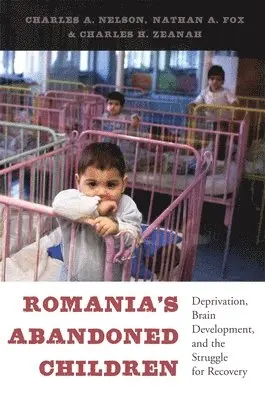
The implications of early experience for children’s brain development, behavior, and psychological functioning have long absorbed caregivers, researchers, and clinicians. The 1989 fall of Romania’s Ceausescu regime left approximately 170,000 children in 700 overcrowded, impoverished institutions across Romania, and prompted the most comprehensive study to date on the effects of institutionalization on children’s wellbeing. Romania’s Abandoned Children, the authoritative account of this landmark study, documents the devastating toll paid by children who are deprived of responsive care, social interaction, stimulation, and psychological comfort.Launched in 2000, the Bucharest Early Intervention Project (BEIP) was a rigorously controlled investigation of foster care as an alternative to institutionalization. Researchers included 136 abandoned infants and toddlers in the study and randomly assigned half of them to foster care created specifically for the project. The other half stayed in Romanian institutions, where conditions remained substandard. Over a twelve-year span, both groups were assessed for physical growth, cognitive functioning, brain development, and social behavior. Data from a third group of children raised by their birth families were collected for comparison.The study found that the institutionalized children were severely impaired in IQ and manifested a variety of social and emotional disorders, as well as changes in brain development. However, the earlier an institutionalized child was placed into foster care, the better the recovery. Combining scientific, historical, and personal narratives in a gripping, often heartbreaking, account, Romania’s Abandoned Children highlights the urgency of efforts to help the millions of parentless children living in institutions throughout the world.
E-bok
PDF, Engelska, 20181 403 kr
Läs direkt efter köp
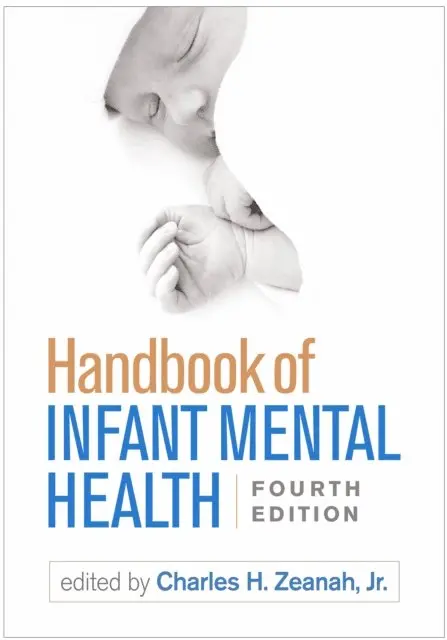
The definitive reference in the field--now significantly revised with 75% new material--this volume examines typical and atypical development from birth to the preschool years and identifies what works in helping children and families at risk. Foremost experts explore neurobiological, family, and sociocultural factors in infant mental health, with a major focus on primary caregiving relationships. Risk factors for developmental problems are analyzed, and current information on disorders and disabilities of early childhood is presented. The volume showcases evidence-based approaches to assessment and intervention and describes applications in mental health, primary care, child care, and child welfare settings. New to This Edition: *Chapters on genetic and epigenetic processes, executive functions, historical trauma, and neglect. *Chapters on additional clinical problems: hyperactivity and inattention, sensory overresponsivity, and relationship-specific disorder. *Chapters on additional interventions: attachment and biobehavioral catch-up, video-feedback intervention to promote positive parenting and sensitive discipline, parent–child interaction therapy, and home visiting programs. *Existing chapters all rewritten or revised to reflect a decade's worth of empirical and clinical advances.
E-bok
Engelska, 20181 403 kr
Läs direkt efter köp
The definitive reference in the field--now significantly revised with 75% new material--this volume examines typical and atypical development from birth to the preschool years and identifies what works in helping children and families at risk. Foremost experts explore neurobiological, family, and sociocultural factors in infant mental health, with a major focus on primary caregiving relationships. Risk factors for developmental problems are analyzed, and current information on disorders and disabilities of early childhood is presented. The volume showcases evidence-based approaches to assessment and intervention and describes applications in mental health, primary care, child care, and child welfare settings. New to This Edition: *Chapters on genetic and epigenetic processes, executive functions, historical trauma, and neglect. *Chapters on additional clinical problems: hyperactivity and inattention, sensory overresponsivity, and relationship-specific disorder. *Chapters on additional interventions: attachment and biobehavioral catch-up, video-feedback intervention to promote positive parenting and sensitive discipline, parent–child interaction therapy, and home visiting programs. *Existing chapters all rewritten or revised to reflect a decade's worth of empirical and clinical advances.